Wondering where you can legally drive a golf cart? The answer depends on your location, speeds, and local laws.
Usually, you can go where roads have speed limits of 25 mph or less, but some places allow up to 35 mph with modifications.
Keep reading to learn the key rules and tips for staying within the law.
What’s the Difference Between a Golf Cart and a Low-Speed Vehicle?
A golf cart becomes a low-speed vehicle (LSV) when it exceeds 20 mph and meets specific safety equipment requirements. Standard golf carts typically top out at 20 mph and lack safety features such as headlights, seat belts, and turn signals. In contrast, LSVs are designed to legally travel between 20 and 25 mph and must be equipped with these safety features. If you modify your golf cart to go faster past 20 mph and add the necessary safety gear, it can be reclassified as an LSV. Doing so triggers federal standards, VIN requirements, and road-legal status. Always check your cart’s speed and safety equipment first before assuming it’s street-ready. To avoid premature battery failure during upgrades, note that lithium battery lifespan depends on avoiding deep discharges and extreme temperatures. For those upgrading their Club Car, selecting top accessories can improve safety and compliance with LSV standards. Understanding what makes golf carts street legal often starts with recognizing federal VIN requirements for LSVs.

Easy to Install: First locate the door lock actuator into the mounting position and insert the linkage into the power door lock swivel head. Then, secure the actuator and mounting plate with screws and make sure the mounting plate is parallel to the vehicle door lock lever. Finally, adjust the position and connect the wires to ensure that the wiring is secure
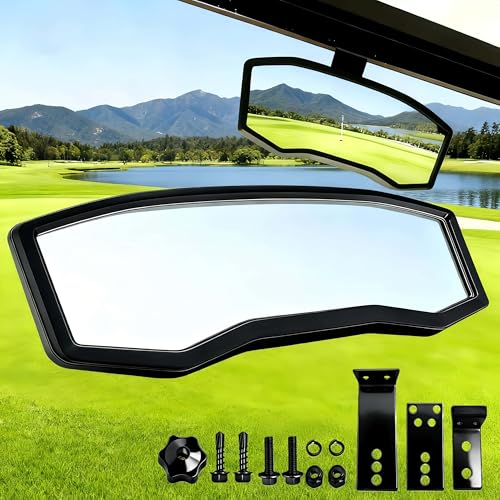
UNIVERSAL FIT & 10-MINUTE INSTALL: This golf cart rear view mirror includes 3 mounting kits for a universal fit. Installs on EZGO, Yamaha, Club Car, EPIC, and most utility vehicles in under 10 minutes with included hardware and clear instructions

Cool Design with 200% Brightness: Spiral design to glow in 360°direction, light up the night with hundreds of dancing patterns like chase, build-up, strobe, pulse, scan, stack etc and 12 solid colors. 200% Super brighter, Always ensure stand out in the ride, and safe in the night trail without being left out
Which Roads Can Golf Carts and LSVs Actually Use?
Golf carts are generally limited to roads posted at 25 mph or less. You cannot use them on highways or interstates unless there’s a specific crossing designated for golf carts. LSVs, on the other hand, can handle roads up to 35 mph, but you still cannot operate them on interstates. Whether you can drive a golf cart or an LSV on a particular road depends heavily on local grooming regulations, which specify acceptable routes and restrictions. Parking rules are also strictly enforced for both vehicle types, and access to certain roads can be limited or prohibited based on local ordinances. If you store your golf cart during cold months, remember that batteries can freeze if the charge level drops too low, so maintaining a full charge is essential for winter storage. To ensure clear visibility while navigating these permitted routes, investing in a high-quality windshield can greatly improve safety and comfort. If you are considering a high-performance model, reviewing a comparison of the Top Lithium Golf Carts can help ensure your vehicle meets local quality and performance standards. Always check the specific laws in your area before driving to ensure you’re on permitted routes.

▸ 1. Compatible Models: Fits Gas or Electric Club Car Precedent (2004 & Up) models, Club Car Windshield only suitable for golf carts with original glass, not for modified carts. Precisely cut to size: 37.6"W X 33.2"H, perfectly fits the original frame

[Applicable Models]: EXOMETS EZGO Golf Cart Windshield ONLY FITS 1994-2013 EZGO TXT/Medalist gas & electric golf cart. The dimensions is 32.1"H X 48.6"W. Please confirm the year, size and model match before purchasing. (NOTE: NOT FIT EZGO TXT (2014-up))

FITMENT - Compatible with 1994-2014 EZGO TXT & Medalist Gas or Electric Golf Cart. Please confirm whether this folding tinted windshield is suitable for your golf cart before placing your order.
State-by-State Golf Cart Laws for Public Streets
Most states allow golf carts on roads posted at 25 to 35 mph, but only with local authorization. You’ll typically need to have working headlights, brake lights, turn signals, mirrors, a horn, a windshield, and seat belts. Driving any legal golf cart also requires a valid driver’s license and a minimum age of 16. Some states impose additional restrictions: Florida limits you to designated county or municipal roads; Louisiana requires parish designations; Virginia needs local government approval. In states like Georgia and Michigan, the authority is left to your city or county. To stay compliant, regularly check your state’s specific laws before you drive and ensure your golf cart’s safety gear and accessories like mirrors or turn signals are in good working order. Knowing the typical price ranges for used golf carts can help you budget for necessary upgrades to meet these legal requirements. In Florida, for example, golf carts do not require license plates as long as they are only operated on designated local roads. Additionally, you must never operate a golf cart on roads with speed limits exceeding 35 mph unless the cart has been upgraded to meet low-speed vehicle standards.
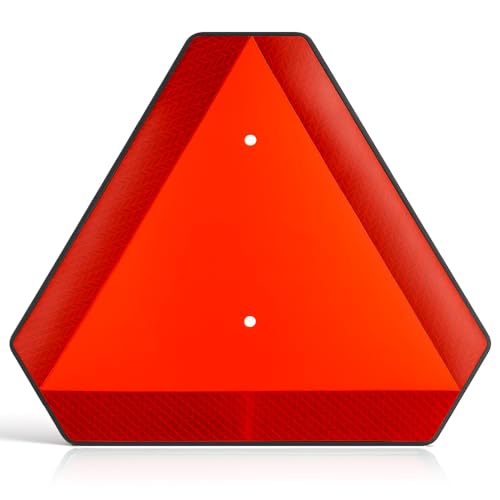
Meets ASAE S276.4 Standards: This 16x14-inch slow moving vehicle sign meets the rigorous ASAE S276.4 safety standards, ensuring high visibility at 600 feet with a reflective red border and vibrant red-orange center.

Broad Compatibility: This golf cart rear safety grab bar fits most modified rear seat kit platforms for Yamaha, EZGO, and Club Car 2+2 or 4+2 passenger carts. Check the bracket spacing and cart platform before ordering.

Dimensions:The golf cart flag boasts a well - sized 25 x 35 cm orange flag, integrated with a 5 x 18 cm high - intensity reflective strip, which greatly enhances safety alertness. Its telescopic flagpole can be smoothly adjusted from 28 to 160 cm (11 to 63 inches), making it suitable for a wide range of usage scenarios.
How to Find Your Local Golf Cart Ordinance
To find your local golf cart ordinance, start by visiting your city, town, or county website and navigating to the municipal code or ordinance library. Look for sections related to traffic, vehicles, or public safety, and search for keywords like golf cart, low-speed vehicle, or neighborhood vehicle. Pay attention to whether the rules apply to city streets, county roads, or only unincorporated areas, as regulations can vary significantly. Once you know the legal areas to drive, you may also need to select top turf tires for compliance with traction requirements on certain surfaces. Equipment requirements are an important aspect of the ordinances. Ensure your golf cart complies by installing lights, brakes, mirrors, and a slow-moving vehicle sign if needed. Parking regulations may also limit where you can park or cross public streets, so review those rules carefully. Additionally, check for age minimums, licensing rules, and permit procedures often specified in these ordinances. Understanding the differences between electric and gas models can also help you choose a cart that meets local noise and emission standards. For clarity, contact your city clerk or police department, and always keep a record of the ordinance number and revision date to reference the correct rules. You should also verify whether the area mandates formal state registration for your golf cart to operate legally on public roads.

【 DOT-APPROVED STREET-LEGAL GOLF CART TIRE 】: Arisun Cruze 205/65-10 golf cart tires are DOT approved and street legal, delivering smooth and reliable performance on neighborhood roads, paved paths, golf cart trails, and community streets with a quiet, comfortable ride.

DOT APPROVED STREET LEGAL FOR LSV: Complete set of 4 GTW Fusion 225/50R14 tires meets DOT approval standards, making it fully street legal for golf car use.

DURABLE 4-PLY CONSTRUCTION: Engineered with a robust 4-ply carcass, this tire provides excellent puncture resistance and structural integrity for an extended service life on any path.
When Private Property Exempts You From Road Laws
If you operate your golf cart solely on private property, many public road laws don’t apply. You won’t need a driver’s license or public registration when driving on land owned by you or with the owner’s permission. However, owner restrictions still apply—you can’t just go anywhere without approval. The property owner is responsible for setting rules, including who can drive and where they can go. Before you assume your golf cart is ready to run, remember that battery charging issues can prevent you from even getting started, so check the battery health first. Over time, such issues often arise from improper charging habits that shorten the battery’s lifespan.
Private property exemptions usually cover your own land, golf courses, and other controlled sites. Even then, crossing onto public roads remains subject to traffic laws, regardless of where you’re driving. If you’re on someone else’s private land, always get their consent beforehand. Neighborhood or homeowners’ association rules can also impose additional restrictions. Keep in mind, the exemption does not give you free rein—speed limits and access restrictions set by the owner still stand. However, if a golf cart is classified as a Low-Speed Vehicle under state law, the exemption may not apply when crossing public roads. Ignoring these rules could make you liable for damages or injuries.
Golf Cart Driver Requirements: License, Age, and Daylight Rules
Driving a golf cart on public roads requires adherence to licensing, age, and daylight rules. You must carry a valid driver’s license at all times; in some areas, a learner’s permit is acceptable if a licensed adult accompanies you. Verify your local requirements, as some jurisdictions may have stricter provisions. It is essential to also be aware of specific state guidelines for golf cart operation.
Most states set the minimum age for golf cart operation at 16, although a few allow 18. Some areas permit operation at age 15 if you hold a learner’s permit. Age verification is crucial because operating without proper authorization can result in fines or impoundment. For instance, the vehicle must be registered with the local DMV if used on designated public roads in your neighborhood.
Daylight-only rules are common, usually restricting golf cart use from sunrise to sunset. However, some jurisdictions allow nighttime driving if your cart has appropriate lighting and reflectors. Always check local ordinances since they can impose additional restrictions beyond state laws. Not complying with these rules could lead to penalties or safety hazards. Regularly adding distilled water to your batteries can help ensure your golf cart operates safely and legally during permitted hours.
Golf Cart Equipment Checklist for Legal Road Use
Making your golf cart street-legal requires a comprehensive equipment checklist that meets federal low-speed vehicle standards and adheres to your state’s specific regulations. Essential safety features include functional headlamps, tail lamps, brake lamps, and turn signals to ensure visibility by other drivers. Reflex reflectors and a rearview mirror are also necessary for safe operation. Each seating position must have a seat belt, and a windshield provides additional protection from debris and weather. A parking brake is mandatory to prevent unintended movement when parked. Additionally, your cart must carry a valid 17-digit Vehicle Identification Number (VIN) to verify its identity and compliance.
States have additional requirements beyond federal standards. Louisiana, for example, mandates that your golf cart is equipped with effective brakes, reliable steering, safe tires, and a horn. In Florida, approval from local authorities is necessary before operating on public roads. Customizing your golf cart often involves these upgrades, but maintaining properly charged and functioning batteries is crucial; a dead battery means your lights and horn won’t work, jeopardizing safety and compliance. Using DOT-compliant equipment ensures your vehicle can pass safety inspections necessary for legal road use. Always double-check local ordinances to confirm specific requirements before hitting the streets.

[Applicable Models]: Golf cart LED Light fits for EZGO TXT 1996-2013 gas and electric and 12V System Required. For 36V/48V: you must use a 36V/48V to 12V voltage reducer (not included). Skip this, and the lights will burn out

Designed exclusively for EZGO Freedom TXT/T48 (2014-Up) Golf Carts - This 10L0L Headlight Kit is designed specifically for EZGO Freedom TXT/T48 models from 2014 and up. Whether you own a gas or electric golf cart, this headlight kit includes both driver and passenger side lights, ensuring a perfect fit and seamless replacement for your existing headlights.

[Compatible Models]: Golf cart LED headlight kit compatible with EZGO TXT 1996-2013 gas and electric golf cart, please check your model to make sure your golf cart is fit
Common Mistakes That Get Golf Cart Drivers Ticketed or Towed
Even after making sure your golf cart is legally equipped and ready to hit the streets, common mistakes can still land you a ticket or cause your cart to be towed. Driving after sunset or on roads where the speed limit exceeds 30 mph is a frequent violation, as most local ordinances restrict golf carts to daytime use and lower speeds. Ignoring insurance requirements by operating without proof of liability coverage is another common trigger for citations. Failing to check local signage and driving in areas where carts are banned can also result in fines or towing. Exceeding the 15 mph speed limit, letting an unlicensed driver under 16 operate the cart, neglecting to register your vehicle, or not obtaining the necessary permits all increase your risk of penalty. Overloading passenger capacity, towing equipment improperly, or carrying loads beyond municipal rules are also typical mistakes that can lead to fines or your cart being removed from the road. Improperly charging your batteries at home can also damage equipment and create safety hazards, so always follow a step-by-step walkthrough for safe, effective charging. Choosing a durable windshield hinge can also prevent visibility issues that lead to traffic stops. Avoiding these errors helps ensure you stay compliant and avoid unnecessary costs.