
Golf cart parts, checked for fit
Know what fits your cart before you buy.
Golf cart parts look like they should fit any cart. Most don’t. One wrong plug, one wrong spline count or one wrong model year, and that shiny new part goes right back in the box.
We read the spec sheets, the manuals and the owner reviews. Then we match every pick to the carts it really fits. So your first order is the right order.
Start with your cart: pick a brand
Or pick your voltage
Tap a chip to see every guide and ranking for that cart.
Fit check
4
things to check before you buy any part
100+
Field guides written for real owners
60+
Spec rankings with fit notes on every pick
3
Big cart brands covered closely: EZGO, Club Car and Yamaha
0
Fake test claims. Every pick comes from specs and owner reviews
01 System board
Shop by the part of the cart you’re working on
Every golf cart is really six small systems working together. Find the one giving you trouble, or the one you’re itching to upgrade, and start there.
Batteries · Chargers · Motors · Controllers
Power Systems
The heart of the cart, and where most of the money goes. Get this right and everything else feels easy.
Tires · Hub caps · Brakes
Ride and Wheels
Small changes here change how the cart feels over every bump, root and gravel path.
Windshields · Roofs · Enclosures
Shelter
Comfort for the hot afternoon sun, the cold morning wind and the rain that shows up on hole seven.
Light bars · Speakers · Subwoofers
Light and Sound
For night rides home from the clubhouse, beach town cruising and the neighborhood holiday parade.
Turn signals · Horns · Mirrors
Street Legal
Rules change from state to state and town to town. Check your local law first, then build the kit around it.
Truck ramps · Cargo baskets
Haul and Load
For owners who take the cart to the lake, the farm or the campsite, and need it to get there safely.
02 Featured rankings
The rankings owners open first
These six answer the questions we hear most: more speed, smarter charging, easier hauling and a more comfortable ride.
#01 · Spec ranking · 7 picks
Best Motors for Yamaha Golf Carts
Tired of your Yamaha slowing to a crawl on the hill by the 9th tee? This ranking runs from a budget DC swap all the way to a programmable Navitas AC kit you can tune from your phone.
Every pick lists voltage, power and spline count. So you can match it to your cart before you spend a dollar.
- High speed DC motors
- Direct stock replacements
- Full AC conversion kits
Fits: Yamaha G29, Drive2, G9, G14, G16 · 36V to 72V
Read the ranking →
#02 · 9 picks
Best Lithium Battery Chargers for Golf Carts
Lithium packs need a charger that speaks their language. A charger built for lead acid can use the wrong charge profile and shorten battery life.
Read the ranking →
#03 · 8 picks
Best 12 Volt Battery Chargers for Golf Carts
Running four 12V batteries? A good 12 volt charger lets you top up one weak battery at a time, before it drags the whole pack down.
Read the ranking →
#04 · 10 picks
Best Golf Cart Ramps for Trucks
Most carts weigh close to half a ton. Loading one onto a truck is no time to guess, so these ramps are sorted by weight rating, length and fold style.
Read the ranking →
#05 · 10 picks
Best Golf Cart Windshields
Wind, bugs and morning dew hit you square in the face at cart speed. These picks cover fold down, tinted and clear options, with fit notes for popular models.
Read the ranking →
#06 · 8 picks
Best Golf Cart Subwoofers and Sound Setups
Bass on a golf cart is tricky. You have open air, very little space and a battery you still need to get you home. These eight picks balance punch, power draw and weather resistance.
Read the ranking →
03 Check before you buy
Four checks that save you a return trip
Picture this. It’s Friday night. You order a new charger so the cart is ready for Saturday’s round. It shows up on time. You carry it to the garage, reach for the charge port and stop. The plug is the wrong shape. Saturday now starts with a long walk to the first tee.
Almost every bad parts order comes down to one of these four things. Check them once, write them on a sticky note in the garage, and you’ll shop with confidence for years.
Check 1 · Volts
Your cart’s voltage
Lift the seat. Count the batteries and read the number on one of them. Six 6V batteries make a 36V cart. Six 8V or four 12V batteries make a 48V cart.
Chargers, motors and controllers all have to match this number. A 36V charger will not properly charge a 48V pack.
Check 2 · Spline
Spline count
Splines are the small teeth on the motor shaft. They lock the motor into the rear axle. Yamaha carts commonly use 19 or 23 splines.
If the count is wrong, the motor will not seat, no matter how hard you push. Count the teeth on your old motor before you order.
Check 3 · Year
Model and year
Find the serial number plate. On a Club Car, the first two letters name the model. The next four digits show the year and the week it was built.
Brands change parts between years. Two carts that look the same in the driveway can take different windshields, seats and motors.
Check 4 · Controller
Controller type
The controller is the cart’s brain. It decides how much power reaches the motor. Series, Sepex (short for separately excited) and AC systems each need their own kind of motor.
Here’s a real example: a series motor will not work on an EZGO with a DCS or PDS system.
Every ranking on Fair Way Volt opens with a “Check your cart first” box built on these four checks.
04 The front nine
Fresh from the cart barn
Our newest guides and rankings, laid out like a scorecard. The biggest tile is the newest post, and the hole number shows the order.

10 Solenoids That Every Golf Cart Owner Should Keep Handy
A ten-pack of solenoids could save your next round, but only if you choose the right one.
10 Best Seat Belts for a Golf Cart That Keep the Fun Safe
Make your golf cart safer with 10 seat belts that are easy to install—find out which one fits your ride.
Where to Recycle Golf Cart Batteries: Disposal Guide
Where to recycle golf cart batteries safely and avoid fines—discover the best drop-off locations and essential safety steps.
7 Best Motors That’ll Make Your Yamaha Golf Cart Fly
The top seven motors for your Yamaha cart that deliver rocket-like speed and range you won’t believe.
Where Can I Sell My Golf Cart? Best Places to Sell
Jog over to discover the top platforms for selling your golf cart quickly.
9 Lithium Battery Chargers Your Golf Cart Will Thank You For
Just nine rugged, smart chargers that keep your golf cart moving—find yours before you get stranded.
Can You Lease a Golf Cart? Leasing Options Explained
People lease golf carts for under $300 monthly, but which lease type actually saves you more?
10 Hub Caps That’ll Make Your Golf Cart the Star of the Course
Find 10 hub caps for 8-inch rims that will transform your golf cart’s style from bland to bold.
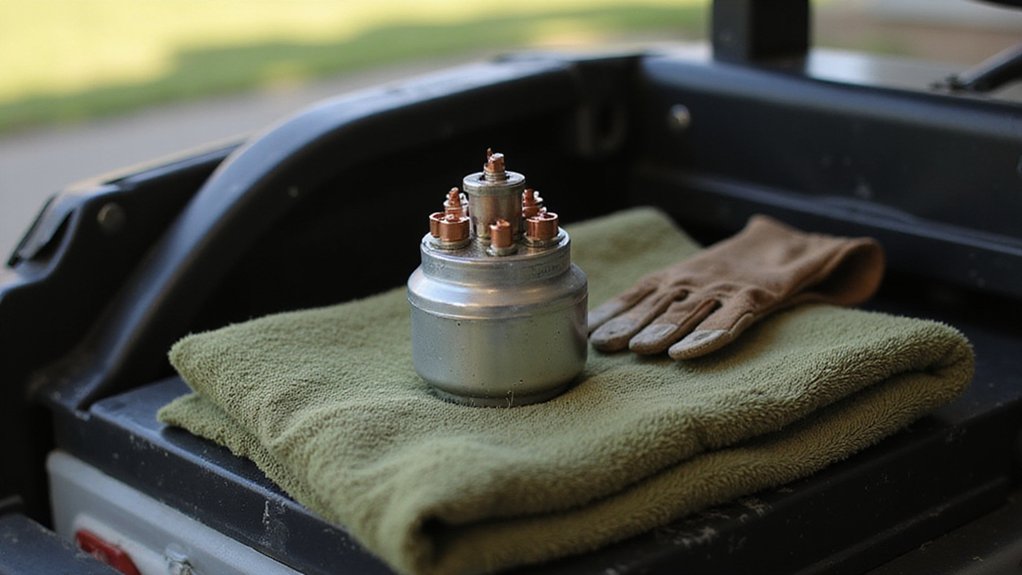






Hole 09 · See the whole course
05 Field guides by problem
What’s going on with your cart?
Most owners don’t show up with a product in mind. They show up with a problem, and a cart that won’t do what it did last week. Pick the one that sounds like yours.
“My cart won’t move”
Quick tip: before you blame the controller, check the easy stuff. If your cart has a tow and run switch, make sure it’s set to run. Then check that every battery terminal is clean and tight.
“My battery dies too fast”
Quick tip: lead acid batteries hate sitting half charged. Plug in after every ride, even a short one. Check the water level about once a month.
“I want more speed”
Quick tip: a stock 36V cart often tops out around 12 to 14 mph on flat ground. Real gains come from the motor, the controller and the battery pack working as a team.
“I’m buying, selling or leasing”
Quick tip: a used six seater can start near $5,000, while a new one can pass $18,000. Know the range before you talk to any seller.
06 How we research
Honest picks, built from specs and real owners
We don’t run a test track, and we won’t pretend we do. Here’s what we do instead, every single time.
1 Read the specs
Manufacturer spec sheets, manuals and fitment charts come first. Voltage, amp hours, spline count and weight rating. Numbers before opinions.
2 Read the owners
Verified buyer reviews show what specs can’t: fit problems, early failures and happy surprises. When a product has only a few reviews or a low average, we say so plainly.
3 Check the fit
Every pick is matched to the brands, models and voltages it’s built for. If the fit is unclear, we tell you exactly what to measure before you order.
Fair Way Volt earns a small commission from qualifying Amazon purchases, at no extra cost to you. That never decides which product makes a list.
Spec reading in action
A 48V battery pack: lead acid vs lithium
Lead acid Lithium (LiFePO4)
Pack weight
About 380 lb (six 8V batteries at about 63 lb each)
About 70 to 100 lb for a typical 48V 100Ah kit
Rated charge cycles
About 500 to 1,200 cycles
About 3,000 to 5,000 cycles
Typical service life
About 4 to 6 years with good care
About 8 to 10 years
What it means for you: lithium costs more upfront, but it sheds about 300 lb and can outlast two or three lead acid packs. Figures are typical ranges from manufacturer spec sheets. Your pack may differ, so always check the label on the exact model.
The green
Start with your cart.
Pick your brand or your voltage and see what fits. No guesswork, no return labels, no long walks to the first tee.