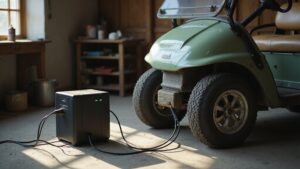
Wondering if you need a license plate for your golf cart in Florida? It depends on how fast it goes and where you’re driving.
If your cart stays under 20 mph and you stick to certain roads or private property, you can often go without registering it.
But increase the speed or change where you drive, and laws might require upgrades and registration.
Keep reading to get the full picture.
When Does a Golf Cart Actually Need a License Plate in Florida?
A golf cart needs a license plate in Florida only if it has been converted into a low-speed vehicle (LSV). Specifically, if your golf cart’s top speed exceeds 20 miles per hour through modifications, it becomes classified as an LSV. Once it qualifies as an LSV, you are required to register it with the state, which in turn mandates displaying a license plate. Without this conversion—keeping the vehicle under 20 mph—it remains a standard golf cart and does not require a license plate. The key factor is whether your vehicle has been modified to go faster and thus legally qualifies as a plated vehicle, not just where you drive it. Even when using a golf cart on public roads in Florida, vehicle registration laws still allow it to remain unplated as long as its top speed stays under 20 mph. Higher speeds from modifications also necessitate additional safety equipment like headlights and mirrors to meet LSV standards. Choosing high-quality hinges can help ensure the windshield stays securely attached during higher-speed travel in an LSV.
Where Can You Drive a Golf Cart Without a License Plate?
You can legally drive a golf cart in Florida without a license plate only on roads specifically designated by local governments for golf-cart use. These roads typically have a posted speed limit of 30 miles per hour or less. You are also permitted to cross county roads to reach approved routes, golf courses, or mobile home parks. Outside of these designated roads and crossings, operating a golf cart on public roads is prohibited. No license plate is required when driving on private property, within golf courses, or inside gated communities that have secured local designations for internal roads. However, always check community permits and local rules, as they define your permitted routes. Regular maintenance ensures your golf cart remains in compliance, but it does not grant access to undesignated public roads. Stick to approved paths, and you’ll stay within legal limits. Unlike in some states, Florida generally does not require state registration for golf carts operated solely within these approved areas. Considering the differences in power and maintenance requirements, electric golf carts often offer quieter and lower-maintenance operation on these approved roads. For those prioritizing audio enjoyment while driving, upgrading with top golf cart subwoofers can enhance the riding experience on permitted routes.
Golf Cart vs. Low-Speed Vehicle: The Speed Rule That Changes Everything
In Florida, the key threshold is 20 miles per hour. If your vehicle cannot exceed this speed, it remains classified as a golf cart. These vehicles are limited to certain road access points and do not require license plates. However, if modifications allow your vehicle to surpass 20 mph, it is reclassified as a low-speed vehicle (LSV). This change means you must register, title, insure, and license your vehicle, along with complying with specific safety standards. Enforcement checks the actual performance of the vehicle, not just its appearance, so boosting your golf cart to go faster legally changes its classification and the rules that apply. For those seeking better performance, upgrading to top Yamaha golf cart parts can push a vehicle past the 20 mph threshold, triggering this reclassification. Understanding Bintelli’s manufacturing origins can also help when comparing cart brands for potential upgrades. If your cart is upgraded, adding an enclosure for golf cart can enhance comfort while ensuring it meets the new safety requirements for LSVs.
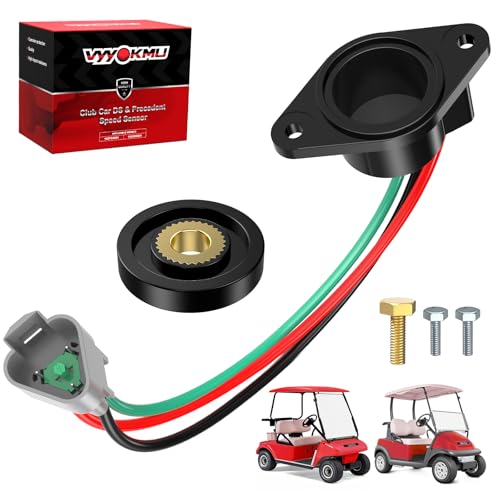
[Compatible Models]: Club Car DS high speed sensor is compatible with 2004-UP Club Car DS & Precedent 48V models equipped with ADC motor or KDS motor and IQ system. (Note: It does not fit the earlier gas and electric motor models)

[Compatible With]: Golf Cart Speed Sensor is specially designed for 48V Club Car DS & Precedent 2004-UP electric models with IQ system KDS motor/ Advanced Motor (ADC motor). OEM part number: 102704901, 102265601

Precision Design: Built to OEM specifications (Replaces 102704901, 102265601), ensuring a seamless fit within your speed sensor housing without modifications.
What Happens If You Drive Without a License Plate on Unauthorized Roads?
Driving on unauthorized roads without a license plate is considered illegal. Even if your golf cart does not normally require a plate when used legally, operating it on roads where golf carts are not permitted removes that exemption. The primary violation is crossing into restricted areas, not just lacking a license plate. Once you leave designated golf cart routes, the legal protections and exemptions no longer apply, and authorities treat your vehicle as unlawfully operated on public roads. Determining a particular cart’s model year can be essential for verifying that its lights and safety features meet Florida’s legal requirements. Consulting a top golf carts review can help you understand vehicle specifications for legal compliance, such as ensuring your cart has a 36 volt battery charger that meets Florida’s operational requirements.
Law enforcement can issue a citation for this roadway violation as a noncriminal traffic infraction. They can also enforce standard registration and license plate laws, since your golf cart is no longer operating under the golf-cart statute. This can lead to civil penalties, additional vehicle-law violations, and potentially more severe consequences.
In addition, misusing roads without proper registration and plates impacts your insurance coverage, which might become invalid. Parking can also become problematic, as your vehicle may be considered illegally parked and subject to tickets. Not adhering to road designations and registration laws increases the risk of fines and legal issues.

【18 Amp Rapid Charger/Lead-Acid】EPOWREY 18 Amp 36 Volt golf carts battery charger for EZGO TXT - D style plug.Our chargers are designed for fast, convenient and safe charging in a variety of situations.

【48 Volt 15 Amp Golf Cart Charger】EPOWREY golf cart battery charger is designed to quickly and safely charge EZGO RXV and TXT golf cart batteries with 3-pin Triangular plug. Our golf cart battery charger utilize advanced smart charging technology with high output voltage and current accuracy, good stability and up to 90% efficiency to ensure efficient and reliable power for your golf cart

【15 Amp Rapid Charger/Lead-Acid】 EPOWREY 48 volt battery charger for Club Car golf carts with 3-pin round plug.This charger is designed as a one-piece plug, using a rubber cord that is more abrasion-resistant and heat-resistant than PVC cords, and have effective waterproofing advantage.
License, Age, and Safety Rules for Unregistered Golf Carts
Florida exempts golf carts from registration and license plates when used properly, but you still need to follow important age, license, and safety rules to stay legal. If you’re under 18, you must have a valid learner’s permit or driver license to operate a golf cart on public roads. Once you turn 18 or older, a government-issued photo ID is enough for identification, but a standard driver license is not required. However, just because registration isn’t necessary doesn’t mean there are no rules. You should only drive on roads with a speed limit of 30 mph or less, and your golf cart must have proper brakes and functioning lights for safety. Insurance isn’t mandated for unregistered carts under state law, but it’s wise to consider coverage, especially if you plan to use the cart off-road. Furthermore, a top utility box can help you organize and secure essential safety gear and identification documents while driving. Remember, these rules apply only to genuine golf carts, not low-speed vehicles, and the law treats LSVs differently requiring their own registration and equipment. So check your cart’s classification before you take it out. For added reliability, choosing a top golf cart battery charger ensures your cart stays powered for safe road use.
Private Property vs. Public Roads: When Registration Rules Change
Whether you drive your golf cart solely on private property or take it onto public roads makes all the difference in Florida’s registration rules. On private property—such as a golf course or gated community—you are not required to register your golf cart or display a license plate. Florida’s golf cart regulations do not apply once you cross onto private land, giving you freedom from state registration requirements. For owners who also use their carts on designated public roads, upgrading with top Club Car accessories can improve safety and compliance. When purchasing a used cart for public road use, it is especially important to verify the ownership paperwork to avoid future legal complications. Upgrading with lift kits and tires can also improve both performance and safety when transitioning from private property to public roads.
However, the moment you leave private land and enter public roads, the rules change. Not all public roads are open to golf carts; you can only operate on roads that local authorities explicitly designate for golf cart use. Without official approval from your municipality or county, driving on the public roadway is illegal, and your cart loses any registration exemptions. To stay compliant, keep your golf cart within private property boundaries unless you have confirmed the road is officially open to golf carts. If not, following the local designations or risking legal issues is essential.
The Bottom Line: Exemptions, Penalties, and How to Stay Legal
Florida’s golf cart regulations exempt you from license plate requirements if you operate strictly within designated roads that have posted speed limits of 30 miles per hour or less. Stick to these roads, and you won’t need a plate. However, if you need to cross a higher-speed road, your golf cart must be equipped with additional safety equipment —common requirements include headlights, taillights, turn signals, and a windshield. It is also generally illegal to ride on sidewalks, as golf carts are not classified as pedestrian vehicles.
If you go beyond this limit and drive on faster roads, standard motor vehicle rules apply, which include license plate obligations. Violating these rules can cost you between $60 and $500 in fines, and your vehicle may be impounded.
To stay compliant, ensure your vehicle is a legitimate golf cart and not a low-speed vehicle. Use your golf cart only in authorized areas, and always double-check local regulations for designated roads. Ignorance of the rules won’t protect you from fines, so make sure you’re fully informed before you drive.