Wondering if you can take a golf cart onto Illinois streets? The answer depends on whether your local area has specific rules allowing it.
In most cases, you’ll need certain safety features, a valid license, insurance, and a permit.
Keep reading to find out exactly what’s required to make your golf cart street legal in Illinois.
Yes: But Only With a Local Ordinance
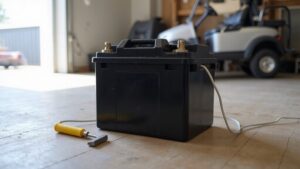
You need a local ordinance to drive a golf cart on public streets in Illinois. State law does not automatically permit golf cart operation; instead, your local government must pass an ordinance or resolution authorizing it. This ordinance must include a determination that allowing golf carts will not jeopardize public safety. To maintain battery health during home charging, owners should follow a proper charging routine that includes using the correct voltage charger and avoiding overcharging. Additionally, street legal golf carts must have specific safety equipment like headlights and turn signals to comply with local rules.
Once approved, there are additional local rules to follow, such as registering your golf cart and obtaining liability insurance. Communities may require you to register the cart with local authorities and carry specific coverage to protect against potential damages or injuries. These requirements differ from place to place, so it is essential to check with your local government’s ordinance to ensure compliance. Before purchasing, consider that used golf cart prices vary widely based on condition and features. Operating a golf cart without verifying local regulations can result in citations or other penalties.

Front and Rear Dual Turn Signals for Safety:KEMIMOTO side mirrors are 7x5.5-inch side view mirrors with LED turn signals. Besides providing drivers with an expansive field of vision, they feature front and rear lights on the mirrors that flash when turning, alerting adjacent vehicles with bright turn signals and ensuring your safety during both day and night

Meets ASAE S276.4 Standards: Triangle Sign This 16x14-inch slow-moving vehicle sign meets the rigorous ASAE S276.4 safety standards, ensuring high visibility at 600 feet with a reflective red border and vibrant red-orange center.

New Upgrade Design: This golf cart armrest with cup holder is molded out of sturdy premium high quality ABS materials which can UV resistant. More long-lasting than other armrests on the market which made from vinyl materials.Package includes 1 pair armrest, one on each side. (Only for rear seat. )
Which Roads Are Golf Cart Legal in Illinois?
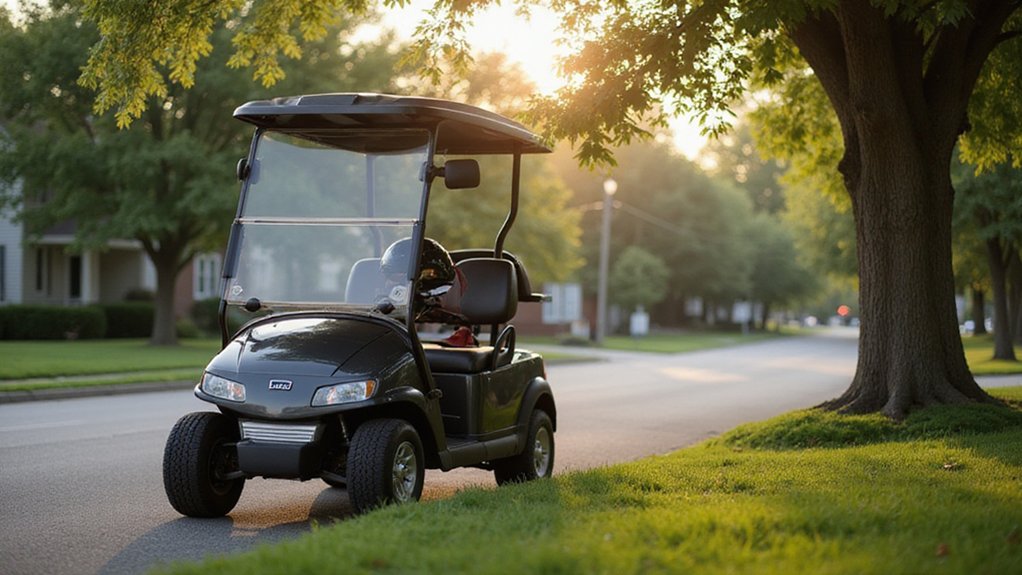
You can drive a golf cart on Illinois roads only if a local ordinance allows it. State law does not provide blanket permission for golf cart use on public streets. Instead, your ability to operate depends entirely on the rules set by city, township, or county authorities. Typically, golf carts are permitted on roads that have speed limits of 35 mph or less, and only within incorporated municipalities. You are generally not allowed to use state highways or county roads unless they are explicitly designated as accessible for golf carts. Always pay close attention to road signs and ordinance markings, as authorities often specify permitted routes and crossing restrictions. Your legal driving area for a golf cart is limited to specific streets as defined by local maps, so without a local ordinance, you cannot operate on any public road. Unlike cars, golf carts are subject to state and community rules that vary widely, requiring local registration or permits in many jurisdictions. Following proper charging habits can help maintain battery performance and avoid road delays. For choosing a permitted area, it helps to check for local ordinance requirements that define exactly where you can drive.

Made from durable, 1/8" aluminum Max-Metal

GOLF CARTS ONLY, PLEASE: Clearly mark your parking spot with this humorous “Golf Cart Parking Only” metal sign — perfect for golf lovers, retirement communities, and backyard golfers.
DURABLE MATERIAL: Crafted from sturdy plastic for enduring wear-resistant quality.
Crossing Higher-Speed Roads? Know the Limits
You can legally cross roads over 35 mph, but only at specific points and under strict conditions. You must cross at an intersection, coming straight across in a perpendicular line, and come to a complete stop before crossing. Yield to all oncoming traffic, ensuring it’s safe before proceeding. Crossing is only allowed at designated intersections with traffic lights or four-way stop signs, not mid-block. Road type restrictions also apply—state highways, toll roads, and controlled-access highways are off-limits for crossing unless a special exemption applies. Keep your golf cart’s speed at or below 20 to 25 mph during these crossings. Always verify local ordinances, as some municipalities may prohibit crossings outside of set intersections or impose additional restrictions to ensure safety. Local ordinances may also require specific safety equipment before crossing higher-speed roads. For maximum safety on the road, consider upgrading to magnetic speakers that enhance audio clarity without draining your cart’s battery.
Do You Need a Driver’s License or Permit?
You need both a valid driver’s license and a local permit to legally operate a golf cart on public streets in Illinois. Your driver’s license demonstrates your eligibility to drive, but many municipalities also require you to obtain a separate permit before hitting the road. When applying for this permit, you often must provide proof of your license status, usually by submitting a copy. Insurance requirements are common as well; most towns won’t issue the permit without proof of adequate coverage. The local permit process ensures your golf cart is equipped with a working speed controller to comply with street-legal speed limits. Some owners try using battery repair liquid to restore old batteries, but tests show it rarely works for street-legal performance. Unlike a golf cart, which is too large for a standard truck bed to transport easily, these vehicles require a trailer for safe hauling.
Age restrictions typically apply, with some municipalities requiring you to be at least 18 years old. A learner’s permit is generally not enough—most areas specify that you must hold a full, valid driver’s license. Without both a current license and the proper local permit, you are breaking the law. Always check your specific city’s rules, pay the permit fee, and ensure your license remains valid to stay compliant.

YOUR PHONE DESERVES BETTER: Patented PhoneFit tech adjusts to any phone (even in that tank case) while showing Fighting Illini pride - because fumbling for your phone shouldn't be your biggest challenge on the course


Safety Equipment Required on Illinois Streets
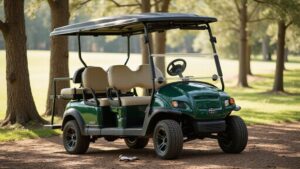
To be street-legal in Illinois, your golf cart must be equipped with specific safety gear. It needs brakes, a steering system, and tires that meet safety standards. Additionally, a rearview mirror is required to monitor traffic behind you. Reflective warning devices in red must be placed on both the front and rear of the cart to increase visibility. A slow-moving vehicle emblem should appear on the back to alert other drivers. For those prioritizing performance, choosing a model with a reliable lithium battery can enhance both safety and longevity. When selecting a cart, it is wise to review top golf cart reviews that assess overall quality and performance.
Lighting must include a white headlight visible from at least 500 feet, providing adequate night visibility. A red tail lamp visible from 100 feet ensures your cart can be seen from behind in low light conditions. Brake lights and turn signals are also necessary for clear communication with other drivers. For optimal night driving, consider upgrading to top LED headlights that exceed these minimum visibility requirements. While these are the minimum legal requirements, some local ordinances may add extras like seat belts, windshields, or horns. Always check your town’s specific rules before taking your golf cart on public streets.
Operation Hours and Seasonal Restrictions
You can drive your golf cart on Illinois streets only if local ordinances permit it. There is no statewide rule, so hours of operation vary significantly from town to town. Most municipalities restrict driving to daylight hours, often from sunrise to sunset or within specific windows like 6:00 a.m. to 9:00 p.m. Some towns allow evening driving until as late as 11:00 p.m. on weekends, while others prohibit operating at night entirely. If night driving is permitted, you will likely need upgraded accessories such as headlights and reflectors for safety. Seasonal restrictions are also common, especially near schools; for instance, some ordinances ban driving during school hours between 7:00 a.m. and 4:00 p.m. on certain streets. In Texas, similar local ordinances dictate when and where you can operate a golf cart on public roads. Parking rules are similarly variable, and you must follow local regulations about where you can leave your golf cart, which can differ block by block. Even the fastest golf carts, regardless of motor, voltage, and drivetrain, must comply with these local time limits and lighting requirements when operated on public streets. If you attempt to enhance your speed yourself, safety remains paramount, and any modifications must still adhere to these same local restrictions.
How to Check Your Local Rules Before Driving
You must verify that your local government has authorized your golf cart for street use through an ordinance or resolution before driving on any Illinois street. Check your municipality, township, or county code first—state law alone does not automatically permit golf carts on public roads. Local rules usually restrict golf carts to streets with speed limits of 35 mph or less and may specify approved routes or areas where use is permitted. Some ordinances require you to obtain a permit, provide proof of insurance, and hold a valid driver’s license. You may also need to pass a physical inspection if your village mandates one. Always review posted signage for any local bans or restrictions before driving. Additionally, ensure your golf cart is properly maintained to stay compliant, and if borrowing or leasing, confirm that your agreement permits street use. For carts used on public roads, adding essential safety equipment like headlights, turn signals, and a rearview mirror is a common requirement to meet local standards. Choosing a reliable lithium battery can help maintain your cart’s performance and compliance with local requirements. Driving without local authorization risks citations and potential legal issues. To keep your cart road-ready, ensure you also have a 24 volt battery charger that is compatible with your battery type to avoid charging failures.