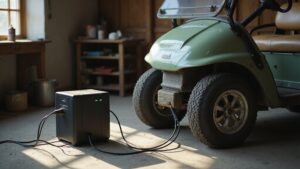
Ever wonder what makes your golf cart run smoothly and respond when you press the pedal? That’s the job of the controller, which acts as the brain of your cart’s electrical system.
It manages power from the batteries to the motor, ensuring controlled speed and protecting the system from overloads.
Keep reading to see how this vital component keeps your golf cart running seamlessly.
What Does a Golf Cart Controller Actually Do?
Your golf cart’s controller acts as its central processing unit, managing all the electrical functions necessary for operation. It regulates the flow of electricity from your battery pack to the motor, converting your pedal inputs into controlled power output. This process helps prevent your battery from discharging too quickly, extending its lifespan and ensuring efficient energy use. For a deeper look at the best options on the market, you can read our review of top controllers for golf carts to compare features and find the right fit. Some extended roof models even integrate with controller settings to ensure stable power delivery for onboard accessories. High-quality controllers are often paired with lithium golf carts that prioritize both performance and battery longevity.
The controller also controls the motor’s speed and torque, adjusting for changes in load or when climbing inclines to deliver a smoother ride. It limits current to avoid overheating and potential damage, providing overheat protection as well. The wiring setup of your golf cart influences how the controller interprets signals from the throttle and how it coordinates with direction controls. This ensures responsive acceleration and deceleration without abrupt starts or stops. Essentially, the controller is the main link connecting your batteries, motor, and driver commands, making sure everything runs safely and smoothly.

EFI Electronic Control Unit (ECU) for EZGO Golf Carts 2019-2026 with EX1 Engine
[MOST TRUSTED CLEANER] - America’s original club & ball washer—proven for 30+ years. Golfers and courses nationwide rely on Club Clean to enhance play and protect equipment investment.
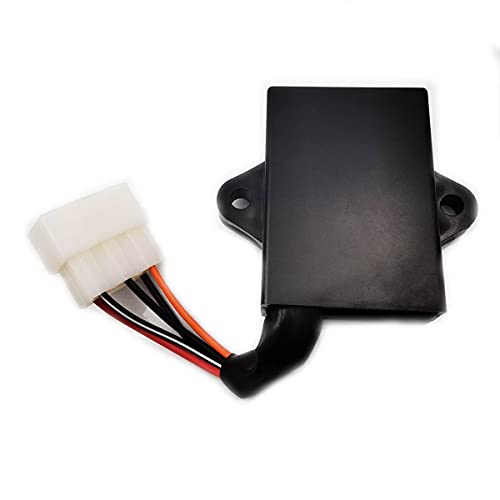
✔ [Fit models] : The Ignition CDI Box Compatible with 1990-1994 Yamaha Gas Golf Cart G9,replace number is 99999-02368.
How the Golf Cart Controller Turns Pedal Pressure Into Smooth Speed
The process of turning pedal pressure into smooth speed involves several key steps. It all begins with a sensor—often a potentiometer—that converts the physical travel of your foot on the pedal into a variable throttle voltage, usually between 0.5 and 4.5 volts. The controller reads this voltage as a demand for power, rather than a direct connection to the motor. It then maps your pedal position to a proportional current request through voltage regulation, meaning deeper presses request more motor current, while light presses keep the output minimal for gentle movement. When choosing a model, comparing electric, gas, lifted types helps match the controller’s performance to your specific needs. This selection is also informed by understanding the controller’s role in managing overall battery efficiency and motor longevity. For instance, top-rated electric models often integrate GPS tracking to monitor battery usage and optimize range.
Pulse-width modulation (PWM) then comes into play by rapidly switching the motor’s power on and off thousands of times per second. Wider pulses provide higher average energy, resulting in increased speed, while narrower pulses keep the vehicle crawling. To ensure smooth acceleration and prevent jerks, the controller ramps up power gradually by regulating the voltage supplied from the battery, rather than sending full power immediately. Safety checks on direction and brake status refine this process, ensuring every pedal movement is met with a predictable, seamless response.
Why Torque Control Helps You Climb Hills and Haul Heavy Loads
Torque control is crucial for climbing hills and hauling heavy loads because it allows your motor to deliver maximum twisting force at low speeds. This is exactly when you need the most torque to overcome gravity and inertia. During steep inclines, the controller prioritizes low-speed torque over top speed, preventing your cart from bogging down or stalling. It works by regulating current flow; more current equals more torque. When you increase current, your vehicle gains the power needed to climb inclines or carry heavy cargo without struggling. Upgrading to a high-amp controller boosts this capacity further, giving you stronger climbing ability and more reliable load handling. For example, a 48-volt system with a high-amp controller can produce significantly more torque than a lower-voltage setup, directly improving hill-climbing performance. When selecting your upgrade, focusing on the best electric motor models ensures compatibility with your controller’s torque output. Proper calibration of torque control ensures your cart maintains consistent power even when terrain or load changes. This prevents sudden drops in speed or performance, making it easier to navigate inclines and carry heavy loads smoothly. To safely transport a golf cart in a truck bed for servicing or upgrades, it is important to compare cart dimensions with common bed sizes to ensure a proper fit. Ultimately, torque control enhances your cart’s utility by providing reliable, powerful performance under challenging conditions.

Products include: 2 Pack 3 Amp Heavy Duty Golf Cart Solenoid Diode

A 3 amp solenoid diode designed for high amp Club Car, Yamaha, and EZGO electric golf carts
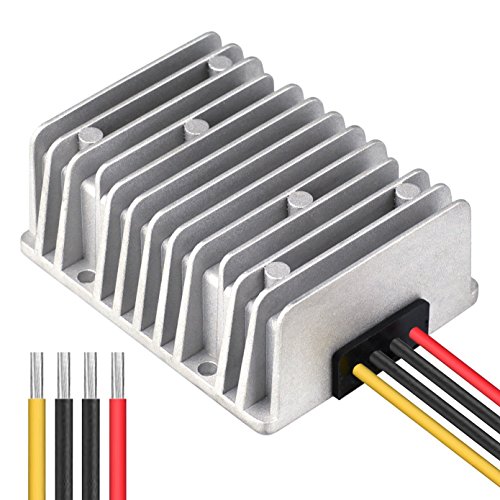
Input voltage range: DC 8V-40V; Output voltage: DC 12V(non-adjustable); Output current: 25A; Output power 300W.
Safety Features That Protect Your Golf Cart’s Motor and Batteries
Safety features are essential for protecting your golf cart’s motor and batteries during demanding operation. Overcurrent limiting prevents your motor windings from overheating by reducing current during heavy acceleration, which in turn lessens stress on your batteries. Thermal protection monitors the temperature of the controller; if it overheats, it reduces output or sends a warning to prevent damage to MOSFETs during prolonged climbs. Understanding golf cart weights helps you choose a controller and battery setup that supports the vehicle’s total load without straining safety systems. Upgrading to a soundbar designed for outdoor use can enhance your riding experience, but be sure to consider the best soundbar for golf cart that integrates well with your existing electrical setup. For reliable operation, choosing a high-performance controller ensures that these safety features work together to deliver consistent power and protection under demanding conditions.
Battery management systems play a crucial role. Low-voltage cutoff stops the battery from deep discharging, which helps extend the lifespan of lead-acid or lithium packs. Overvoltage protection prevents regenerative braking current from overcharging the pack when it is full, avoiding stress and potential damage.
Circuitry protections are also vital. Short-circuit detection quickly disconnects power during faults, safeguarding components from damage. Reverse-polarity protection prevents incorrect battery connections from causing harm. These integrated safety features ensure your controller, motor, and batteries can operate reliably under tough conditions without sudden failures.

DC-DC Power Converter Input Voltage:DC36V-96V;Output Voltage:DC 12V Output Current:30A max;Output Power:360W max

[Fit Models]: Golf cart light wire harness fits Club Car DS&EZGO TXT RXV&YAMAHA G22, G29, Drive 2 models. NOTE: Not for Club Car Precedent

COMFORTABLE TO PUSH: The adjustable padded handle fits golfers of any height, making the cart easier to push and reducing hand and arm tiredness during long rounds
Signs Your Golf Cart Controller Is Failing: and When to Replace It
If your golf cart is surging, slowing, or refusing to move altogether, the controller is likely failing. You’ll notice sudden changes in speed, such as the cart accelerating without pedal input or decelerating unexpectedly. Weak, jerky acceleration that lurches or stalls when pressing the pedal is a common sign. You might also experience power loss where the cart crawls despite a fully charged battery, or it won’t move even if you hear the solenoid click. Signs like excessive heat, a burning smell, or buzzing noises emanating from the controller area also point to trouble. Diagnostic fault codes and intermittent issues that appear or disappear after bumps or weather changes are additional indicators. Before replacing the controller, ensure the battery’s health and wiring connections are in good condition, as they are frequent culprits. Using a multimeter to check for proper voltage at the controller’s input terminals can confirm whether power is reaching the unit. Upgrading to better traction can also improve handling, much like choosing top golf cart tires. Just as protecting your cart from the elements can extend its life, using a quality weatherproof cover helps prevent moisture damage to sensitive electronic components. If your input voltage is present but the motor shows no output, replacing the controller is usually necessary.