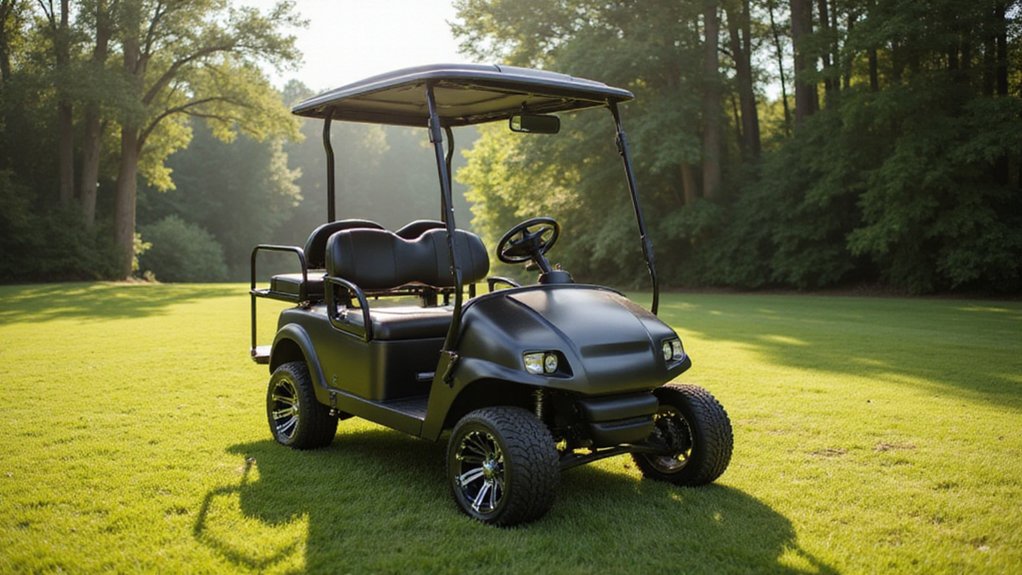
Wondering how to make your EZGO golf cart go faster? The good news is, there’s a mix of quick upgrades and tweaks that can boost your speed without sacrificing safety. From batteries to motors, small changes can add several miles per hour.
Keep reading, and you’ll learn the key steps to giving your cart the speed boost you want.
Inspect Your Cart First: Check Tires, Brakes, and Batteries
Start by inspecting your cart’s tires, brakes, and batteries thoroughly. Check each tire’s PSI—refer to the manufacturer’s specs—to ensure proper inflation. Underinflated tires increase rolling resistance, which wastes power and reduces speed. Look for uneven tread wear; this can indicate poor tire alignment, which also hampers performance. Examine the sidewalls for damage, debris, or flat spots that could create additional resistance. Upgrading to a high-performance light bar can improve nighttime visibility for safer driving at higher speeds. If your cart’s controller is outdated, upgrading to a top-rated controller can optimize power delivery for better acceleration and top speed.
Next, verify that your brakes are not dragging. Push the cart on level ground—if you feel resistance, your brakes likely need adjustment. Inspect the brake pads for wear, ensure the brake cables are properly tensioned, and confirm that the parking brake releases fully. Spongy or uneven braking can significantly decrease your cart’s efficiency and speed.
Finally, evaluate your battery’s health. Clean any corrosion from terminals and tighten all connections to prevent loose contacts that limit current flow. Test the pack under load rather than just at rest to identify weak batteries that could slow down acceleration. For heavy-duty hauling needs, consider utility bed accessories that can improve overall vehicle balance and performance. Addressing these mechanical and electrical issues first ensures you’re getting the maximum performance from any upgrades or speed parts you plan to add.

215/40R-12 (18.8" x 8.1" x 12")

Top-Class Tires: Arisun Cruze (215/35-12) is a DOT approved, 4-ply, Street Legal Golf Cart Tire. Featuring a nondirectional and water-channeling tread pattern, these golf cart tires perform well in both wet and dry conditions. In addition, the Arisun Cruze is turf safe and street legal (DOT approved), allowing you to enjoy a smooth and quiet ride on any surface.
Eliminate Voltage Sag With Lithium Batteries for Faster Acceleration
Lithium batteries significantly reduce voltage sag compared to lead-acid options. Lithium packs typically experience only a 3% to 5% voltage drop during hard climbs, while lead-acid batteries can dip by 15% to 20%. For a 36V system, this means lithium batteries maintain around 34V to 36V at 100A, ensuring the motor receives a steady, high voltage under load. In contrast, lead-acid batteries may fall near 30V, causing sluggish acceleration. When upgrading, choosing a model designed to work with high-quality lithium options can further improve overall system reliability.
This lower internal resistance allows your electric cart to respond faster during sudden power demands, giving you quicker acceleration and smoother performance. Additionally, healthy lithium packs recover voltage quickly after load, keeping your ride responsive. To preserve this advantage, ensure all connections are clean and tight, as loose terminals or undersized cables can increase internal resistance and diminish low-sag benefits. Pairing your lithium upgrade with a top LED light kit can further enhance your cart’s overall performance and visibility. For a complete upgrade, consider selecting a top golf cart model that already supports high-output lithium systems for optimal compatibility.
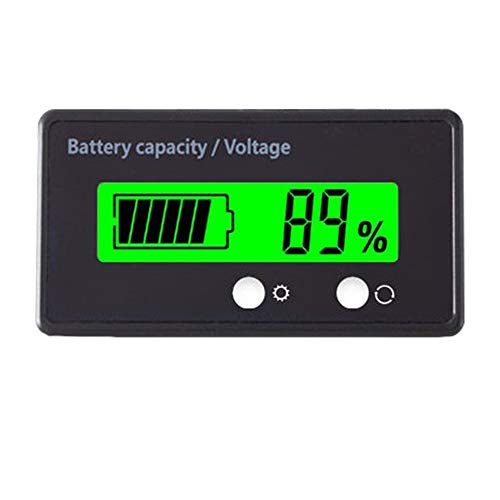
Universal battery capacity indicator voltage meter - wide voltage input range DC 12V-84V Lead-acid Batteries and 3S-26S Lithium Batteries: Ternary lithium batteries, polymer batteries, lithium-ion batteries, storage batteries.

APPLICABLE BATTERY: Compatible with: ①L03-L20 series lithium battery pack, ②L04-L24 series lithium-iron battery pack, ③ lead-acid battery of DC 12V, 24V, 36V, 48V, 60V, 72V, 84V. This battery monitor also supports custom mode in range of DC 7-100V.

HIGH EFFICIENCY: Supports 20V–60V input (compatible with 24V/36V/48V systems), stable 12V 20A (240W) output. Synchronous rectification technology, up to 95% conversion efficiency. 30%-50% power headroom is suggested for stable performance
Match Your Controller to Your Speed Goal (500a+ for 20 Mph)
A 500A+ controller can be matched to your 20 mph speed goal for your EZGO. While a 400A controller can push your cart to about 20–22 mph on a 48V setup, opting for a 500A+ controller isn’t overkill—it’s a torque-first upgrade that still delivers around 20 mph when properly paired with the right motor, wiring, and programming. Compatibility is key: 500A+ controllers work with PDS and series systems but may not be compatible with all regen-equipped carts. Keep in mind that amperage limitations do not automatically increase your top speed; instead, they boost launch torque and hill-climbing ability. You’ll need to reinforce wiring and install a heavy-duty solenoid to handle the higher current. Proper programming is essential to balance speed and torque, so don’t skip that step. Additionally, maintaining proper tire pressure can also affect overall performance and rolling resistance, supporting your speed and torque goals. Choosing the right cover for your EZGO can protect your upgraded electrical components from weather damage. Ultimately, matching your controller’s amperage to your drive system ensures you reach your 20 mph goal efficiently and reliably. A 400A controller like the Alltrax XCT-48400, for instance, delivers approximately 20% increase in torque compared to stock factory controllers. For similar performance gains, you might also consider a top extended roof for added utility while keeping your cart optimized.

【Replace】The golf cart Motor Controller replaces 73326G02, 73326-G02, 73326-G03, 73326G03, 73326-G04, 73326G04, 73326-G05, 73326G05, 73326-G06, 73326G06, 73326-G07, 73326G07, 609803.
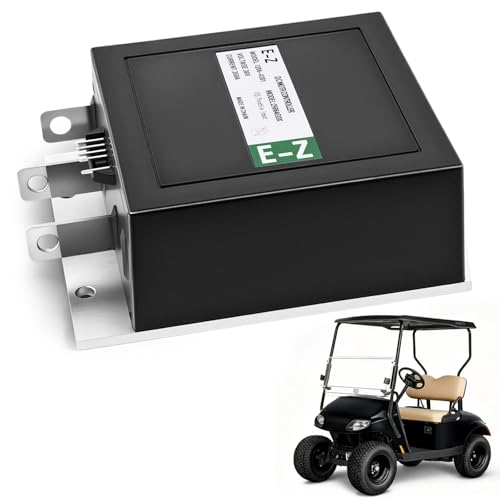
【COMPATIBILITY】Compatible with E-Z-GO EZGO TXT, Series ITS 1994-2019; Compatible with Medalist & TXT models only with Series Motor (3 Blades and 5 Pins) 1994-2019; Not a Separately Excited (Sep Ex) motor controller and will not work with shunt wound electric motors.

Golf cart electronic speed controller performance plug, can be plugged into the outside of the PDS controller to change the performance characteristics of golf carts
Swap to a Higher-Rpm Motor for a 5–10 Mph Gain
Swapping to a higher-RPM motor can give you a 5 to 10 mph increase in top speed. The key is selecting a motor rated for around 6,000 RPM maximum. This ensures you gain extra speed without risking overspeed damage or control issues.
Before installing, check your cart’s drive system—series, PDS, or DCS—as control logic varies between them. Compatibility typically involves matching the motor’s spline count and voltage, especially for direct-fit replacements on 1988–2009 TXT models. You don’t need to change gear ratios; a higher-RPM motor alone will boost top speed. For buyers comparing the best options, reviewing top speed golf cart models can help identify which motor upgrade matches your desired performance.
Keep in mind that on a 48V system, expect roughly 6-7 mph of speed gain. However, your stock controller might limit the motor’s RPM, reducing potential gains. Taller tires can increase speed further but will decrease torque, affecting acceleration and hill-climbing ability. Faster motors usually trade off low-end torque for higher top speeds, so choose one suited to your desired balance. For the best results, pair your motor with deep-cycle batteries that provide consistent power output under high load.

Golf cart ADC motor brush kit fits for 1997-2009 EZGO Electric TXT, 640, 835, 875, 881, 4/6-Passenger Shuttle, ST Sport, ST Sport II, ST Express.
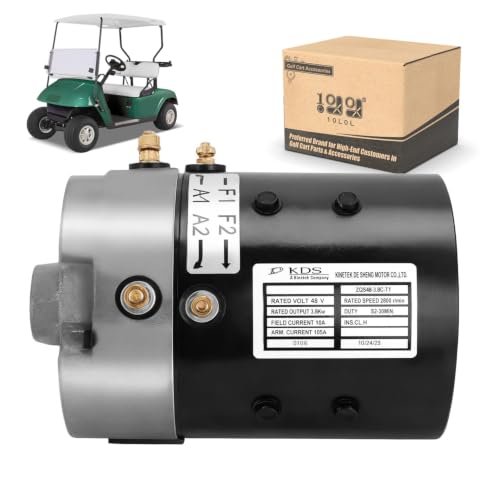
Golf Cart Advanced Nidec Motor works on EZGO TXT / Freedom 48-Volt 2010-Up.(Note: Not for use on PDS or DCS golf carts);
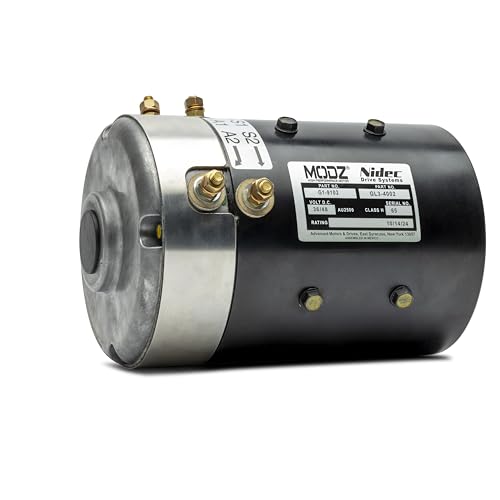
High Speed Performance: Increases top speed between 25-35% mph with the factory controller, compared to the stock motor
Pick Tires and Gears That Don’t Sacrifice Safety
Choosing the right tires and gears involves balancing speed and safety, and it’s entirely possible to do both. For tires, stick with mid-size options around 20 inches. These provide added speed without the significant torque loss seen with larger, 23-inch tires. Maintaining tire pressure at the manufacturer’s recommended level is critical for optimal grip and reliable braking. Proper wheel alignment ensures even tire wear and keeps your steering stable at higher speeds. When it comes to gears, an 8:1 ratio allows you to reach about 26 mph without drastically sacrificing low-end torque. Steer clear of 6:1 ratios unless you’re racing on flat terrain, as this extreme gearing can make hill starts sluggish and increase motor stress. Always verify load ratings and braking needs because larger tires and lower gear ratios reduce your torque margin. Don’t push beyond what your cart can safely handle to maintain control and safety at higher speeds. Using a DOT-approved windshield is also essential for clear visibility and legal road use at higher speeds. Practicing safe pedal control on inclines helps prevent sudden lurches or loss of traction. To further protect your cart, consider a Club Car golf cart cover for secure outdoor storage during upgrades.

Aggressive UTV style 0.45" deep tread pattern designed for various complex and harsh road surfaces. Providing exceptional performance in any terrain

Includes: (4) 20x10-10 All Terrain Tires, (4) 10"x7" Black Steel Wheels

THE RIGHT SIZE: 20x10-10 - All Terrain Tire fits 10 inch wheels; No Lift Kit Required on Most Golf Cart Applications