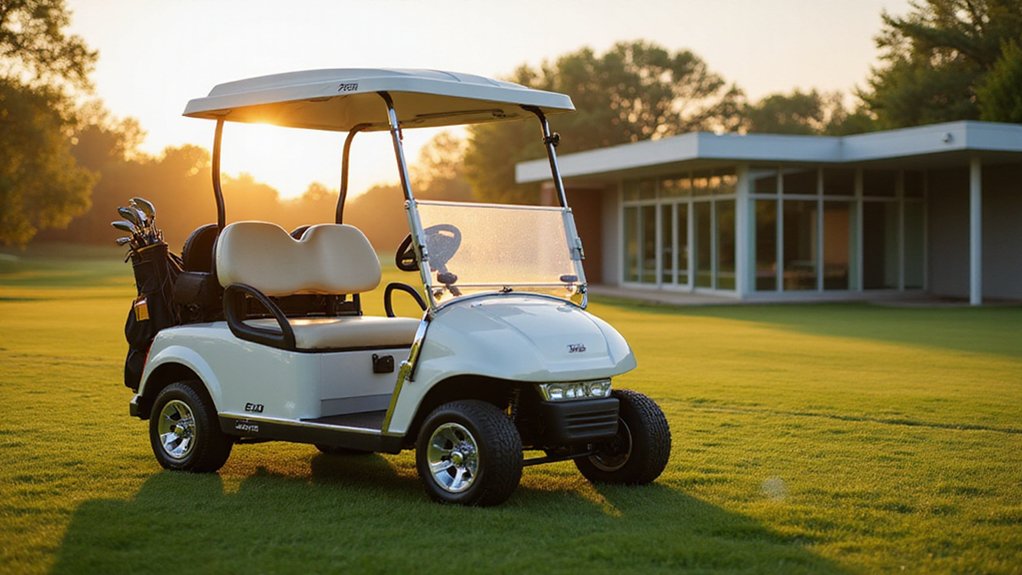
Thinking about buying a golf cart but feeling overwhelmed by choices? Knowing what will fit your needs—whether for neighborhood cruising, recreation, or hauling—can make all the difference.
Selecting the right power source, checking for safety features, and understanding your budget are key steps.
Keep reading to get a clear, straightforward guide to help you make a smart purchase.
Define Your Golf Cart’s Main Use: Neighborhood, Recreation, or Hauling
To determine your golf cart’s main use, consider whether you need it for neighborhood trips, recreation, or hauling. Each purpose requires distinct features.
For neighborhood use, your priority should be a compact size and smooth acceleration and braking for frequent trips on approved streets. Ensuring the cart is street-legal involves adding equipment like lights, signals, and mirrors to meet local ordinances. This focus helps you replace short car trips for errands, reducing your environmental impact. For example, street-legal carts often require lights, signals, and mirrors to comply with local rules. Selecting a model with Dot-Approved Windshields ensures visibility and legal compliance on public roads. Understanding the upfront cost difference between lithium and lead-acid batteries is also key, as lithium battery prices vary widely based on capacity and brand.
If you plan to use your golf cart for recreation, comfort and quiet operation are essential. Look for a model with seating for four to six passengers and easy entry points. A serene ride on designated paths enhances leisure time and keeps noise levels low, maintaining the peaceful environment around campgrounds or beaches.
Hauling tasks necessitate a rugged design with a cargo bed, a reinforced frame, and wider tires for better load capacity. Payload capacity takes precedence over speed, as heavier loads may slightly increase environmental impact. Matching your cart to your hauling needs prevents costly mismatches and ensures safety and performance.

[Premium Lighting Upgrade]:Upgrade your golf cart with this deluxe light kit, designed for 1996-2013 gas and electric carts This high-quality lighting kit is the perfect solution to enhance both the functionality and appearance of your golf cart Whether you're cruising around the neighborhood or hitting the course, premium lighting will ensure you stand out and stay safe
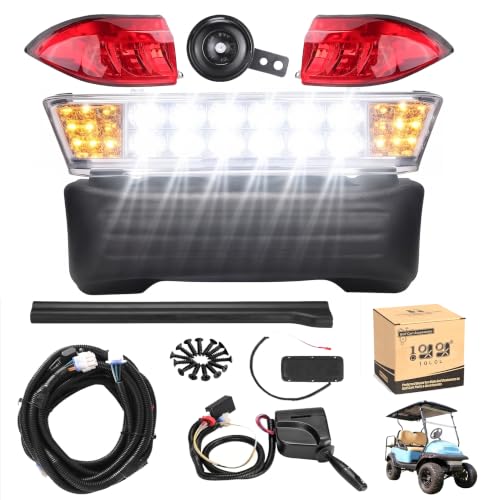
Club Car Precedent Fitment: Designed for 2004-2018 Club Car Precedent gas and electric golf carts, 12V street-legal light kit with headlight, taillight, turn signals, horn, brake pad, and hazard functions
Gas vs. Electric Golf Cart: Which Power Fits Your Routine?
Electric golf carts are ideal if you typically travel short distances, such as around your neighborhood or course. They operate quietly, produce zero emissions, and cost very little to run—about $0.02 to $0.04 per mile. The batteries generally last between five to ten years, but you’ll need to recharge overnight, which is convenient for daily use. Protecting the cart from weather and debris with a high-quality cover can also extend its lifespan and battery performance. Electric carts are perfect for routine trips where charging overnight fits your schedule and the trips are predictable. However, keep in mind that if your daily routine involves longer distances, steep hills, or heavy loads, a gas-powered cart might be more suitable due to its faster refueling and longer range per tank. When selecting a charger for your electric cart, it is important to choose a top-rated 8 volt battery charger that matches your battery system for optimal efficiency. In contrast, gas cart maintenance includes oil changes and other engine-related tasks that electric models largely avoid entirely.

【18 Amp Rapid Charger/Lead-Acid】EPOWREY 18 Amp 36 Volt golf carts battery charger for EZGO TXT - D style plug.Our chargers are designed for fast, convenient and safe charging in a variety of situations.

【15 Amp Rapid Charger/Lead-Acid】 EPOWREY 48 volt battery charger for Club Car golf carts with 3-pin round plug.This charger is designed as a one-piece plug, using a rubber cord that is more abrasion-resistant and heat-resistant than PVC cords, and have effective waterproofing advantage.

【48 Volt 15 Amp Golf Cart Charger】EPOWREY golf cart battery charger is designed to quickly and safely charge EZGO RXV and TXT golf cart batteries with 3-pin Triangular plug. Our golf cart battery charger utilize advanced smart charging technology with high output voltage and current accuracy, good stability and up to 90% efficiency to ensure efficient and reliable power for your golf cart
Inspect a Used Golf Cart’s Tires, Brakes, and Frame Like a Pro
Inspecting a used golf cart’s tires, brakes, and frame involves several critical steps. Start by examining all four tires. Check the tread depth; shallow tread indicates the tires need replacing. Look for uneven wear patterns, which can signal alignment problems. Cracked sidewalls suggest dry rot and should be a red flag. Ensure the tire sizes and brands match; mismatched tires often mean tire rotation was skipped or the cart was poorly maintained. Wear across the center of the tread points to overinflation, while wear on the shoulders suggests underinflation.
Next, test the brakes at moderate to high speed. The cart should stop straight without pulling to one side. A spongy brake pedal often indicates worn brake components, so check the brake fluid levels and inspect for corrosion on backing plates. Listen carefully for grinding or squealing sounds, which are signs that brake shoes are worn out and need attention. If you regularly need to haul the cart, consider investing in one of the best golf cart trailers to ensure safe transport. For added protection from debris and weather during transport, consider a Club Car windshield to shield the driver. Additionally, if you use a portable heater in cooler weather, it helps to review top cup holder designs for safely securing a propane tank.
Finally, crawl under the cart to inspect the frame. Look for flaking or scaly rust on the frame rails, as this can compromise structural integrity. Check welds for any cracks, and examine the battery tray for acid damage or corrosion. Push down on each corner of the cart; excessive bouncing can mean shocks are worn and need replacing. Finally, visually inspect the frame for bends or dents, and listen for any clunking noises when driving over bumps, indicating potential frame or suspension issues.

PRE-MOUNTED CONVENIENCE: All tire and wheel assemblies are mounted and aired up prior to shipping, allowing quick and easy installation on golf carts without additional preparation or tools, saving time during setup.

Set of 4: The 205/50-10 golf cart wheels feature a 60% carbon black compound for wear, corrosion, and aging resistance. The aluminum alloy forged wheels with classic five-spoke design support up to 675 lbs/306 kg for smooth and quiet rides

CONTAINS: 3 tire spoons, 3 rim protectors, 1 valve tool, 10 valve cores, 12 valve caps and a storage bag. All parts neatly packed for easy storage, portability, quick access when needed
Golf Cart Street-Legal Checklist: Lights, Seat Belts, VIN, and Speed Limits
To make your golf cart street-legal, it must be equipped with specific safety features and meet certain speed and identification requirements. You need functioning headlamps, tail lamps, stop lamps, turn signals, and reflectors. A windshield is also necessary for safety, especially if you’ll be driving on public roads. Seat belts are mandatory for every seat—lap belts are acceptable, but lap-and-shoulder belts provide better safety. Your cart must display a 17-character Vehicle Identification Number (VIN) to identify it properly. Additionally, the vehicle’s top speed should be between 20 and 25 miles per hour; exceeding this range can make it non-compliant. You cannot drive the cart on roads where the posted speed limit exceeds 35 mph. Always verify your state’s license requirements and any special permits needed before taking your golf cart onto public streets. Local regulations may require extra lighting, stricter seat belt rules, or other modifications, so ensure your vehicle complies with all applicable registration and safety rules. Upgrading the audio system can enhance the driving experience, and selecting a top-rated subwoofer ensures better sound quality on the road. For additional protection, you can also invest in a custom-fit cover to shield your cart when parked outdoors. Understanding Club Car golf cart prices and resale factors can help you assess the value of a used cart you are considering for street-legal modifications.

[Fit Models]: Deluxe golf cart led light bar kit fits gas&electric EZGO TXT golf carts 1996-2013. It not only enhances visibility with superior light output at night but also significantly improves the overall functionality and style of your golf cart

[Suitable For]: Deluxe golf cart Led light kit compatible with Club Car Precedent 2004-up electric golf carts (Note:If your golf cart is a gas model, please purchase a 12-pin to 9-pin adapter yourself)

[Compatibility & Voltage]: Golf cart LED Headlight Tail Light Kit Fits 1993-Up Club Car DS Gas & Electric models. Requires 12V operation (voltage reducer needed for 36V/48V carts)
Match the Golf Cart’s Paperwork, Title, and Service History
To match the golf cart’s paperwork, title, and service history, start by reviewing the ownership documents. For standard carts, a bill of sale often suffices, but for LSVs—low-speed vehicles—a clear title is essential. Check the serial number on the cart and cross-reference it with every document; any mismatch indicates a red flag. If the cart was financed previously, ensure there is either a lease agreement or a lien release in the file. Next, examine the service history. Look for records of battery replacements, brake work, and major repairs. Consistent maintenance documentation shows how the cart was used and stored, which helps you identify potential hidden issues. Look for signs of battery water levels being checked and recharging habits, as frequent deep discharges can shorten lifespan. Additionally, ensure the cart meets Florida road rules for LSVs, as a title is required for legal on-road operation. Collect all relevant paperwork, including the bill of sale, purchase receipt, and any prior registration records, to establish a complete ownership history. If the cart features a lithium battery, confirm it is one of the top lithium golf carts recommended for quality and performance to ensure long-lasting reliability.
Build a Real Golf Cart Budget That Covers Batteries, Accessories, and Taxes
To build a budget that covers your golf cart purchase, you need to itemize costs for batteries, accessories, taxes, and fees separately. Start with battery options. Lead-acid batteries typically cost between $700 and $1,700 installed, while lithium batteries range from $1,800 to $4,500. Your choice will influence ongoing costs and maintenance, so set aside funds accordingly. For those prioritizing carrying golf bags, consider models that include four with bag holders to avoid buying an extra rack. Next, plan for accessories. Don’t overlook this category—basic accessories start around $75 to $150, but common upgrades like mirrors, phone mounts, or seat covers can add $200 to $400. Consider these as separate expenses, ensuring your budget includes enough room for these upgrades. For EZGO owners, investing in a quality battery charger can extend battery life and reduce long-term replacement costs. Finally, set aside funds for taxes, registration, dealer fees, and potential maintenance. Sales tax can significantly increase your initial expenditure, so include it in your overall budget. Adding a contingency buffer for future repairs or replacements will help prevent surprises, giving you a clear ceiling that accounts for all expenses. For brands like Racka, researching the build quality and origins can help you anticipate long-term maintenance costs.

48V 15A GOLF CART CHARGER: Built for Yamaha G29 Drive & Drive 2 golf cart batteries. FirstPower golf cart charger features upgraded 3-Pin Leaf plug for instant plug-and-charge simplicity, are perfectly compatible with the golf cart. Optimized for 48V lead-acid systems (excludes lithium), its adaptive charging algorithm prevents sulfation. The ultimate 48V battery charger replacement for fast, reliable power delivery.

【Upgraded Battery Charger】AUTOUTLET 8 volt battery charger extends the charging cable, adds a carrying handle to make it more convenience to use; and adopts the cable clamps of thickened material which can hold the battery terminals more firmly

【Compatible with EZGO/Yamaha/Club Car 36V 18A Fast Charger】36 Volt golf cart battery charger comes with a Crowfoot plug, designed for 36 volt EZGO/Yamaha/Club Car golf carts, small in size and light in weight, made of lightweight die-cast aluminum with heat dissipation properties, durable and only weighing 4.8 pounds, you can carry it with you anywhere you want to charge.36v golf cart charger is fully potted inside to provide IP67 protection level, with excellent waterproof and dustproof effect.