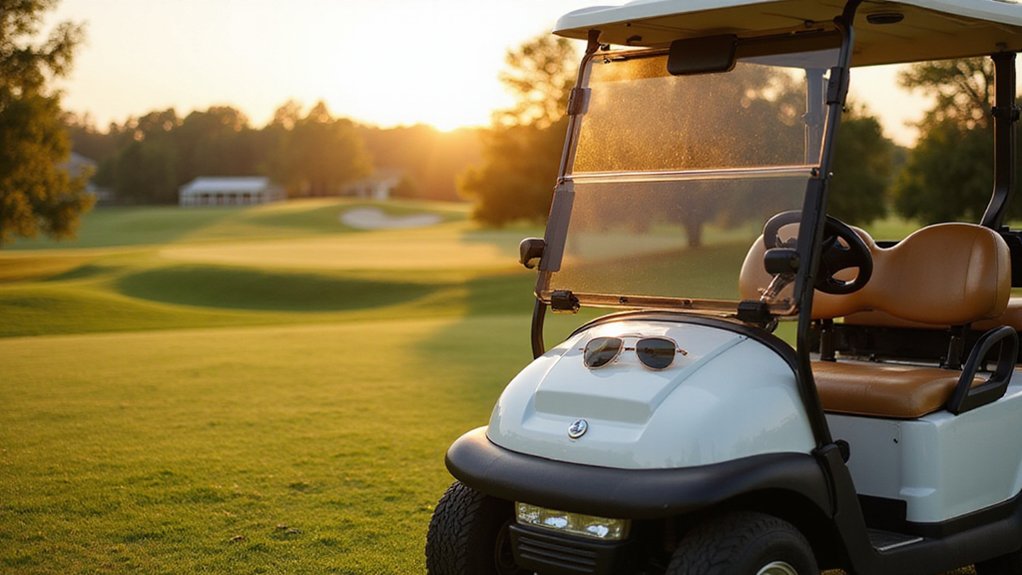
Wondering if you can lease a golf cart instead of buying one? The good news is yes—you can, and it’s often a smart move if you only need a cart for a few months.
Most lease deals range from $100 to $300 a month and often include maintenance and insurance.
Keep reading to find out which leasing option suits your needs best.
Golf Cart Lease vs. Rent vs. Buy: Which Saves You More?
Renting a golf cart is your most affordable option for short-term needs, such as a vacation or weekend event. Daily rates typically range from $35 to $225, making it easy to budget for a few days of use. If you need the cart for several months, leasing often provides better value. Monthly lease payments usually fall between $100 and $300, and lease incentives can reduce your initial costs. Unlike rental agreements, leasing allows you to customize with accessories without worrying about strict return policies. When evaluating quality and performance, leasing can still offer access to top-tier models reviewed in guides like Top Golf Carts, and many of these carts feature high-torque motors that provide reliable hill-climbing ability. Buying a golf cart becomes the best option for heavy, year-round use. The upfront cost is substantial, usually between $5,000 and $18,000, but this eliminates recurring payments. Renting is suitable for short periods like weekends, leasing for a season, and buying for consistent, daily use. Your decision should be based on how often you plan to use the golf cart—if it’s frequent and ongoing, making a purchase will save you more money in the long run. For those considering a purchase, inspecting dealer versus private options can guide you to a fair price and better warranty coverage.

【2-in-1 Versatility】 The Lixoomer dog seat belt harness is both a secure golf cart safety tether AND a tangle-free walking leash. It converts in seconds from cart security to walking mode, offering the ultimate all-in-one solution for your game and daily walks.

Package Contents: You will receive 2 pieces of golf keychains with golf cart, allowing you to share with a friend or use them as stylish accessories for different occasions. Be cautious of the risk of suffocation from small parts.

MULTI-STORAGE: Our golf cart organizer tray offers various storage options for organizing all your items neatly; Possess 8 storage areas: 2 side insulated cup holders, 3 mesh pockets, 2 square compartments, 1 cooling compartment, it is easy to hold your balls, tees, sunglasses, cell phone, drinks (Note: Not compatible for the golf cart with windshield)
What Are the 3 Main Golf Cart Lease Structures?
There are three main golf cart lease structures, each suited to different needs and preferences.
An operating lease is the most straightforward option, where the lessor maintains ownership and bears residual risk. You benefit from lower payments and greater lease flexibility, allowing you to return, renew, or buy the cart at fair market value when the lease ends. This structure is ideal if you prefer shorter-term commitments or want to avoid the hassle of ownership. However, some lessors now pair these leases with high-performance lithium batteries to reduce weight and improve range. Leasing may also simplify compliance with state and community rules regarding registration. For those considering upgrades, a light bar for your golf cart is a popular accessory that can enhance nighttime visibility and safety.
A fair market value (FMV) lease is similar to an operating lease but connects your buyout option to the cart’s market value at the end of the lease term. Payments tend to be lower, but the final purchase cost can fluctuate based on market conditions. This structure suits those who want lower monthly expenses but are comfortable with potential variability in the buyout price.
The $1 buyout lease functions more like a financing arrangement. You pay higher monthly payments since you are amortizing the full cost of the cart over the lease term. At the end of the lease, you can acquire ownership by paying a nominal fee—usually just one dollar. This option is best if eventual ownership is your primary goal and you are willing to accept higher monthly payments for the benefit of locking in ownership at the end.
How Much Does a Golf Cart Lease Really Cost?
Monthly lease costs for a standard golf cart range from $150 to $300, but the actual price depends heavily on factors like cart type, lease duration, and location. For basic 2-passenger models, expect to pay around $75 to $200 per month. Upgrading to larger or lithium-powered models, especially in tourist-heavy areas, can push costs into $500 or even $700 monthly. High-demand locations tend to have higher rates due to increased demand. Additional upfront fees, such as $150 to $250 for delivery, plus taxes and minimum rental charges, can add to the total cost. If you are handy, you might consider DIY speed upgrades to improve performance on a leased cart. When signing your lease, consider renewal options because longer commitments might lower your monthly payments to about $120 to $160. Always account for extra features and accessories before finalizing the price. For those prioritizing aesthetic upgrades, Yamaha seat covers offer a practical way to enhance comfort and style on leased carts. Investing in a top cover can also protect your leased cart from weather damage and extend its lifespan.

Universal Size Design: 50'' (L) x 32'' (H), our upgraded golf cart seat covers are designed to fit most models including EZGO, Yamaha, Club Car, Icon, and Extra. (Please note: Due to manual measurement, there may be an error of 1 in. We recommend measuring your golf cart seat before purchase to ensure a proper fit.)

Protect Your Golf Cart Seat Helps protect your golf cart bench seat from dust, dirt, scratches, and everyday wear. Keeps seats clean and well-maintained for daily use.

Universal Fit: Measuring 51(L) x 30(H) inches, this Golf Cart Seat Covers fits all 2-person golf cart seats. Please measure your seat before purchasing to ensure a perfect fit. (Note: slight size variations may occur due to manual measurements.)
What’s Included in a Golf Cart Lease Package?
A golf cart lease package generally includes four main components: the cart itself, charging equipment, maintenance and repairs, and insurance or liability coverage. The cart is delivered to you in working condition for the duration of your lease, with an option to buy it later if you choose. Charging equipment such as chargers and batteries arrives with your cart, tailored to your specific power needs and usage. Maintenance coverage typically includes routine checks like battery testing and basic repairs, though misuse or damage caused by neglect is not covered. For example, a lessor may still expect you to follow a safe replacement procedure to prevent voiding the warranty. Insurance can be provided by the lessor as liability coverage or by you through a personal policy that meets specified limits. Understanding how the gas engine and drive train operate can help you better assess maintenance needs and identify normal wear. Some lease packages also require the windshield to meet DOT-approved safety standards to ensure road legality.
You may also negotiate for additional features such as golf cart accessories, including storage compartments, lighting, or improved seating. When your lease term concludes, you have the option to renew the lease under similar or adjusted terms. Delivery, support services, and usage guidelines are usually part of the package, helping you distinguish between normal wear and potential chargeable damages.

Sturdy & Long-Lasting: Our golf cart storage basket is crafted from sturdy and wearproof 1680D Oxford fabric, designed to withstand various weather conditions and frequent use. The interior is reinforced with PP support panels to prevent sagging or deformation, ensuring stability and maintaining its shape over time. Additionally, the golf cart storage basket features a foldable and portable design, making it easy to install, store, and transport without taking up excessive space

KEEP ORGANIZED ON GOLF CART- with this golf push cart organizer, you can quickly and easily find golf balls, scorecards, pencils and other accessories. A must-have accessory for golf club cart / golf course cart.

Wide Application - This golf cart cargo net is suitable for various golf cart models, for Yamaha EZGO, Club Car,and more. Regardless of the type of golf cart you own, this product can be easily installed and provides an excellent storage solution. Whether you're using it for shopping, outings, hunting, or picnics, it's the best choice.
Who Actually Leases Golf Carts: and Why?
Golf carts are typically leased by golf course operators, resorts, and event organizers. Golf course operators lease carts to avoid large upfront investments, maintain cash flow, and adjust fleet size based on seasonal demand. For optimal performance and reduced maintenance costs, selecting best golf cart tires ensures safety and efficiency across varied terrains. Ensuring clear visibility during operation, operators often choose windshield options that provide durability and UV protection for their leased fleets. Resorts and hotels often lease branded carts to enhance guest experience with personalization options, supporting a more luxurious or cohesive aesthetic. Master-planned communities lease carts for predictable monthly costs and flexibility as community needs evolve. Event organizers lease carts for short-term use, aligning with specific tournament or festival schedules. Commercial operators lease to convert capital expenses into manageable operating costs, helping protect cash flow. Additionally, anyone who values the option to transfer a lease or exit the agreement easily benefits from leasing arrangements that include this flexibility. For those considering ownership, understanding the lithium vs lead acid battery differences is crucial, as lithium batteries offer longer lifespan and lower running costs compared to lead acid.
What Happens When Your Golf Cart Lease Ends?
When your golf cart lease ends, you must return the vehicle by the specified date and time, usually to the original pickup location. Ensure the cart is in the same condition as when you received it, aside from normal wear and tear. Proper maintenance is essential, as a final inspection will assess for any damage beyond normal use. Missing keys or accessories can result in replacement charges, and if you return the cart late, it often converts to another full rental day, increasing your costs. Understanding golf cart prices before leasing can help you evaluate whether buying is a better long-term value than continuing to lease. For instance, investing in a 24 volt battery charger ensures you maintain the battery properly if you decide to purchase the cart. Since ownership paperwork varies by state, knowing local title requirements can clarify what documentation you need if you choose to buy out the lease.
After returning the cart, you can decide whether to renew the lease, buy the vehicle, or walk away. Lease renewal options allow you to extend the current agreement or sign a new one. If you’re interested in owning the cart, check your contract for buyout rights, which may require advance notice. To avoid disputes over damages or fees, it’s crucial to maintain clear documentation of the cart’s condition upon return.
Where to Find the Best Golf Cart Lease Deals
Seasonal providers like Madgik Fleet offer the best deals, especially since their leases include service and cleaning, making them ideal for short-term needs. If you’re considering a longer commitment, explore rent-to-own plans from Lone Star Golf Cars, which require only a 10% down payment and no credit check. Negotiating your lease is crucial—ask dealers if they will match competitor rates or throw in maintenance packages to get the best value. Timing also matters; the most attractive deals often pop up during model-year clearance periods. Start your search with authorized dealers for reliability, then consider local multi-service providers for flexibility and potentially better terms. Before signing, confirm whether the lease covers basic upkeep like changing a flat tire, since some short-term agreements leave that responsibility to you. For those leasing electric carts, a reliable 12 volt battery charger ensures consistent performance and extends battery life between charges.

[COMPLETE REFLECTOR KIT] - Includes 6 total pieces: 2 amber side reflectors and 4 red rear reflectors—perfect golf cart reflectors for boosting visibility on ATVs, trailers, RVs, and more.

EXTRA CARGO SPACE: Increase Your Storage Space and Make Room for All Your Cargo with this Full Aluminum Cargo Box.