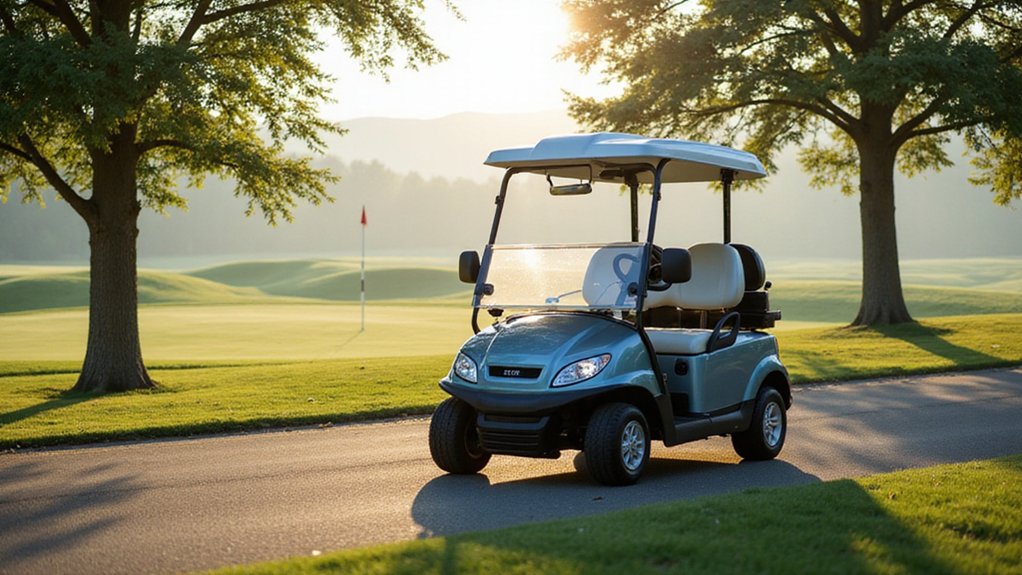
Wondering whether golf carts are electric or gas-powered? The answer depends on what you need — electric carts are quiet and eco-friendly.
While gas models often offer more range and power.
Your choice comes down to how far you plan to go, the terrain, and your maintenance preferences.
Keep reading to find out which type suits your lifestyle best.
Electric vs. Gas Golf Carts: The Core Difference
The main difference between electric and gas golf carts lies in their power source. Electric carts run on batteries, typically 36V or 48V systems, which you recharge regularly. Gas carts, on the other hand, rely on gasoline stored in a tank, fueled at gas stations or with cans. This difference affects how you operate and maintain each type.
Electric carts are simpler to use—just recharge the batteries and go. Gas carts require fueling, which can be messier and noisier, but they can be refilled quickly at a gas station. Operating costs usually favor electric carts since electricity is cheaper than gas, and electric motors have fewer moving parts, meaning less maintenance. Gas engines tend to be louder, produce emissions, and need regular engine checks, oil changes, and repairs. In contrast, electric carts are nearly silent, produce no emissions during use, and are better for environmentally conscious settings. Your choice affects everything from maintenance routines to overall noise levels and environmental impact. Additionally, whether you choose electric or gas, your cart may need to meet state and community rules regarding registration and use. Regardless of power source, protecting your investment is crucial, and the best cover for golf cart can shield either type from weather damage. For electric carts, the battery lifespan can be significantly shortened by habits like deep discharging or improper charging, so knowing the warning signs of a worn-out battery is key to avoiding unexpected failures.

[10 Years Lifetime and 5000+ Deep Cycles] OGRPHY 48 volt lithium battery is made of new grade A cells with UL certification. 10 years lifetime and 5000+ deep cycles is not just a slogan under instructions on the product manual.

Born for 48V Golf Cart: Special designed for 48v golf cart industry, OGRPHY 48v lithium golf cart battery is compatible with golf cart controllers of all major brands on the market. Built in premium grade A prismatic LiFePO4 cells(UL certified), this 48v battery has better durability & safety. Over 5kWh capacity equals 8pcs 12V 100AH lead acid batteries. Max 10.24kW continuous power & peak 51.2kW power (50% more powerful than standard lithium batteries) to conquer hills/rough terrain effortlessly.

Get Rid of Lead Acid Batteries Now: Revolutionize your golf cart with Lithova 48V golf cart lithium conversion kit! This 48V lithium battery directly replaces 6-8V 50Ah heavy lead-acid batteries in one simple installation. Enjoy 74% weight reduction, 60% smaller size, and extended 25-mile range (effortless 3-5 Rounds of 18-hole courses). Lasts 8x longer than lead-acid batteries, Up to 15000 deep cycles ensure maintenance-free performance and long-term reliability.
How Electric Golf Carts Work and Their Range
Electric golf carts typically operate using a rechargeable battery pack, most commonly lead-acid or lithium-ion. This battery supplies direct current to a speed controller, which then powers an electric motor to drive the wheels. When you press the accelerator, the controller adjusts the flow of current, allowing for smooth and responsive speed control. Proper battery maintenance is essential: lead-acid packs need regular checks of water levels and cleanings, while lithium-ion batteries require minimal upkeep. Your vehicle’s range largely depends on the battery’s amp-hour capacity, the terrain you drive on, and the load you carry. Standard lead-acid batteries usually offer a range of 15 to 30 miles per charge, whereas lithium-ion setups can often push 40 to 60 miles. Charging typically requires a dedicated outlet and 8 to 12 hours for a full recharge. During stop-and-go driving, regenerative braking can recover some energy and slightly extend your range. Maintaining consistent charging habits helps keep your batteries healthy and your cart reliable over time. To verify your charger’s performance, you can test the charger safely using a voltmeter and basic safety precautions. To operate on public roads, these carts must meet additional equipment and speed rules that classify them as low-speed vehicles (LSVs).
How Gas Golf Carts Work and Why Range Matters
Gas golf carts rely on a small internal combustion engine, typically a four-stroke, to turn the wheels. When you press the accelerator, it activates a starter-generator that ignites the engine. A spark plug ignites an air-fuel mixture, pushing a piston to drive the crankshaft. Unlike electric carts, there is a brief delay before power hits, so acceleration isn’t instant. The top speed of a gas golf cart is typically limited to around 12 to 14 mph by factory governors, though modifications can increase it.
Range is a key factor because gas models can travel between 75 and 240 miles per tank. Refueling takes just minutes, making them ideal for all-day use without frequent charging. The actual distance depends on terrain, load, and driving habits. Gas carts perform well when access to charging stations is limited or unavailable. However, they require more maintenance, including oil changes, air filter replacements, and carburetor servicing, unlike electric models that need less upkeep. For those considering an electric switch, investing in a 48 volt battery charger is essential for keeping the batteries at peak performance. How far you go on a tank is influenced by how you drive and regular tune-ups. For owners who need to haul tools or cargo, adding a utility bed for golf carts can expand the cart’s versatility.
Electric vs. Gas: Operating Cost Per Mile
Electric golf carts cost significantly less to operate per mile than gas-powered models. You’ll pay about $0.02 to $0.04 per mile on electricity, thanks to advanced Battery technology and widespread Charging infrastructure. Gas carts, however, typically require $0.08 to $0.15 per mile for fuel—making them roughly three to four times more expensive to run. Over the course of a year, driving 3,000 miles, electric carts can save you around $255, paying approximately $90 compared to $345 for gas models. Additionally, maintenance costs favor electric carts, which need fewer oil changes and tune-ups—annual expenses range from $200 to $400 for gas carts, while electric models generally incur lower ongoing costs. Battery replacements every 4 to 6 years, costing between $600 and $1,200, still leave electric carts as the more cost-effective choice in the long run. For those focused on performance and value, electric models consistently outperform gas carts in overall efficiency. You can also enhance your electric cart’s protection with a top golf cart cover that includes doors for added convenience and weather resistance. When evaluating long-term ownership, reviewers often highlight electric carts as offering superior quality and performance compared to gas alternatives.

Extend Battery Life Before Replacing: Battery Renew Solution breaks down harmful lead sulfate buildup on battery plates and restores charging capacity in flooded lead acid batteries. Stop buying new batteries and bring your existing ones back to life. Can take up to 10 days of regular charging for full effect

【15 Amp Rapid Charger/Lead-Acid】 EPOWREY 48 volt battery charger for Club Car golf carts with 3-pin round plug.This charger is designed as a one-piece plug, using a rubber cord that is more abrasion-resistant and heat-resistant than PVC cords, and have effective waterproofing advantage.

DC 48V 36V to 12V Converter: Input Voltage Range: DC 18V-60V(18V/20V/24V/36V/48V);Output voltage: 12V; Output current: 20A; Output power: 240W
Best Use Cases: Terrain, Towing, and Trip Length
Terrain is the key factor when choosing your cart type. Flat, paved routes allow standard electric models to operate at peak efficiency and deliver the best range. Conversely, hilly, gravel, or sandy terrain require more power, which can significantly reduce towing capacity by 25 to 30 percent. Gas-powered carts handle rougher surfaces more consistently because they can supply the extra power needed without compromising performance. To maximize an electric cart’s performance on those smooth routes, choosing high-quality 6-volt batteries is essential for maintaining consistent voltage and longer range. A top golf cart battery charger designed for 36-volt systems can further optimize charging efficiency and lifespan. For those who frequently operate on varied or rough terrain, choosing a lifted golf cart can improve ground clearance and stability.
Your terrain choice influences your decision significantly; rough ground justifies lowering the rated towing capacity to prevent strain on the cart. Electric carts are ideal for smooth surfaces and shorter trips, offering 30 to 60 miles per charge. However, on more challenging terrains, a gas cart with a larger tank providing 100 to 180 miles per tank is better suited for longer outings and heavier loads. For work sites or mixed terrain use, utility carts capable of handling more than 1,200 pounds are available, but for hill climbing and towing, gas carts tend to be more reliable.

OVERCHARGE PROTECTION: Your lead acid battery can be charged for an extra 1200 cycles compared with other chargers, thanks to the smart 5-stage charging. When the battery is fully charged, our charger will automatically cut off the power supply to prevent overcharging and extend the battery life. Plug and play, no worries

【18 Amp Rapid Charger/Lead-Acid】EPOWREY 18 Amp 36 Volt golf carts battery charger for EZGO TXT - D style plug.Our chargers are designed for fast, convenient and safe charging in a variety of situations.

【Compatible with EZGO/Yamaha/Club Car 36V 18A Fast Charger】36 Volt golf cart battery charger comes with a Crowfoot plug, designed for 36 volt EZGO/Yamaha/Club Car golf carts, small in size and light in weight, made of lightweight die-cast aluminum with heat dissipation properties, durable and only weighing 4.8 pounds, you can carry it with you anywhere you want to charge.36v golf cart charger is fully potted inside to provide IP67 protection level, with excellent waterproof and dustproof effect.
Long-Term Costs: Battery Replacement vs. Engine Maintenance
Battery replacement costs are the largest long-term expense for an electric golf cart. Expect to pay between $800 for basic lead-acid batteries and over $4,000 for premium lithium-ion packs. Your choice of battery chemistry greatly influences your total costs over time. Flooded lead-acid batteries require regular maintenance, such as watering and terminal cleaning, to ensure they reach their typical lifespan of 2 to 6 years. Neglecting this upkeep can significantly shorten their lifespan and increase replacement frequency. The purchase price can vary based on factors like battery chemistry, voltage, and brand. Switching to lithium-ion batteries eliminates the need for routine maintenance, though the upfront cost is higher. Over the long run, lithium batteries tend to be more economical because their longer cycle life reduces how often you need to replace them. For instance, understanding how many charge cycles a lithium pack can handle is crucial for predicting its lifespan and overall value. Meanwhile, a gas-powered cart does not require battery replacements but demands ongoing engine maintenance, including oil changes, spark plug replacements, and filter changes. This maintenance routine is continuous but spreads out over time, and the costs gradually accumulate. Ultimately, lithium electric carts often prove more cost-effective over the years due to fewer replacement needs and longer-lasting batteries compared to gas engines’ steady maintenance requirements. For example, specific manufacturers like Bintelli produce carts with distinct battery options that influence these long-term cost calculations.

【ULTRA HIGH PERFORMANCE - CLASS A BATTERY】: LOSSIGY 36V100AH Lithium Battery Golf Cart is made of class A chip, equipped with 43.8V25A smart charger, 9 in1 battery monitor, built-in 200A BMS, 3840W Powerful, 1000A peak current. IP65 waterproof. Preferred item for golf cars, trolling motors.

Grade A Cells: OGRPHY lithium batteries are all made of grade A lifepo4 battery cells with UL certification. Higher energy density, more stable performance, safer and longer lifetime.

【Grade-A cells】XRH 48V 105AH Golf Cart lithium battery Built with high-performance Grade-A cells that support a 3C discharge rate, ensuring reliable, high-current output for demanding applications.
Noise, Emissions, and Your Neighbors: A Practical Comparison
Electric carts operate at 50 to 60 decibels, comparable to a normal conversation, making them much quieter than gas models, which range from 70 to 90 decibels—about the noise level of a lawn mower. This significant difference can impact your daily experience and your neighbors’ comfort, especially during early mornings or late evenings when noise is more noticeable. Electric carts produce zero tailpipe emissions, reducing your environmental impact to roughly a quarter of what a gas cart emits. They also eliminate exhaust fumes in enclosed spaces like garages or on community paths, resulting in cleaner and calmer rides. Gas carts, even when well maintained, can generate neighbor complaints due to excessive noise and odors. If peace and air quality matter in shared spaces, electric carts are the better choice, offering quiet operation and zero emissions. For those seeking to upgrade performance, choosing a top electric motor can further enhance the quiet and efficient operation of your cart. However, even the quietest electric cart must comply with local rules, such as whether sidewalk riding is legally permitted in your area.
Electric vs. Gas: Which Has Better Resale Value?
Gas golf carts generally retain a slightly higher resale value than older electric models with lead-acid batteries, typically holding about 50–55% of their original price after five years. However, electric carts equipped with lithium-ion batteries can surpass gas models in resale value, sometimes reaching up to $12,000 for well-maintained units. The key factor is battery health; poor condition can decrease the resale price by $1,000 or more. Buyers will also consider the upfront replacement costs for lead-acid batteries, which can range from $900 to $3,500. Electric carts with reliable charging infrastructure and lithium-ion batteries tend to attract more demand and command higher resale prices, especially when their batteries are well cared for.
How to Choose: Your Golf Cart Decision Guide
Choosing between a gas and electric golf cart depends on your primary needs and usage patterns. Electric carts are ideal for short, flat trips within neighborhoods or noise-sensitive areas because they operate quietly and require overnight charging. They offer lower annual maintenance costs, typically around $150 to $200, but require battery replacements every 5 to 7 years. Gas-powered carts are better suited for steep terrains, heavy hauling, or long-distance travel, providing over 100 miles per tank with quick refueling times.
Charging access is a critical factor: electric carts need a dedicated power outlet for overnight charging, while gas models can refuel in minutes. Maintenance costs for gas carts are higher, averaging between $400 and $500 per year due to more frequent upkeep. When choosing, consider color options and warranty coverage from your dealer. Many brands provide extensive customization choices, and electric models often come with longer warranties. Ultimately, your decision hinges on balancing your terrain, range requirements, and the amount of ongoing maintenance you’re willing to handle.


APPLICATION --- The battery testers can be used for testing battery voltage and capacity for electric motorcycle, motorcycle,golf cart, automotive , car, marine, RV, boat, etc.
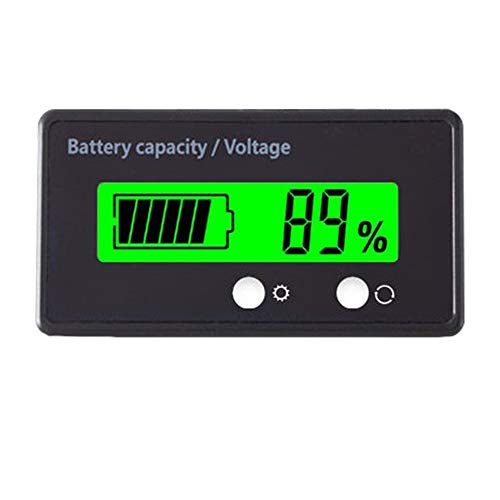
Universal battery capacity indicator voltage meter - wide voltage input range DC 12V-84V Lead-acid Batteries and 3S-26S Lithium Batteries: Ternary lithium batteries, polymer batteries, lithium-ion batteries, storage batteries.