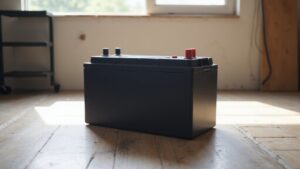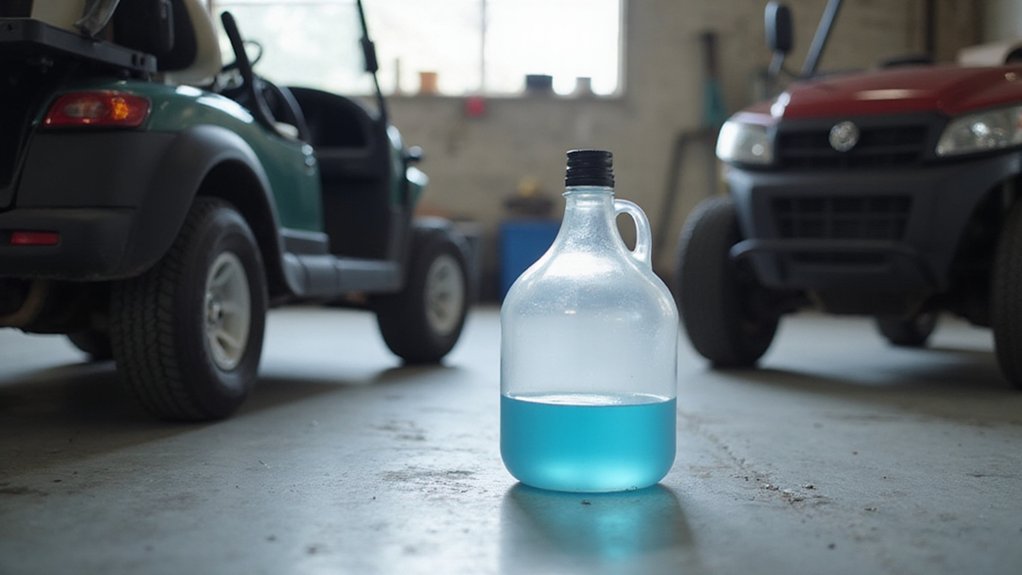
Wondering how to add water to your golf cart batteries safely? Keeping your batteries properly topped off with the right water level is key to their longevity and performance.
If you follow a few simple steps, you can maintain healthy batteries and avoid costly damage. The full process is straightforward, and the details are important for making it work smoothly.
Why Distilled Water Is the Only Safe Choice for Golf Cart Batteries
Using distilled water is essential for maintaining the health of your flooded lead-acid golf cart battery. It contains no dissolved minerals or salts, which means it won’t introduce impurities like calcium, magnesium, or chlorine into the electrolyte. Tap water, well water, or spring water often carry these contaminants, which can build up on the battery plates over time. This buildup reduces the battery’s capacity and shortens its lifespan. Choosing the right top hub caps can also help protect your battery compartment from debris and moisture. For owners who frequently use their carts for hauling, maintaining a clean and secure battery area is just as critical as choosing a model with a dump bed option for heavy-duty tasks. Reviewing top lithium golf carts can help identify models with superior battery management systems that reduce the need for frequent water checks.
Even deionized or softened water isn’t safe enough; they may still contain trace impurities that disrupt the electrolyte’s balance. Hard water, in particular, can cause corrosion and self-discharge, both of which harm your battery’s performance. A simple, low-cost jug of distilled water helps keep the electrolyte pure, protecting your battery from damage. Remember, contamination from impure water is a more common cause of battery failure than overfilling or underfilling. Using only distilled water ensures your golf cart’s batteries stay clean and operational for as long as possible.

Shuts off automatically when battery cell is at proper level, no over filling
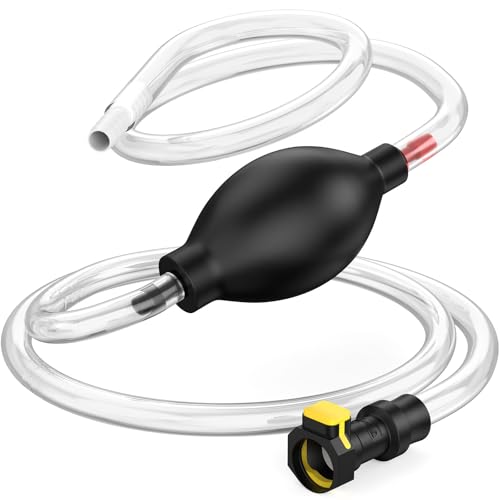
Compatibility: This golf cart battery water filler is compatible with golf carts, RVs, boats and utility vehicles featuring Trojan HydroLink or Flow-Rite Pro Fill systems. It keeps batteries at proper water levels to extend service life, improve efficiency and reduce long-term maintenance costs

Proven Solution for Battery Revival: With the highest success rate, our battery restore is a proven choice for bringing old and weak lead acid battery back to life. It restores battery better than battery desulfator and rejuvenator for extended performance and lifespan.
Should You Check Water Levels Before or After Charging?
You should check water levels after charging. If the plates are exposed before charging, add just enough distilled water to cover them. Then, perform your charge. Once the charge is complete, verify the water level again and top off to the proper mark. For routine maintenance, always add water after the full charge to prevent overfilling during the process. This approach helps keep your flooded lead-acid batteries in good condition and reduces mess. Distilled water is recommended because it avoids mineral contamination that can damage battery cells. Always wear protective gloves and goggles when handling batteries to guard against acid spills and sparks. Proper charging times vary by battery pack voltage, charger type, and chemistry, so it is important to avoid overcharging your batteries.
How to Measure the Correct Water Level in Each Cell
To measure the correct water level in each cell, start by removing the vent cap and inspecting each cell individually. You are checking electrolyte levels, which should stay just above the lead plates—typically 1/4 to 1/2 inch above them. Look for internal markers inside the opening, such as a split ring or fill line, which indicate the proper height. If no marker is present, ensure the electrolyte covers the plates completely while leaving a small air gap below the top. This gap prevents overflow during charging. Never rely on the overall battery case top as a reference; always use the cell’s own indicator point. Confirm that the electrolyte levels are consistent across all cells, and avoid exposing the plate material. To verify safety, always use a hydrometer or multimeter to check the electrolyte’s specific gravity and voltage before adding water. Maintaining precise levels prevents acid loss and ensures optimal battery performance, just as a golf cart controller regulates power flow to protect the electrical system. To finance battery maintenance or replacement, many owners use dealer financing to spread the cost over manageable monthly payments.

【A Must Battery Indicator for Golf Cart】ELMCONFIG battery monitor is for informing how much battery is left in golf cart YAMAHA/golf cart CLUB CAR/golf cart EZGO, motorcycle, electric cart,lawn mower and so on. Freely switching voltage among 12V 24V 36V 48V 60V 72V.

LED Battery Level Indicator Meter: Special designed for golf cart to clear show left power; 10 segment LED Bar Graph display, 10% per segment(1 red, 2 yellow,7 green), so that you can enjoy the journey and prepare to charge in advance.

Multi-function Battery Monitor with Clear Display: this battery indicator features a crisp display that cycles between voltage reading and battery percentage with a simple press of the front button; Easily toggle the backlight, set sleep mode, and select your specific battery type (Li-ion, Lead-Acid, etc.) for unparalleled accuracy and control; The package includes 1 battery meter
How to Add Water Step by Step Without Damaging Cells
Begin by ensuring your safety gear is on and the battery is cool to touch. Carefully remove each vent cap to inspect the cells individually with a flashlight. Only add distilled water when the plates are exposed, filling slowly with a funnel to just cover them before charging. Proper battery safety requires working in a well-ventilated area because cells emit flammable gas during maintenance. Do not overfill; stop once the water reaches the level recommended below the vent well. After charging, recheck the electrolyte levels and top off to about 1/8 inch below the vent, as electrolyte expands during the charging process. Use a turkey baster or paper towels to correct any overfills if necessary. This final step prevents spillage and damage caused by electrolyte evaporation over time. Securely reinstall each cap and wipe away any drips. Maintaining consistent watering across all cells ensures even electrolyte levels, which helps prevent premature battery failure. Always fill each cell individually due to internal dividers separating them. If your cart struggles with reduced runtime or slow acceleration despite proper watering, those are warning signs that the cells may already be failing. For a completely dead battery, always use a low-amp charger to begin the recharge process safely before attempting to add water. Consulting a trusted golf cart review can help you identify models that pair best with reliable battery maintenance practices.

Angled Spout: These fillers help prevent spills and overfilling when adding water to batteries in cars, golf carts, or other vehicles.

Compatibility: Use golf cart battery water pump to ensure your golf cart battery remains in optimal condition. Suitable for golf carts, RVs, boats, and utility vehicles equipped with trojan hydroLink and flow rite pro fill watering systems. This method of adding water extends the lifespan of the battery and improves its performance while reducing maintenance costs

The car battery filler uses a double-acting quick-flow valve tip to prevent back dripping. The 2-quart battery filler can be used safely with battery liquid, bringing you more convenience.
Common Watering Mistakes That Shorten Golf Cart Battery Life
Watering your golf cart batteries at the wrong times can shorten their lifespan. Always wait until the batteries are fully charged before watering. Watering before a complete charge causes electrolyte expansion during charging, which pushes acid out of the cells and speeds up corrosion on terminals and trays. Using tap water instead of distilled water introduces minerals that settle on the plates, permanently reducing capacity. Overfilling the cells leaves no room for gassing during charging, leading to acid spills, corrosion, and electrolyte dilution. If water levels drop too low, the plates become exposed, accelerating sulfation and weakening battery performance. Regularly checking each cell at least once a month ensures low cells are identified early, preventing uneven wear across the entire battery pack. Always water after charging, use only distilled water, fill just above the plates, and keep an eye on water levels to avoid these common mistakes. Even with proper watering, battery lifespan typically declines after a few years of regular use. Unlike gas cart engines, battery systems rely on electrolyte chemistry, so understanding gas golf cart operation helps owners avoid confusing battery maintenance with engine care. Protecting your cart’s other components, such as the windshield options available for Club Car models, also ensures long-term durability and safety.
What You’ll Need to Water Your Batteries Safely
To water your golf cart batteries safely, first gather all the necessary tools and safety gear. Use only distilled water, as tap water’s minerals can contaminate the electrolyte and shorten battery life. Keep a full supply nearby, especially for multi-battery carts, to avoid interruptions. Wear safety glasses and acid-resistant gloves at all times; add a face shield if there’s a risk of splashing. Use a battery filler bottle or squeeze bottle with a shutoff valve for controlled pouring, preventing spills and overfilling. A flashlight can improve visibility inside vent wells, making it easier to see water levels clearly. Keep baking soda and water nearby to neutralize any spills quickly, along with clean rags for wiping up drips. Ensure good ventilation in your work area to prevent buildup of harmful fumes. Following a regular maintenance schedule and having all equipment ready before starting minimizes handling errors and reduces exposure to hazardous materials. Before opening any vent caps, always disconnect the charger and turn the cart off to eliminate spark or shock risks. Using a top cover for your golf cart can protect your battery compartment from rain and debris, reducing the need for emergency watering. A high-quality golf cart enclosure can also shield the batteries from extreme weather, further preserving electrolyte levels and charging efficiency.

BREAKS DOWN SULFATION & RESTORES PERFORMANCE – Sulfation is the leading cause of reduced performance in flooded lead-acid batteries. Our advanced formula penetrates battery cells to help dissolve sulfate deposits that limit charging efficiency, helping batteries accept and hold a stronger charge. For preventative maintenance, use once per year and up to three treatments over the life of the battery.

Suitable dosage and size: This battery filler is 5.5 inches long and 2.4 inches wide; The small and portable size can be easily put into your garage, workshop or tool bag, with a capacity of 6 ounces, large capacity, and efficient refilling; The package contains two battery fillers, the quantity is enough to meet daily replacement needs, no need to buy repeatedly

【High-Quality】: This car battery filler is made of high-quality PP material, featuring good toughness and resistance to cracking. It has excellent corrosion resistance, capable of withstanding the erosion of substances such as battery electrolytes. The battery filler effectively isolates harmful liquids, preventing users from direct contact and potential harm. Additionally, it prevents impurities from mixing in, maintaining the purity of the liquid stored.