Wondering how long your 48-volt golf cart batteries will keep going? The lifespan generally ranges from 4 to 12 years, depending on the type you choose and how you take care of them.
Lithium iron phosphate batteries can last over a decade with thousands of charge cycles, while traditional lead-acid ones typically last 4 to 6 years.
Keep reading to find out which chemistry best fits your riding style and how to maximize your batteries’ life.
48V Golf Cart Battery Lifespan: 4–12 Years by Chemistry
The lifespan of your 48V golf cart battery largely depends on the chemistry you choose. Lithium-ion options, especially LiFePO4 packs, are the most durable. These batteries can last between 8 and 12 years, with many models reaching up to 10 to 15 years. They often deliver between 3,000 and 6,000 cycles, making them a long-lasting choice. For the best performance, prioritize top lithium batteries from reputable brands reviewed in buyer guides. However, keep in mind that the resale value of your golf cart can be significantly higher if you invest in a premium long-life battery pack. Unlike lead acid, lithium batteries require minimal upkeep to maintain their performance over time.
In comparison, NMC lithium chemistry typically offers a shorter lifespan of 3 to 5 years and around 1,000 to 2,000 cycles. Your choice of battery chemistry directly impacts how long your battery will perform reliably. Proper maintenance—such as avoiding deep discharges and maintaining stable charging—can extend the life of any lithium pack. Excessive heat exposure and deep cycling, on the other hand, tend to shorten the battery’s lifespan. Therefore, for the longest-lasting performance, prioritizing LiFePO4 chemistry is your best bet over NMC.

【Grade-A cells】XRH 48V 105AH Golf Cart lithium battery Built with high-performance Grade-A cells that support a 3C discharge rate, ensuring reliable, high-current output for demanding applications.

【ULTRA HIGH PERFORMANCE - CLASS A BATTERY】: LOSSIGY 48V100AH lithium iron phosphate battery for golf carts is made with class A chip, equipped with 58.4V18A smart charger, LCD display with stand, built-in 200A BMS, 5120W Powerful, 1000A peak current. IP65 waterproof. Preferred item for golf cars,RV,Solar

All-in-One 48V Lithium Golf Cart Battery Upgrade Kit – Comes with everything you need for a seamless upgrade: a high-performance 58.4V 18A charger, 2.8-inch LCD touch display for real-time monitoring, and a durable retention strap—no additional accessories required.
How Long Do Lead-Acid 48V Batteries Usually Last?
A 48V lead-acid golf cart battery typically lasts between 4 and 6 years with proper maintenance and regular use. You can expect around 300 to 700 charge cycles, depending on how deeply you discharge the battery and how well you care for it. Heavy use or neglect can reduce its lifespan to just 2–3 years. The key to extending its life is handling it safely by keeping terminals clean and avoiding over-discharging. Following correct charging protocols, such as fully recharging after each use and preventing the battery from sitting drained, is essential. Regular watering is important for flooded types, while both overcharging and undercharging speed up wear. To ensure safety and battery health, always use distilled water only when refilling cells. Over time, performance will decline gradually rather than suddenly failing, and most owners plan to replace their set every 4 to 6 years as a routine maintenance step. Choosing a top pick from a quality and performance review can also help ensure you get a durable battery set that lasts. For a longer-lasting alternative, many owners now consider lithium golf cart batteries, which offer superior cycle life and consistent performance.

【15 Amp Rapid Charger/Lead-Acid】 EPOWREY 48 volt battery charger for Club Car golf carts with 3-pin round plug.This charger is designed as a one-piece plug, using a rubber cord that is more abrasion-resistant and heat-resistant than PVC cords, and have effective waterproofing advantage.

IN LEAD-ACID CASE & LIGHTWEIGHT: The SISWAY golf cart battery features a standard lead-acid case design for superior cell stability and safety. Weighing only 77 lbs, it is lighter and more convenient, allowing for perfect adaptation and flexible performance across diverse operating conditions
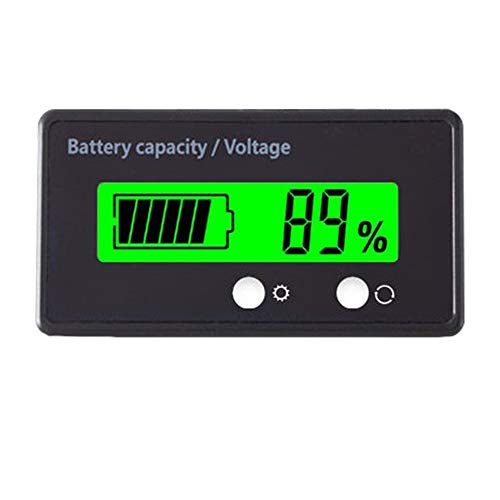
Universal battery capacity indicator voltage meter - wide voltage input range DC 12V-84V Lead-acid Batteries and 3S-26S Lithium Batteries: Ternary lithium batteries, polymer batteries, lithium-ion batteries, storage batteries.
How Long Does an AGM 48V Golf Cart Battery Hold Up?
An AGM 48V golf cart battery typically lasts between 4 to 7 years, which equates to approximately 500 to 1,200 charge-discharge cycles. The lifespan depends heavily on how well you care for it. To maximize its longevity, avoid deep discharges and keep it away from excessive heat. Proper charging habits are crucial—use a compatible charger and don’t overcharge. If you neglect regular maintenance, expect the battery to last closer to 3 or 4 years. You don’t need to add water like traditional lead-acid batteries, but keeping terminals clean and performing regular voltage checks will help monitor its health. When the battery’s capacity drops below 60 percent, it’s time to consider replacing it. Responsible disposal through recycling is essential to reduce environmental impact, as old AGM batteries contain materials that can be harmful if thrown away improperly. For those seeking budget-friendly options, best budget golf carts often feature durable AGM batteries that can still deliver reliable performance. However, peak speed ultimately depends on the motor and drivetrain, not just the battery. For added comfort during your rounds, consider pairing your battery care routine with EZGO Golf Cart seat covers to protect your vehicle’s interior.

48 VOLT GOLF CART BATTERY CHARGER - Effortlessly power your YAMAHA electric golf cart with our lightweight and efficient 48-volt golf cart battery charger, featuring the trusted YAMAHA Drive Plug. This charger is 80% lighter than the YAMAHA OEM model and includes an extended 14+ft of power cables for unparalleled flexibility and ultimate convenience. If you’re looking for the perfect YAMAHA golf cart battery charger, this is the one that delivers exceptional performance and ease of use.

Born for 48V Golf Cart: Special designed for 48v golf cart industry, OGRPHY 48v lithium golf cart battery is compatible with golf cart controllers of all major brands on the market. Built in premium grade A prismatic LiFePO4 cells(UL certified), this 48v battery has better durability & safety. Over 5kWh capacity equals 8pcs 12V 100AH lead acid batteries. Max 10.24kW continuous power & peak 51.2kW power (50% more powerful than standard lithium batteries) to conquer hills/rough terrain effortlessly.

【Universal 48V Battery Charger Pro】Compatible with every 48V system – From golf cart charger setups (Club Car, EZGO, Yamaha) to industrial forklift charger fleets and commercial Floor Scrubber charger units. Charges lithium, LiFePO4, and all lead-acid types (AGM/GEL/EFB/MF) with auto-detection. Deliver 1000W power at 15A for rapid 7-hour full charges of 100AH batteries
What’s the Lifespan of a Lithium 48V Battery on a Golf Cart?
Lithium 48V golf cart batteries generally last between 8 and 12 years, but premium LiFePO4 packs can often reach 10 to 15 or more years. This extended lifespan is due to their ability to handle 3,000 to over 6,000 charge cycles, which surpasses traditional lead-acid batteries significantly. The type and quality of the battery chemistry play a crucial role—higher-quality LiFePO4 options resist degradation better and maintain performance longer. Less expensive or lower-grade packs may only last around 5 to 8 years before showing signs of wear. Proper maintenance, such as keeping the battery cool and avoiding overcharging or deep discharges, is key to maximizing lifespan. Also, fast charging strategies that push the limits of the cells can stress the battery and shorten its overall longevity. For those seeking higher voltage options, 72 volt lithium models offer similar cycle life advantages in larger applications. By practicing smart charging habits and monitoring for signs like decreased range or longer charging times, you can ensure your lithium battery provides reliable service for well over a decade. For those also interested in optimizing their golf cart’s illumination, check out the best light bar to complement your battery’s long-lasting performance. For buyers comparing options, the top lithium batteries reviewed in buyer’s guides highlight which models offer the best cycle life and value.
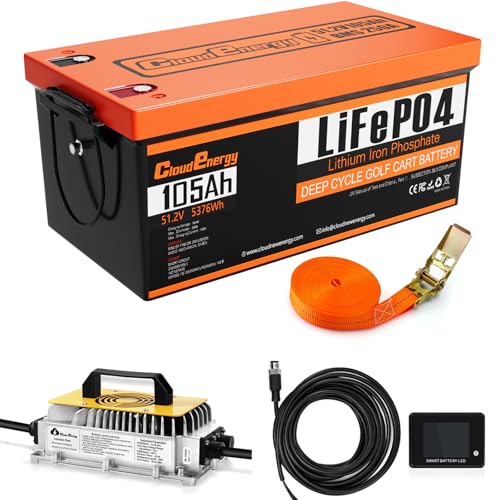
24 Hours Customer Service: Cloudenergy provides technical support and online customer service with fast feedback within 24 hours for any product-related issues or questions

[10 Years Lifetime and 5000+ Deep Cycles] OGRPHY 48 volt lithium battery is made of new grade A cells with UL certification. 10 years lifetime and 5000+ deep cycles is not just a slogan under instructions on the product manual.

【24 hours Customer Service】Cloudenergy provides technical support and online customer service with fast feedback within 24 hours. If you have any product-related issues or questions, please get in touch with us directly, Cloudenergy support team is always here for you.
How Many Charge Cycles Does Each 48V Battery Type Offer?
Lithium Iron Phosphate (LiFePO4) batteries typically offer between 3,000 and 5,000 charge cycles, making them far more durable than lead-acid options. This high cycle count means you can use the battery many times before it reaches its end of life, often lasting over a decade with proper maintenance. In contrast, flooded lead-acid batteries provide only 200 to 700 cycles, equating to roughly 2 to 5 years of use depending on usage and care. AGM batteries usually deliver between 400 and 1,200 cycles, while deep-cycle lead-acid batteries fall around 300 to 700 cycles. Proper charging practices and maintaining the correct charging protocols can significantly influence your battery’s total cycle count. When your lithium battery finally reaches its end of life, recycling programs are available to dispose of it responsibly. For those considering an upgrade, the top lithium battery conversion kits offer substantial performance benefits over older lead-acid systems. However, if you use your cart on public roads, be aware that its street-legal classification depends on whether it meets federal safety standards for low-speed vehicles, which can affect registration and insurance requirements. Buyers prioritizing longevity often compare these cycle counts against the top speed golf cart reviews to balance performance with lifespan.
What Factors Shorten 48V Battery Life the Fastest?
Deep discharging your 48V battery repeatedly shortens its lifespan more quickly than most other factors. This practice promotes sulfation in lead-acid types and causes permanent capacity loss. The damage occurs because excessive discharge forces the battery to work beyond its optimal range, degrading internal components. Environmental conditions also accelerate aging—temperatures above 95°F increase chemical reactions that harm the battery, leading to electrolyte evaporation and plate corrosion. Additionally, chronic undercharging allows sulfate crystals to harden on the plates, reducing capacity, while overcharging creates excess heat that damages plates and speeds electrolyte loss. High-temperature charging and storage further induce thermal stress, which increases self-discharge and accelerates deterioration. Storing a battery in a hot garage can also trigger thermal stress that hastens internal damage over time. Following a safe hookup procedure ensures proper electrical connections that prevent short circuits and spark hazards. Combining deep discharges with heat exposure and incomplete charging cycles inflicts the fastest damage on your battery’s life. Recognizing warning signs like reduced range or slow charging helps prevent irreversible damage.
48V Battery Maintenance: Lead-Acid vs. Lithium Compared
Flooded lead-acid batteries require regular maintenance routines that differ significantly from lithium batteries. You’ll need to check the water level in each cell monthly and top off with distilled water as needed. Terminal cleaning is also necessary to prevent corrosion, which involves removing any buildup with a wire brush or similarly gentle tool. Strict charging discipline is essential; you must fully recharge the pack after every use to ensure optimal performance and longevity. For those considering a replacement, Trojan batteries are among the top-rated options for golf carts. Additionally, choosing a magnetic speaker mount can help keep your audio system secure while driving over rough terrain.
Storage conditions impact maintenance for lead-acid packs as well. You’ll want to store them fully charged and recharge every 30 to 45 days to prevent self-discharge from damaging the cells. Lithium batteries, on the other hand, are much easier to care for. They do not require watering or frequent cleaning, and their charging processes are more flexible—there’s no need to recharge immediately after use. For storage, keep lithium packs in a cool, dry environment with less frequent attention, reducing your overall maintenance workload.
When it is time to replace either type, remember that battery recycling programs accept both lead-acid and lithium batteries. Proper recycling helps keep waste out of landfills and supports environmental sustainability.
Signs Your 48V Battery Pack Is Failing
Reduced range per charge is your first clear sign that your 48V battery pack is failing. If your cart no longer completes a typical round or the runtime drops to half, it indicates the batteries can no longer hold a full charge properly. Sluggish acceleration and weak hill performance follow, with power fading under load even if the resting voltage seems acceptable. You should monitor the voltage daily; a healthy pack stays above 46V under load. Readings below 50V at rest or severe voltage sag when throttling suggest poor battery balancing or sulfation buildup. Charging issues also appear as longer charge times or heat buildup after charging stops. Additionally, visible damage like swollen cases, corrosion, or electrolyte leaks are clear physical signs that your pack is failing and likely needs replacement.
Best 48V Battery for Recreational vs. Heavy Use
A 48V LiFePO4 battery is ideal for recreational use due to its long cycle life and maintenance-free operation. It typically offers 3,000 to over 5,000 charge cycles, making it suitable for weekend trips or occasional use. This battery type recharges in about 2 to 4 hours and has a low self-discharge rate, ensuring stable energy storage when not in use.
Lead-acid batteries are a more affordable, short-term solution but require regular maintenance to keep them functioning properly. They tend to have fewer cycles and a shorter lifespan, which makes them less suitable for frequent or heavy use but potentially acceptable for infrequent recreational outings on a budget.
For daily or commercial applications where the battery endures frequent, prolonged use, LiFePO4 remains the best choice. It can handle more than 6,000 cycles, allows deep discharges up to 100 percent, and provides more stable voltage during hill climbs and heavy loads. Although the initial investment is higher, its longevity and performance often offset the upfront costs, especially when responsible recycling at the end of its life is factored in. For any heavy-use electric cart or vehicle, investing in lithium technology ensures your runtime demands are met efficiently.
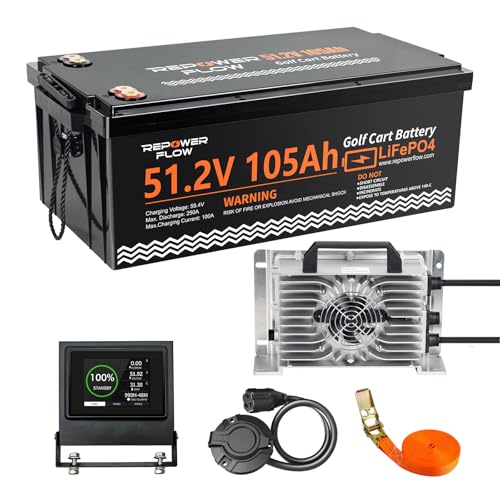
[Dual Terminals Advantage] – Unique dual terminal design allows flexible connection for parallel or series setups, providing more convenience and compatibility than traditional single terminal golf cart batteries.

【Built-in 48V to 12V 15A Converter & 200A Smart BMS】:ogrphy 48V 102Ah golf cart battery is newly upgraded with a built-in 48V to 12V 15A step-down converter — powers LED lights directly with no external converter needed. Equipped with a 200A smart BMS, it offers full-circuit protection and 1000A peak current for superior hill-climbing and acceleration.

Built-in 200A BMS & Multiple Protection: 51.2V 100Ah LiFePO4 golf cart battery built-in 200A Battery Management System (BMS) provides over-charge/discharge, over-current, high/low temperatures, and short-circuiting protection. With good thermal and chemical stability. Maintenance free, no daily maintenance work and cost.