Wondering where Bintelli golf carts are made? You’ll find the assembly mostly happens in Charleston, South Carolina, at the country’s largest low-speed vehicle plant.
They also have a second facility in Indiana to handle more production.
Most parts like motors and batteries are imported from China, but final checks and testing happen here, boosting quality and support.
Keep reading to see how it all comes together.
Bintelli Golf Carts Are Assembled in Charleston, South Carolina
Bintelli golf carts are assembled in a facility located in Charleston, South Carolina. This U.S. assembly plant is the largest low-speed vehicle (LSV) production site in the country. The company’s focus on final build work and rigorous inspections ensures a high standard of quality, setting it apart from import-only distributors. The plant has expanded from 65,000 to 174,000 square feet to meet growing demand. Components are shipped directly to Charleston, where skilled workers assemble and inspect each cart before shipping. This local assembly process ties quality control directly to a domestic hub, providing a reliability advantage and supporting the brand’s identity as a U.S.-based manufacturer. Knowing the differences between battery types, such as lithium vs lead acid, helps owners make informed decisions about performance and lifespan. For those looking to maintain their cart, finding the perfect fit for tires is essential to performance. Upgrading to lithium batteries can offer longer cycle life and faster charging compared to traditional options.

All-in-One 48V Lithium Golf Cart Battery Upgrade Kit – Comes with everything you need for a seamless upgrade: a high-performance 58.4V 18A charger, 2.8-inch LCD touch display for real-time monitoring, and a durable retention strap—no additional accessories required.

Grade A Cells: LOSSIGY 48 Volt lifepo4 lithium golf cart batteries are manufactured of auto grade-A cells with higher energy density, more stable performance and greater power

Grade A Cells: LOSSIGY 48 Volt lifepo4 lithium golf cart batteries are manufactured of auto grade-A cells with higher energy density, more stable performance&greater power.
Which Parts Are U.S.-Made and Which Are Imported for Bintelli?
Most of Bintelli’s key components, such as motors, batteries, and mechanical parts, are imported from China. The company primarily focuses on final assembly, inspection, and distribution within the United States, specifically in Charleston. U.S. content is limited to these assembly processes and some branded accessory parts like body panels, mirrors, and lights. As a result, while the cart is assembled in the U.S., the major parts come preassembled from overseas manufacturers. For those seeking a durable mounting solution, a reliable hinge is essential for windshield stability. For those seeking a reliable power source from domestic alternatives, top deep cycle batteries are often recommended for their U.S.-built performance. The reliance on imported core parts means that most of the essential systems are not domestically produced. Buyers seeking a more comprehensive U.S.-built option may prefer a top utility box for their cart instead.

Applicable for Medalist 1994 and Up;MPT Series 2001 and Up;TXT Models 1994 and Up;Shuttle Series 2001 and Up;Workhorse Models 2001 Up+ Golf Carts.

ezgo txt front seat bracket for EZGO (1995-up) TXT/Medalist Electric/Gas Golf Carts

CUSTOM FIT: JERBOR Golf Cart Seat Hinge For EZGO TXT Medalist 1995+ golf cart, Replaces OEM 71610-G01 71609-G01
Does Bintelli Have a Second Assembly Location in Indiana?
Yes, Bintelli has a second assembly location in Indiana. The facility is located at the River Ridge Commerce Center in Jeffersonville, where the company is investing over $4 million. This site is not a replacement for their primary plant in North Charleston, South Carolina, but rather an expansion. By adding this Indiana location, Bintelli increases its capacity to assemble and distribute electric golf carts and low-speed vehicles. It is their second large-scale site, creating around 67 jobs in the area. This move complements their existing 174,000-square-foot plant in Charleston and enhances overall logistics and manufacturing capabilities within the United States. Buyers seeking a reliable on-course experience should compare top Bluetooth speakers for clear audio during their rounds. Racka Golf Carts similarly focus on domestic assembly quality and origins, emphasizing their commitment to American manufacturing standards. When comparing options, reviewing top golf cart tires can also ensure optimal traction and performance.
How Bintelli Golf Carts Compare to Fully Imported Models
What really sets Bintelli apart from fully imported carts is where the final assembly and quality checks happen. Fully imported models arrive pre-built overseas, skipping U.S.-based final assembly, inspection, and compliance steps. In contrast, Bintelli’s Charleston facility handles the finishing process, ensuring the cart meets domestic quality standards before delivery. This means you’re not just receiving a shipped product; you’re getting a finished, inspected, and approved cart completed right here in the U.S. Bintelli’s investment in U.S. assembly directly strengthens dealer support and warranty confidence, which often outweighs feature specifications in influencing ownership experience. Understanding the electrical system, including battery voltage, helps you assess the overall quality and compatibility of a golf cart. Choosing the right tires, such as top tires for EZGO models, can also improve traction and ride comfort on varied terrain. For buyers evaluating power options, comparing lithium batteries for golf carts can reveal significant performance and longevity advantages over traditional lead-acid setups.
Bintelli’s manufacturing transparency is another key factor. The company openly combines domestic and imported components, whereas fully imported carts often have opaque overseas supply chains. This hybrid approach allows you to evaluate the true value—often within a thousand dollars of fully imported models—while benefiting from a stronger warranty and local dealer support. Ultimately, you’re choosing a product that balances cost with U.S.-based quality assurance.

BCI Group Classification: GC2 battery group size for compatibility with golf carts and various deep cycle applications


Born for 48V Golf Cart: Special designed for 48v golf cart industry, OGRPHY 48v lithium golf cart battery is compatible with golf cart controllers of all major brands on the market. Built in premium grade A prismatic LiFePO4 cells(UL certified), this 48v battery has better durability & safety. Over 5kWh capacity equals 8pcs 12V 100AH lead acid batteries. Max 10.24kW continuous power & peak 51.2kW power (50% more powerful than standard lithium batteries) to conquer hills/rough terrain effortlessly.
What Does “Assembled in the USA” Mean for Bintelli Buyers?
Choosing a Bintelli golf cart marked as “assembled in the USA” means the final build and quality checks happen at their Charleston, South Carolina facility rather than overseas. This domestic assembly helps reduce the environmental impact associated with shipping fully assembled carts across oceans, although key components still arrive from international suppliers. When it comes to labor practices, your purchase supports U.S. workers at Charleston’s large facility. However, it does not guarantee that every part used in the cart meets American standards for origin or manufacturing. The supply chain for these carts is typically mixed, combining domestic assembly with parts from different countries. This approach allows for faster logistics within the U.S. and ensures consistent final assembly but does not mean every component is produced domestically. For a clearer picture of how this cart stacks up, consider the Top Golf Carts review comparing quality and performance. Without proper paperwork, a used Bintelli cart may present ownership transfer issues if the title is missing or unclear. When you see “assembled in the USA,” focus on the quality of the final build and U.S. employment, not on whether the cart is entirely American-made. This distinction is important to understand for making a fully informed purchase. For buyers who prioritize utility, many models are equipped with a cargo box for hauling equipment or groceries.
What Quality Checks Do Bintelli Golf Carts Get in Charleston?
Before a Bintelli golf cart departs the Charleston facility, it undergoes an extensive final inspection. This process verifies fit, finish, and build consistency to ensure each cart meets quality standards. The electrical system is thoroughly checked, confirming motor efficiency and charge-related components so your cart delivers smooth acceleration and reliable performance. Hardware torque is tested, and wiring connections are inspected to catch defects early, benefiting from the local assembly that allows for precise quality control compared to globally sourced supply chains. Mechanical components undergo readiness assessments, including brake system inspections for safety. The local assembly team also carefully reviews the fit of the DOT-standard windshields, ensuring they meet the same rigorous quality benchmarks found in the best windshield options for Yamaha golf carts. This attention to detail mirrors the importance of selecting quality tires and rims for overall performance and durability. These inspections also include verifying that the hub caps are securely fastened and aligned to match the aesthetic standards of top-rated aftermarket options.
To ensure street-legal compliance, lighting systems such as headlights, brake lights, and turn signals are verified, along with DOT-standard windshields. The cart’s paint, trim, and interior cleanliness are meticulously examined. Finally, a road test is performed to confirm overall operation. This rigorous inspection process, rooted in disciplined manufacturing practices, guarantees your cart ships fully prepared for everyday use.
Why U.S. Assembly Matters for Resale Value and Warranty
Warranty terms have the biggest impact on resale value. Bintelli’s parts-only coverage and non-transferable language can limit the appeal for second owners. Since warranty support generally goes through authorized dealers, having U.S. assembly strengthens that network. Buyers are willing to pay more when they know labor exclusions won’t complicate repairs after purchase. An assembly from Charleston adds credibility, but it’s the warranty structure that truly turns that credibility into higher resale value. For example, understanding how gas motor performance compares in different brands can further inform a buyer’s long-term satisfaction with their purchase. Thinking about protection, a dedicated Ezgo golf cart cover also helps preserve the cart’s condition and overall worth.

420D Heavy-Duty Protection: The golf cart covers with the extra PVC coating and used the water-proof adhesive tape fully sealed seams, 100% waterproof defense. Adjustable wind straps, velcro closure straps and elastic band at the bottom allows cover to be secured to the cart., even during storms.

PREMIUM MATERIAL - Made from 600D Oxford fabric, this golf cart cover provides strong, long-lasting protection. It effectively shields your golf cart's finish from rain, heat, sun, snow, and scratches, ensuring durability and reliable performance

[Perfect Fit for 2+2/4 Passenger Golf Carts] : The golf cart cover is custom-designed to fit most 4 seater golf carts, compatible with Yamaha, Club Car, EZGO golf carts etc. Measures 112"L x 54"W x 66"H, with elastic hem and adjustable strap clips to keep it secure even in strong winds. Say goodbye to flapping covers on windy days
Should You Buy a Bintelli Based on Its South Carolina Assembly?
Paying for final inspection and testing in Charleston doesn’t automatically mean better quality than fully imported competitors. While South Carolina assembly can be a nice bonus, it shouldn’t be the main factor in your decision. Instead, focus on dealer support, warranty processes, and whether the cart meets your specific needs. Local assembly is convenient, but overall quality depends more on parts, manufacturing practices, and after-sales service.

Precise Fitment: Designed for 1982-current EZGO TXT electric golf carts. Replaces OEM part number 19186G1P. Verify your cart's year, model, and spline type before ordering.

EASY FOLD & PORTABILITY: Two-step fold with locking buckles creates a compact shape for trunks and lockers. At 15 lbs, this lightweight golf push cart sets up fast and stows easily, giving walkers a foldable golf push cart for travel and storage.
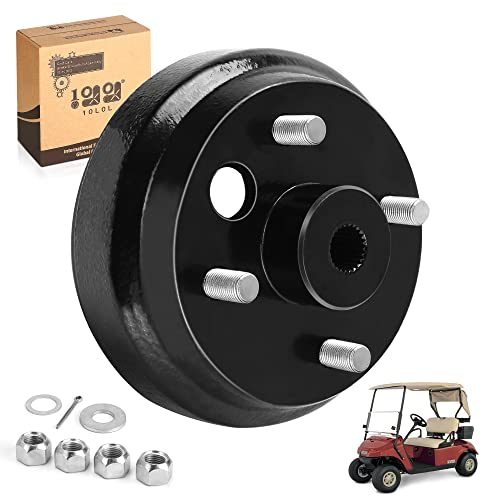
Golf Cart Brake Drum Hub Assembly for EZGO TXT 1982-up Electric Vehicles and 1982-1993 2-Cycle Gas Vehicles.