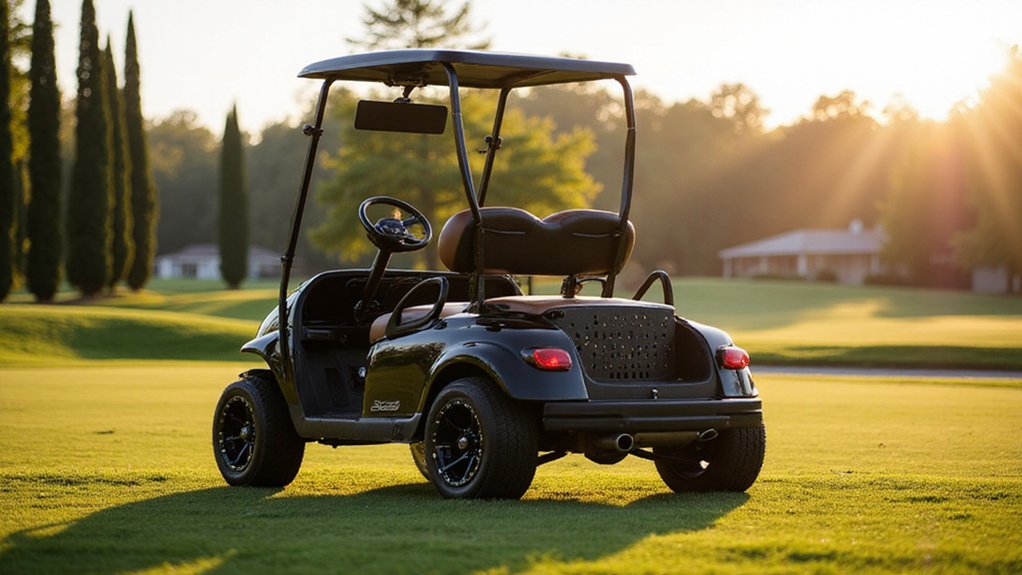
If you’ve ever wondered how to make your Club Car golf cart faster, you’re not alone. Speeding it up can be as simple as a few tweaks or upgrades, depending on your cart’s model and age.
Whether you want a quick boost or a more serious upgrade, the right modifications can push your cart’s speed to new limits.
Keep reading to learn the best ways to increase your cart’s performance.
First, Figure Out Which Club Car You’re Working With
To identify which Club Car you’re working with, locate the serial number first. The location varies depending on the body style of your cart. For DS models, check the frame or dash area to the right of the pedals. Precedent and newer models often hide the serial on or beneath the passenger-side glove box. Older carts made before 1981 may have the serial on the frame under the driver’s seat. If your cart’s serial number is proving difficult to decode, the same process used for Yamaha model identification can be applied to confirm the production year through manufacturer-specific serial code patterns.
Decode the serial prefix to determine the platform, such as DS, Precedent, Tempo, or Onward, as each requires different speed parts. The digits immediately after the prefix reveal the model year, which is crucial because wiring and controller hardware differ between years.
Finally, confirm whether your cart is gas or electric. These drivetrain types need entirely different modification approaches. Cross-check your serial number, body style, and year to ensure you select upgrade parts compatible with your specific model before making a purchase. If you are also looking for outdoor protection, consider comparing your ezgo golf cart cover options to find the right fit. For those who want a complete aesthetic refresh while upgrading performance, reviewing the top hub caps can help ensure your cart looks as fast as it runs.
Reprogram a Modern Club Car Electric Cart Through the Diagnostic Port
To reprogram a modern Club Car electric cart like a Tempo or Precedent I2 Excel via the diagnostic port, follow these steps. First, locate the diagnostic port under the dash; it is usually hidden behind a round black cover. You will need a Curtis 1313 programmer or a compatible equivalent. Ensuring controller compatibility is crucial—using the wrong programmer or incompatible controller will prevent communication. Many budget-conscious buyers look for affordable rides that still offer reliable performance and simple upgrades.
Connect the programmer to the diagnostic port. Turn the key ON and put the cart in RUN mode. You should hear a firm click that confirms the connection to the diagnostic port. Once connected, access the speed parameters such as Speed Code 3, which typically limits the cart to approximately 16 mph, or Speed Code 4, which can reach up to 19 mph. Many modern lithium carts offer superior performance without needing such extreme modifications. For those upgrading their cart, investing in a high-quality battery charger ensures reliable power delivery and longer battery life.
Adjust these settings to your desired speed levels, then disconnect the programmer. Alternatively, the Kraken device can achieve up to 20 mph through a simple flashing process. Test your cart after reprogramming. Keep in mind that the final speed may vary depending on tire size and terrain conditions. Some access points for reprogramming may require a dealer-issued code linked to the controller serial number, so obtain necessary authorization if needed.

【Applicable Model 】This cable is exclusively for Electric Club Car carts with 4-pin diagnostic ports, not universal for all golf cart brands.

[OEM-Level Quality & Fit]: Replaces OEM part #101909901 102251501 with a secure 1307 4-pin Molex connector. Ensures a stable, factory-level connection every time, engineered for long-lasting compatibility and precision

【Part Name】New Dealer Access Level Handheld Programmer, Golf Cart Progammer, club car diagnostic tool Used on Curtis Curtis programmable motor controllers or control systems.
Swap in a Speed Magnet or Upgrade the Motor on Older Club Cars
Swapping in a speed magnet is an effective way to boost the top speed on older Club Car DS or Precedent models with the IQ system and ADC motor, provided the motor is compatible. This modification can increase speed by approximately 2–8 mph, bringing top speeds to around 19–21 mph if the cart is in good condition. The process involves replacing the internal magnet of the existing speed sensor, which is secured with two screws—no need to replace the entire sensor. The magnet is designed to enhance speed without sacrificing torque, eliminating the need for gear, motor, or controller upgrades. For readers seeking a simpler setup, many of the top magnetic speakers for golf carts also offer easy plug-and-play installation similar to this speed magnet swap. For those using their cart in colder climates, pairing the speed upgrade with a golf cart cover with heater can ensure comfortable use even after dark. For optimal performance, ensuring the cart uses a top deep cycle battery can maintain consistent power delivery during high-speed runs.
Before proceeding, verify that your motor is compatible; this mod only works on models with a two-screw speed sensor. To install, place the tow/run switch in TOW mode, raise the rear of the cart, and remove the passenger-side wheel. Use a screwdriver to remove the two screws holding the sensor, and be careful not to overtighten the plastic housing during reassembly. Keep in mind, if your cart uses an older series motor, a speed magnet won’t provide the desired results. Instead, upgrading the motor itself is the better route, but ensure your controller and cables are in good shape to match the upgraded motor.
Lastly, having a healthy, fully charged battery pack is essential to realize the full speed gains. Without proper battery health, even the best magnet swaps won’t deliver the intended speed improvements.

Precision Design: Built to OEM specifications (Replaces 102704901, 102265601), ensuring a seamless fit within your speed sensor housing without modifications.

Vehicle Fitment: Compatible with 48V electric Club Car DS and Club Car Precedent 2004-Up golf carts, equipped with an ADC motor and IQ system. (Not for gas-powered golf carts or older GE motor models. Please confirm the cart’s year, model, motor type, and OEM part number before ordering.)

[Compatible With]: Golf Cart Speed Sensor is specially designed for 48V Club Car DS & Precedent 2004-UP electric models with IQ system KDS motor/ Advanced Motor (ADC motor). OEM part number: 102704901, 102265601
Adjust the Governor on Gas Club Car Carts for More Speed
To adjust the governor on a gas Club Car cart for more speed, you need to modify the linkage to reduce the speed limiter’s restriction. Start by locating the governor linkage, which is usually a rod or cable connecting the accelerator pedal to the throttle control near the engine. Note the factory position on the threaded rod; this serves as your baseline setting. Loosen the jam nut holding the rod in place, then slightly lengthen the rod to introduce some slack. This adjustment allows the throttle to open further before the governor limits the engine speed. For best results, ensure your cart’s solenoid is functioning correctly, as a faulty unit can cause inconsistent power delivery during high-speed operation. Upgrading to a high-amp solenoid can also help maintain steady voltage under load. Keep in mind that street-legal requirements often limit top speeds, so check local laws before driving modified carts on public roads.
After making the adjustment, check that the pedal operates smoothly without binding or sticking. Take care to test drive the cart cautiously—expect a gain of about 3 to 4 miles per hour. If the engine reaches the rev limiter or sounds strained, back off the adjustment to prevent damage. Keep adjustments small and precise because overdoing it can cause binding, excessive engine wear, or damage. Always ensure the cart is parked on level ground with the parking brake engaged before working on the linkage. Note that a micro switch inside the pedal box disables the RPM limiter by grounding, which allows higher RPMs when the governor linkage is adjusted correctly.

Fitment: The governor and accelerator cable replacement for Kawasaki FE290 Club Car DS Golf Cart 2004-up

VITAL COMPONENT: A functional throttle linkage rod is necessary for regular golf cart use; when it's working, you don't notice it, but when it's broken, you notice right away

Fits the Following Cart(s):Fit for 2004-UP Club Car DS Golf Cart Kawasaki FE290 gas&electric golf cart.
Increase Club Car Speed With Gear Swaps or Taller Tires
Swapping your rear-end gear ratios to values like 8:1 or 6:1 is an effective way to increase your Club Car’s top speed. An 8:1 gear ratio can boost your cart to about 26 mph, while a 6:1 ratio can push it up to roughly 34 mph. These gear swaps prioritize high-speed performance over low-end torque, making them ideal for flat terrain and smooth surfaces. Keep in mind that upgrading to higher gear ratios will reduce your cart’s acceleration, so choose based on your terrain and desired speed. To maintain adequate power for such speed mods, you should also consider upgrading to a 48 volt lithium battery for consistent voltage output. For comparison, the EZ Go dump bed models prioritize utility and torque over pure speed. A Yamaha golf cart often requires a different windshield fitment to accommodate its unique frame design.

it fits the Following Golf Cart(s): 1984-Up Club Car DS, Carryall, and Turf gas or electric models (will not fit Club Car Precedent).

【REPLACE PART NUMBER】: 1027717-01, 102771701.

Package Includes: Rear end lift kit includes 4 pcs extension shackles and 4 pcs bolts. Provision of a full range of required products
Match Your Club Car Controller, Motor, and Battery Voltage Limits
Matching your club car’s controller, motor, and battery voltage limits is essential for safe and reliable performance. First, verify your battery’s rated voltage and ensure it aligns with the controller’s voltage range. For example, a 36V battery shouldn’t be paired with a 48V controller, as this can cause damage. Lithium conversions require full-charge voltage checks to stay within safe limits, typically around 4.2V per cell. Additionally, check your motor’s voltage tolerance—stock motors may struggle or overheat if you push beyond their design limits. For 8-volt batteries, selecting the proper 8 volt battery charger is critical to maintaining voltage stability and preventing damage during charging cycles. Many riders use mounting brackets to securely attach accessories during performance upgrades. Always match the voltage family across controller, motor, and battery. A 48V system generally uses a 48V controller and motor, while 72V setups demand larger hardware. Confirm factory labels and motor tag codes before ordering parts. Proper matching helps prevent fault codes, overheating, and early component failure, ensuring your cart runs smoothly and efficiently at higher speeds. When planning upgrades, remember that choosing the right spot to drive your modified cart—such as on private property or designated golf cart paths—is equally important for safety and legal compliance.


【Fitment】Compatible with EZGO Golf Carts and a wide variety of industrial electric vehicles. Part number for 1205-5603, 1205-4601, 1205M-5601, P125M-5603, 1205-210, 1205-211, 1205-201, 1205-209

OEM Part Number:1268-5403, 12685403
Upgrade Brakes, Check Tire Limits, and Know Local Speed Laws
Start by upgrading your brakes before wiring in a faster controller or taller tires. A proper brake upgrade is essential because increased speed and heat from modifications extend your stopping distance. Check that your brake pads and shoes are in good condition, free of wear and glazing, and replace them if needed. Make sure your brake fluid is fresh and matches your new top speed to prevent fade and maintain reliable stopping power. Proper hardware inspection ensures systems stay responsive under increased demands. Consider adding a roof rack for your golf cart to securely carry gear without compromising stability.
When selecting tires, always verify their speed ratings on the sidewall markings. The speed symbol indicates the maximum sustained speed—B means 31 mph, C equals 37 mph, and higher codes correspond to faster speeds. Your load index must also support your cart’s operating weight; exceeding it can cause structural stress and reduce safety. Oversized tires can improve grip and ride comfort but also increase braking distance and system strain. Ensure sufficient clearance and handling considerations are addressed to avoid rubbing or loss of control. Upgrading to brighter LED headlights can improve nighttime visibility and safety on faster roads, a key factor for legal compliance.
Knowing local speed laws is critical for staying legal. Many areas restrict golf carts to roads posted at 35 mph or less. Some jurisdictions have stricter regulations, requiring carts to be equipped with lights, mirrors, or registration if they go beyond certain speeds. Failing to comply can lead to fines or liability in case of an accident. Always review local rules before making modifications to ensure your cart remains street-legal.