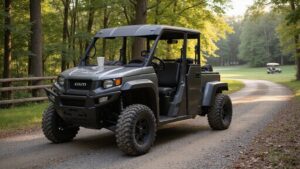
Wondering how to make your golf cart street legal? It’s all about meeting certain safety and legal requirements, like installing specific lights and getting proper registration.
By the end of this, you’ll understand the key steps to ensure your golf cart can hit the streets safely and legally.
Keep reading for the full rundown.
Golf Cart vs. Street-Legal LSV: What’s the Difference?
A golf cart can become street-legal LSV when you modify it to meet federal requirements. This involves raising its top speed to between 20 and 25 miles per hour, which is the minimum for LSV classification. Speed adjustment alone is not enough. You must also install a full DOT-compliant safety package, including headlights, taillights, brake lights, turn signals, mirrors, a parking brake, windshield, and seat belts. Without these safety features, your vehicle remains a modified golf cart, not a true LSV. Achieving federal compliance means obtaining FMVSS 500 approval and securing proper title and registration. Only then does your vehicle qualify as a street-legal low-speed vehicle and can be legally driven on public roads. This process typically requires a certificate of origin to transfer ownership and register the vehicle as an LSV. Before starting modifications, consider whether electric or gas power best suits your driving needs, as this choice affects range, refueling habits, and long-term upkeep. Selecting the right battery quality and performance is also essential for reliable electric operation and long-term value.

Made in USA 2.5LB Shield ABC Fire Extinguisher, Model 2.5D-ABC


USKITS DOT Economy OSHA ANSI Compliant Truck Safety Kits for Enhanced DOT Compliance and Road Safety
Check Your State and Local Laws Before You Start
Before you begin modifying your golf cart, confirm that it can meet federal Low-Speed Vehicle (LSV) standards. Once that’s settled, review your state’s vehicle code. Some states prohibit golf carts from being used on public roads altogether, while others permit local governments to decide. Your design must comply with any city or county ordinances, which often impose stricter rules. For example, a municipality may restrict golf cart use to certain streets or require specific signage. Don’t forget neighborhood restrictions; homeowners’ associations or local zoning laws can also limit where you’re allowed to drive. Registration and titling requirements, driver’s license rules, and minimum age limits vary from place to place. Because laws at the state and local levels layer together, overlooking any detail can make your build illegal. For instance, understanding the distinctions between a golf cart and golf car can help clarify which term applies to your vehicle for compliance purposes. Always verify regulations early to avoid costly modifications or legal trouble later. You may also need to install an adequate light bar for nighttime visibility, as reviewed in our guide on choosing the best light bar for your golf cart. Additionally, ensure your battery system is reliable by selecting a compatible golf cart battery charger for Ezgo models, as reviewed in our top charger comparisons.
Determine Speed and Roadway Limits for Your Area
Speed and roadway limits significantly influence your golf cart’s legality on public roads. A standard golf cart maxes out at 20 mph, whereas a Low-Speed Vehicle (LSV) can reach up to 25 mph. This difference determines whether your vehicle qualifies for road access—LSVs generally meet the criteria to travel on roads, while standard golf carts are often restricted to private property or designated golf course paths. Check your state’s posted speed limits and roadway regulations; many states cap LSVs at 35 mph on roads, but golf carts typically face limits of 25 to 30 mph. Local ordinances can impose even stricter limits, so always verify your city’s specific rules. For drivers seeking more speed, a step-by-step guide to boost your Club Car provides practical DIY techniques and safety tips for increasing performance. Understanding used golf cart price ranges helps you budget for necessary upgrades that meet local speed and safety requirements. To enhance your cart’s comfort and style while complying with regulations, consider Yamaha seat covers that offer durable protection.
Crossing higher-speed roads usually requires controlled intersections or designated crossings, and through-travel on such roads is usually prohibited. Expect roadway speed ranges from 25 to 35 mph in many areas, but confirm your state’s actual limits. Your vehicle’s maximum speed capability is also affected by battery health; weaker batteries will prevent you from reaching legal speeds. Proper tire options with appropriate load ratings help maintain stability at these speeds. Ensuring these factors align means you can safely and legally operate your golf cart on the roads designated for your area.
Install Required Safety Equipment for Street-Legal Carts
Federal low-speed vehicle rules provide a basic list of required safety equipment, but your state may have additional requirements. To be street-legal, ensure your cart has reflex reflectors, mirrors, a parking brake, and a windshield. Most states also require brakes on each wheel, seat belts for every passenger, a horn, and a 17-digit vehicle identification number (VIN). A speedometer and odometer are essential to monitor your speed and mileage, while proper glazing—such as safety glass—is necessary for the windshield. You should also ensure your tires and tubes meet the proper load ratings** to prevent blowouts or handling issues. Before heading out, verify that your battery is well-maintained; weak batteries can fail under load, risking safety and compliance. Check that your tires meet your load ratings to prevent blowouts or handling issues. The restraint system, such as seat belts, should be matched to each seating position—not just the driver’s—to maximize safety. Since regulations vary widely, review your local ordinances carefully to avoid violations. To further enhance visibility, installing top LED headlights can improve your ability to see and be seen at night. Additionally, selecting high-quality tires and rims** ensures better traction and stability when driving on public roads. Following these guidelines ensures your cart is not only street-legal but also safe for everyone on board.

Wide Application: 4 Passenger(2+2) DOT safety certified retractable street legal golf cart seat belts with bracket kit apply to most golf carts: EZGO TXT, Yamaha Drive and Club Car DS.(NOTE: DON'T WORKS ON 2 Passengers Club Car Precedent/Yamaha G29/Drive/Drive2 and EZGO RXV models.) Please check your model before purchasing.

Broad Compatibility: This golf cart rear safety grab bar fits most modified rear seat kit platforms for Yamaha, EZGO, and Club Car 2+2 or 4+2 passenger carts. Check the bracket spacing and cart platform before ordering.

【Fit Models】4 passenger seat belt kit fits most Yamaha, EZGO, Club Car (NOT fits Yamaha G2, G9, Drive, Drive2. Also not for Club Car Precedent and EZGO RXV models which do not have a rear seat). Please check your model before purchasing.
Upgrade Lights, Signals, and Reflectors Step by Step
Place one red reflex reflector on each side as far to the rear as possible, and then install one directly on the rear of the vehicle. These reflectors help other drivers see your vehicle from behind, especially in low-light conditions. Check your local regulations to see if amber front reflectors are required; some areas mandate them for added visibility. Use only SAE-marked reflectors and lamps to ensure they meet legal standards. Verify that all lights and reflectors are positioned at the correct height and spacing according to local laws. For a durable mounting solution, consider using a heavy-duty hinge to secure the rear reflector assembly. Finally, perform a night-visibility check to confirm that headlights, tail lamps, signals, and reflectors are properly aimed and clearly visible from a distance. For added protection and visibility, consider a top golf cart with roof to shield lights and reflectors from weather while driving. Upgrading the wheels with hub caps can also improve the vehicle’s nighttime visibility by adding reflective surfaces that catch headlights from other vehicles.

Reflective sticker fits Yamaha, EZGO, Club Car and most golf carts, quick and easy installation with stick-on mounting

[COMPLETE REFLECTOR KIT] - Includes 6 total pieces: 2 amber side reflectors and 4 red rear reflectors—perfect golf cart reflectors for boosting visibility on ATVs, trailers, RVs, and more.

Reflective sticker fits Yamaha, EZGO, Club Car and most golf carts, quick and easy installation with stick-on mounting
Snap On Mirrors, Windshields, Seat Belts, and a Horn
To make your golf cart street legal, you need to install mirrors, a windshield, seat belts, and a horn. For mirrors, you should have at least one rearview mirror, but many regulations also require driver-side and passenger-side mirrors. Proper placement is important to maximize visibility without needing to turn your head excessively. You’ll also need a DOT-approved safety glass windshield; acrylic is not acceptable. Install seat belts at every seating position, typically lap and shoulder belts. Lastly, fit a horn that is loud enough to be heard from approximately 200 feet away. Ensure all these items are installed correctly because inspections check the entire safety setup, not just individual components. For additional protection from the elements, consider enclosure top options that can shield passengers from rain and sun. To keep your electrical system reliable, note that lithium batteries last significantly longer than lead-acid types when properly maintained. Always disconnect the batteries in the correct order to avoid dangerous electrical shorts during installation.

Upgraded 5mm Thickness with DOT Certification: Constructed from a full 5mm thick high-density polycarbonate for superior strength; This upgraded windshield is officially DOT certified, ensuring professional-grade impact resistance and shatterproof safety for complete peace of mind on the course

PREMIUM 5MM HIGH-DENSITY ACRYLIC – With a harder, more durable material than that of standard windshields for superior strength; has removable protective films to prevent scratches during shipping and installation
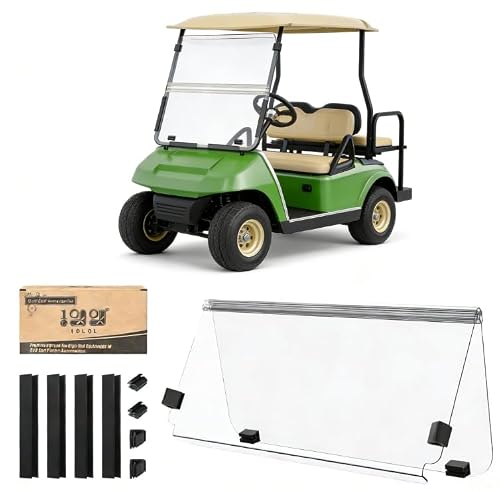
OEM Perfect Fit:Custom-made for Club Car DS models 1982–2000, manufactured strictly to OEM specifications. It precisely matches the original frame and mounting positions, requiring no cutting for a seamless fit, combining easy installation with original vehicle compatibility.
Decide If You Need a Wiper, Speedometer, or Backup Camera
A wiper is essential if your vehicle has a windshield, especially in states like Virginia and Maine where they are legally required. Windshield wipers help maintain visibility during rain, snow, or debris, making them a basic safety feature. Federal Motor Vehicle Safety Standards (FMVSS) 500 list them as necessary safety equipment, so treating them as optional can compromise safety and compliance. For those upgrading to a lithium battery, reviewing top lithium golf carts can help ensure you choose a model that already supports these safety features. Choosing a cart with proven quality and performance can simplify compliance with such requirements.
A speedometer is also a must-have for legal operation of low-speed vehicles like LSVs in many states. It allows you to monitor your speed easily, helping you stay within the common 25 mph limit. Without a speedometer, you risk getting ticketed for exceeding speed regulations, and it significantly enhances safe driving.
Backup cameras are more complicated. While some states and manufacturers now require them for LSVs, the rules differ widely depending on where you register. Check your state’s laws and certification requirements to determine if a backup camera is needed. Keep in mind that a low-cost aftermarket backup camera may not meet compliance standards, so verify what qualifies before you install one. This step is crucial for legal registration and safe maneuvering.

Universal Fit for Most Golf Carts:This manual wiper kit fits most golf carts, compatible with EZGO, Yamaha, and Club Car (TBI) (GS) . Fits frames from 0.9 to 1.32 inches wide.

【Universal UTV Fitment】 Engineered for ultimate compatibility. Perfectly fits Polaris RZR, Ranger, Can-Am Maverick X3, Commander, Kawasaki Mule, Teryx, Honda Pioneer, and most Hard Coated Polycarbonate windshields.

[FITMENT] This windshield wiper kit is universal fit for all Golf Carts models, and compatible with Ezgo Yamaha Club Car (TBI) (GS)
Street-Legal Golf Cart Registration and VIN Steps
To register your street-legal golf cart, you must have a recognized Vehicle Identification Number (VIN). Factory-built Low-Speed Vehicles (LSVs) come with a VIN, but converted carts usually do not. If your cart lacks a VIN, you’ll need to go through a VIN verification process via a state inspection. In states like Florida, this involves submitting photo documentation of your cart and a completed inspection form. Once your cart passes inspection and a new VIN is assigned, you can proceed to submit the title and registration application. This process ensures that your license plates are linked to an approved VIN and classified properly for street use.
Street-Legal Golf Cart Driver License and Insurance Rules
Most states require you to carry a valid driver’s license to operate a street-legal golf cart. Florida and South Carolina are strict about this, mandating it at all times. Liability insurance is also a baseline legal requirement in nearly all states. For example, California mandates a minimum coverage of 30/60/15—meaning $30,000 for injury per person, $60,000 for total injury per accident, and $15,000 for property damage. Florida additionally requires personal injury and property damage liability coverage. If you upgrade your golf cart to a Low-Speed Vehicle (LSV), standard auto insurance policies usually cover it, not recreational or golf cart policies. Regular maintenance to ensure roadworthiness is essential because a vehicle that is not road-ready may be disqualified from street use. Customizing accessories and features might meet local code requirements but do not exempt you from license and insurance laws. Always verify specific rules with state and local authorities to prevent gaps in coverage and avoid fines or impoundment.
Final Checklist: What to Do Before You Hit the Road
Before hitting public roads with your street-legal golf cart, run through this final checklist to confirm safety, legality, and roadworthiness. First, verify that all lights—headlights, taillights, brake lights, and turn signals—are functioning properly. Ensure seat belts, a windshield, a horn, and a parking brake are operational. Check that your tires are in good condition, steering feels responsive, and brakes respond smoothly.
Next, confirm that the branding on your golf cart matches your registration documents. Secure eco-friendly accessories such as solar panels, making sure they do not block lights or reduce visibility. Verify that your vehicle identification number (VIN) is clearly readable and that your registration is current. Check that any required decals or license plates are properly displayed and visible.
Finally, perform a comprehensive pre-road test. Test all lights in low-light conditions, confirm turn signals and the horn work, and check the parking brake on an incline. Take a short drive around your neighborhood to ensure everything operates smoothly before entering traffic. Once these steps are complete, you’ll be ready for the road.