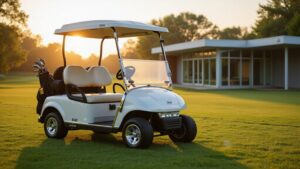
Are you trying to figure out which golf cart battery will save you the most hassle and money? The right choice depends on your budget, how often you drive, and how much maintenance you’re willing to do.
In this guide, you’ll find a straightforward comparison of the main types—flooded lead-acid, AGM, gel, and lithium-ion—so you can pick the best fit for your driving habits without second-guessing.
How to Choose a Golf Cart Battery by Budget, Usage, and Maintenance
Choosing the right golf cart battery depends on your budget, how you use the cart, and how much maintenance you’re willing to handle. If keeping costs low is a priority, lead-acid batteries are the most affordable upfront option. However, you’ll need to properly recycle old units, as disposing of lead-acid batteries involves an extra step to ensure environmental safety. For those looking at lead-acid, be aware that new golf cart prices can vary widely based on battery choice. To enhance your cart’s utility, consider comparing roof rack options for added storage.
For frequent drivers, battery life and runtime are crucial. Focus on batteries with higher capacity and monitor storage temperature—keep the pack charged and in a cool environment to prevent damage. Consistently neglecting temperature control shortens battery lifespan significantly. For a detailed overview of the best models, consulting a golf cart review can help you compare options based on real-world performance.
If you prefer minimal upkeep, lithium batteries are the best choice. Though they cost more initially, they require almost no maintenance. Proper charging discipline is essential for all types, especially avoiding deep discharges that can damage the battery. Make sure to match the voltage of the battery to your cart’s system for optimal performance. Ultimately, your choice balances initial costs with long-term convenience, durability, and ease of use.

Born for 48V Golf Cart: Special designed for 48v golf cart industry, OGRPHY 48v lithium golf cart battery is compatible with golf cart controllers of all major brands on the market. Built in premium grade A prismatic LiFePO4 cells(UL certified), this 48v battery has better durability & safety. Over 5kWh capacity equals 8pcs 12V 100AH lead acid batteries. Max 10.24kW continuous power & peak 51.2kW power (50% more powerful than standard lithium batteries) to conquer hills/rough terrain effortlessly.

[10 Years Lifetime and 5000+ Deep Cycles] OGRPHY 48 volt lithium battery is made of new grade A cells with UL certification. 10 years lifetime and 5000+ deep cycles is not just a slogan under instructions on the product manual.

Get Rid of Lead Acid Batteries Now: Revolutionize your golf cart with Lithova 48V golf cart lithium conversion kit! This 48V lithium battery directly replaces 6-8V 50Ah heavy lead-acid batteries in one simple installation. Enjoy 74% weight reduction, 60% smaller size, and extended 25-mile range (effortless 3-5 Rounds of 18-hole courses). Lasts 8x longer than lead-acid batteries, Up to 15000 deep cycles ensure maintenance-free performance and long-term reliability.
Flooded, AGM, and Gel Golf Cart Batteries: How They Compare
Flooded batteries are the most budget-friendly option upfront but require ongoing maintenance. You’ll need to regularly water them, clean the terminals, and perform equalization charges to balance the cells. They are also prone to spills and corrosion, which can cause damage and require careful handling. These batteries are suitable if you’re comfortable with routine upkeep and want to minimize initial costs. Proper recycling is essential to reduce environmental impact when you eventually replace them. For those who tow their cart, selecting the right trailer ensures your battery setup stays secure during transport. To confirm the battery is still in good condition, you can test the voltage with a multimeter as part of regular safety checks. However, for longer lifespan and lower maintenance, many buyers now choose lithium battery options instead.

Dimensions: Length 10.24 inches, Width 7.09 inches, Height 9.92 inches, Total Height 10.79 inches; Weight: 67lbs, Terminal Type: SAE post & SAE/M8; Terminal: Positive (+)-Red, Negative (-)-Black.

ML35-12GEL is a 12V 35AH GEL rechargeable maintenance free battery.

Dimensions: length 10.2 inches, width 7.1 inches, height 10.9 inches, total height 10.7 inches; weight: 70.8 pounds, terminal type: SAE and SAE/M8 post; terminal: positive(+)-red, negative(-)-black.
Should You Pay More for Lithium-Ion? Long-Term Value vs. Upfront Cost
Paying more upfront for lithium-ion golf cart batteries often pays off in the long run. While a lithium system can cost between $1,500 and $4,000 or more for a 48V setup, lead-acid packs are usually less expensive initially. However, lithium batteries typically last 8 to 12 years and endure 3,000 to 6,000 charge cycles, compared to lead-acid batteries that usually last only 3 to 5 years or 500 to 1,000 cycles. This extended lifespan means you’ll avoid replacement costs and reduce your overall expense over time. Choosing the right top battery chargers also maximizes performance and longevity.
Ownership benefits add up quickly. Lithium batteries require little maintenance—they don’t need watering, cleaning, or regular inspections. If you use your golf cart often or plan to keep it for many years, investing in lithium can reduce your total battery costs by approximately 50 to 65 percent across a decade. Though the initial investment is higher, the savings from fewer replacements and less upkeep make lithium batteries a smarter choice for long-term ownership. A well-chosen Ezgo golf cart cover can also protect your cart and its battery system from weather damage. Upgrading to a high-amp solenoid ensures consistent power delivery from your lithium battery to the motor.
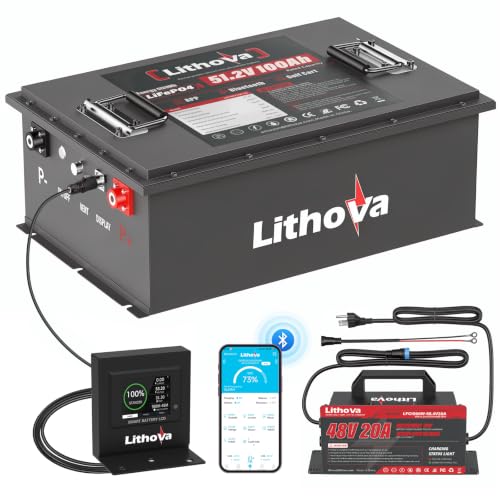
Get Rid of Lead Acid Batteries Now: Revolutionize your golf cart with Lithova 48V golf cart lithium conversion kit! This 48V lithium battery directly replaces 6-8V 100Ah heavy lead-acid batteries in one simple installation. Enjoy 74% weight reduction, 60% smaller size, and extended 50-mile range (effortless 7-9 Rounds of 18-hole courses). Lasts 8x longer than lead-acid batteries, Up to 15000 deep cycles ensure maintenance-free performance and long-term reliability.

【ULTRA HIGH PERFORMANCE - CLASS A BATTERY】: LOSSIGY 48V100AH lithium iron phosphate battery for golf carts is made with class A chip, equipped with LCD display with stand, built-in 200A BMS, 5120W Powerful, 1000A peak current. IP65 waterproof. Preferred item for golf cars,RV,Solar

【24 hours Customer Service】Cloudenergy provides technical support and online customer service with fast feedback within 24 hours. If you have any product-related issues or questions, please get in touch with us directly, Cloudenergy support team is always here for you.
Golf Cart Battery Performance: Weight, Speed, and Charging Time
Lithium golf cart batteries are significantly lighter than lead-acid ones, weighing about 60-70% less—typically 70 to 100 pounds compared to 250 to 300 pounds. This substantial weight reduction enhances your cart’s acceleration and hill-climbing ability, making handling quicker and more responsive. Additionally, lithium batteries recharge in just 2 to 5 hours, whereas lead-acid batteries usually take between 8 and 12 hours, resulting in less downtime between rounds. When driving on public roads, Florida law requires that low-speed vehicles meet specific safety equipment standards, such as headlights and seat belts. For example, model year requirements can affect which carts are street-legal and thus influence their resale prices. Many owners highlight Denago’s reliable battery performance as a key reason for recommending the brand.
Lithium batteries also provide up to 50% more range per charge due to their higher usable capacity, meaning you can go further without needing to recharge. They tend to last two to three times longer than lead-acid batteries, which lowers replacement costs over time. From an environmental perspective, their longer lifespan reduces raw material demand and waste, offering a clear sustainability advantage over the heavier, shorter-lived lead-acid options.

【ULTRA HIGH PERFORMANCE - CLASS A BATTERY】: LOSSIGY 36V100AH Lithium Battery Golf Cart is made of class A chip, equipped with 43.8V25A smart charger, 9 in1 battery monitor, built-in 200A BMS, 3840W Powerful, 1000A peak current. IP65 waterproof. Preferred item for golf cars, trolling motors.

Grade A Cells: LOSSIGY 48 Volt lifepo4 lithium golf cart batteries are manufactured of auto grade-A cells with higher energy density, more stable performance&greater power.

【48V 100Ah Lifepo4 Battery Size & Product Information】DJLBERMPW 4P 12V 100AH Lifepo4 Battery is suitable for 5120Wh Marine Trolling Motor. Battery Size: 12.91*6.77*8.44 inch. (Recommend to charge the battery at 20A charger, Max Constant Discharge Current 100A,Operating temperature: Charge at 0℃-45℃;Discharge at -20℃-60℃)
Match Your Driving Habits to the Best Battery Choice
For driving less than 15 miles daily, lithium batteries are your best choice because they suit shallow cycling and require low maintenance. Flooded lead-acid batteries are not ideal here, as partial discharges can cause sulfation, shortening their lifespan. Lithium batteries handle frequent shallow cycles efficiently and are ready to go with minimal upkeep. If you prioritize budget over longevity, flooded lead-acid can be considered, but it may lead to more frequent replacements in this usage pattern. Additionally, if you plan to use your golf cart on public roads, street legal compliance may require specific battery performance and safety features. For those wondering about cart quality, note that many popular brands, like Bintelli, are manufactured in overseas facilities which can affect replacement part availability. When selecting a lithium model, focusing on reviews of top lithium golf carts can highlight the highest-performing options for both shallow and deep cycle needs. Always remember to recycle old batteries responsibly to reduce environmental impact.

All-in-One 48V Lithium Golf Cart Battery Upgrade Kit – Comes with everything you need for a seamless upgrade: a high-performance 56.8V 18A charger, 2.8-inch LCD touch display for real-time monitoring, voltage converter for stable output, and a durable retention strap—no additional accessories required.

【Grade-A cells】XRH 48V 105AH Golf Cart lithium battery Built with high-performance Grade-A cells that support a 3C discharge rate, ensuring reliable, high-current output for demanding applications.
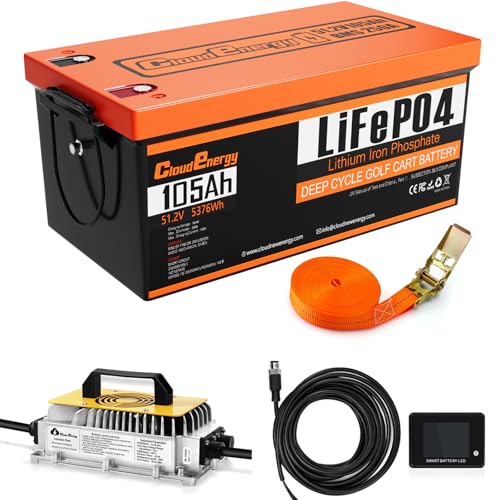
24 Hours Customer Service: Cloudenergy provides technical support and online customer service with fast feedback within 24 hours for any product-related issues or questions