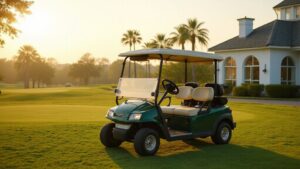
Choosing the right golf cart brand can feel overwhelming with so many options out there. Top brands like Club Car, E-Z-GO, and Yamaha dominate over 90% of golf fleets, each offering unique strengths.
Whether you’re after durability, customization, or a balance of performance and reliability, knowing what sets them apart helps you make the best choice.
Keep reading to find out which brand fits your needs best.
What Defines the “Big 3” Golf Cart Brands Today?
The “Big 3” golf cart brands today are Club Car, E-Z-GO, and Yamaha. These brands dominate over 90% of golf course fleets worldwide due to their longstanding reputations and consistent production quality. They are known for their proven durability, extensive dealer networks, and high resale value, making them a reliable choice for long-term investment. When it comes to customer customization, E-Z-GO stands out with a broad range of options for comfort and neighborhood appeal. All three brands prioritize sustainability by offering durable, long-lasting builds that help reduce waste compared to cheaper, less reliable alternatives. While newer brands may introduce flashy technology, they generally can’t match the reliability, support, and ecosystem that these legacy manufacturers provide, ensuring you’re making a safe, long-term decision. For those buying used, understanding the real price ranges of these top brands helps you spot a fair deal and maximize savings. For those choosing a battery type, understanding the difference between lithium vs lead acid golf carts is key to maximizing performance and lifespan. Finding the right Ezgo golf cart cover also helps protect your investment from weather damage and extends the life of the cart.
Club Car vs. E-Z-GO vs. Yamaha: What $8,000 to $17,000 Gets You
In the $8,000 to $17,000 range, your options vary significantly depending on the brand and features. Club Car tends to push toward the higher end with premium models like the lifted Onward 4-passenger, priced at $11,699, and a lithium-equipped version that approaches $16,807. E-Z-GO offers more budget-friendly choices starting around $8,974 for their 2-passenger RXV and $9,889 for a 4-passenger RXV, keeping most family carts well below $12,000. Yamaha’s Drive2 QuieTech gas models come in lower, at approximately $9,590. With this budget, you can typically purchase a 4-passenger gas or electric cart from any of these brands. For a comprehensive overview, you can consult Top Golf Carts to compare quality and performance further. Models priced above $15,000 usually include lifted or street-legal builds, promising more customization and premium features. Across all three brands, your budget leaves plenty of room for accessories and upgrades—especially with Yamaha and E-Z-GO—allowing you to add popular options like custom wheels or upgraded seats before reaching the higher price points. Buyers seeking the top speed golf cart should review performance specs to ensure their chosen model meets their desired velocity. Reviewing the battery quality and performance comparison from leading experts can also help you decide between lithium and lead-acid options.

420D Heavy-Duty Protection: The golf cart covers with the extra PVC coating and used the water-proof adhesive tape fully sealed seams, 100% waterproof defense. Adjustable wind straps, velcro closure straps and elastic band at the bottom allows cover to be secured to the cart., even during storms.

[Perfect Fit for 2+2/4 Passenger Golf Carts] : The golf cart cover is custom-designed to fit most 4 seater golf carts, compatible with Yamaha, Club Car, EZGO golf carts etc. Measures 112"L x 54"W x 66"H, with elastic hem and adjustable strap clips to keep it secure even in strong winds. Say goodbye to flapping covers on windy days

Perfect Fit: Universal heavy duty golf cart cover for Yamaha, EZGO, Club Car 2 or 4 passengers vehicle (include 2+2 golf carts with rear flip seats), Check the cart and roof measurements before ordering for a suitable fit
Club Car vs. E-Z-GO vs. Yamaha: Which Holds Up Better?
E-Z-GO relies on a steel frame that offers durability but is more vulnerable to rust over time, so regular maintenance is necessary to prevent corrosion. Yamaha’s steel frame is coated with a powder finish, which provides better resistance to dents and minor scratches, but it still lacks the natural corrosion resistance found in aluminum. For those seeking an upgrade, a top gas motor can significantly improve performance in these models. Additionally, for passengers in the rear, aftermarket accessories like grab bars with cup holders can greatly enhance comfort and convenience on longer rides. The speed and power of these models vary depending on motor voltage and drivetrain design. All three brands deliver dependable performance, but in environments that are harsh or see frequent use, Club Car’s rust-resistant aluminum frame and reliable build give it an edge. For dry, inland conditions with less exposure to moisture, the performance difference narrows, yet Club Car maintains a reputation for superior long-term durability and value.

Fit For: Compatible with EZGO, Club Car, and Yamaha golf cart rear seat kits featuring a metal footplate. Verify hole distance before purchase to ensure proper mounting. Provides added stability for passengers entering and exiting the rear seat.

Wide Universal Compatibility:Our golf cart rear safety grab bar is tailor-made for most modified rear seat kit platforms, perfectly compatible with Yamaha, Club Car, EZGO 2+2 and 4+2 passenger golf carts. It is recommended to confirm the product size before purchase to ensure a perfect fit.

30-DAY RETURN POLICY/1-YEAR WARRANTY: If your order arrives and it’s not exactly what you want, you may return it within 30 days for a refund. We know that people sometimes order a part and then discover it’s not exactly the one they need for the repair. We understand and want to work with you. Just make sure the item is in its original packaging and in good condition free of damage. Outside of 30-days, we will replace it anytime within one year of your order.
Are Newer Lithium Golf Cart Brands Worth It?
Choosing a newer lithium-powered golf cart is often worth it if you’re a heavy user or plan to keep your cart long-term. Lithium batteries cost two to three times more upfront than traditional lead-acid, but they provide between 2,000 to over 5,000 cycles, compared to lead-acid’s 300 to 1,000 cycles. This means you’ll likely only need to replace the battery pack once during the cart’s lifetime, rather than multiple times. Lithium batteries also charge faster, typically in two to four hours, and require zero maintenance, making daily use more convenient. According to reviews of top lithium batteries, buyers should consider factors like cycle life and charge speed when choosing a pack. Top picks for quality and performance often highlight these fast-charging advantages. The long-term value of a lithium pack becomes clear when factoring in its reduced replacement frequency.
Brand reputation plays a significant role. Established brands tend to offer more reliable lithium options, while newer brands may involve higher risk due to less proven track records. If you use your cart frequently or aim for long-term ownership, investing in the latest lithium technology can pay off. For infrequent users or those with low mileage needs, the higher initial investment may not be justified.

Born for 48V Golf Cart: Special designed for 48v golf cart industry, OGRPHY 48v lithium golf cart battery is compatible with golf cart controllers of all major brands on the market. Built in premium grade A prismatic LiFePO4 cells(UL certified), this 48v battery has better durability & safety. Over 5kWh capacity equals 8pcs 12V 100AH lead acid batteries. Max 10.24kW continuous power & peak 51.2kW power (50% more powerful than standard lithium batteries) to conquer hills/rough terrain effortlessly.
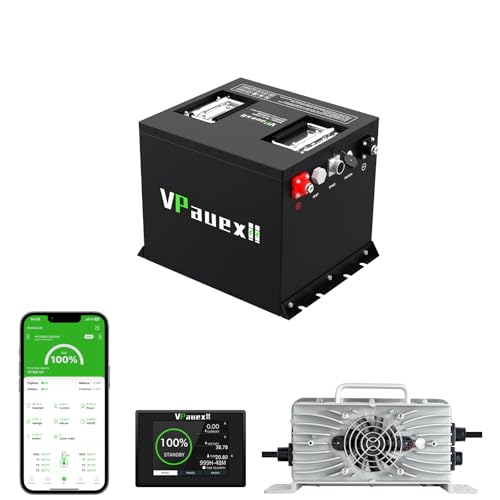
✔️ [12 Years & 6000+ Cycles]: VPauexii 36V lithium conversion kit. Built with new Grade A EV LF105 cells. 12-year lifetime and 6000+ deep cycles isn't just a claim—it's the result of our quality commitment. Full 5-year warranty. No hidden costs. Premium performance, advanced safety. The smartest value today.

[10 Years Lifetime and 5000+ Deep Cycles] OGRPHY 48 volt lithium battery is made of new grade A cells with UL certification. 10 years lifetime and 5000+ deep cycles is not just a slogan under instructions on the product manual.
Best Golf Cart Brand for Fleet, Street-Legal, or Personal Use
For fleet purchasing, the top brands are Club Car, E-Z-GO, and Yamaha. They have extensive service networks and proven durability in commercial settings. E-Z-GO emphasizes toughness and low maintenance costs over luxury features, making it ideal for work crews. Club Car provides versatile performance suitable for various fleet needs, while Yamaha offers reliable, all-around operation that can handle diverse environments. For instance, Club Car models often benefit from top lift kits to enhance ground clearance for rugged fleet tasks. To keep those fleets running, pairing them with a properly reviewed 12-volt charger ensures consistent power and extended battery life. Additionally, selecting the right tires, such as the top tires for Club Car models, can significantly improve traction and ride quality on uneven terrain.

【18 Amp Rapid Charger/Lead-Acid】EPOWREY 18 Amp 36 Volt golf carts battery charger for EZGO TXT - D style plug.Our chargers are designed for fast, convenient and safe charging in a variety of situations.
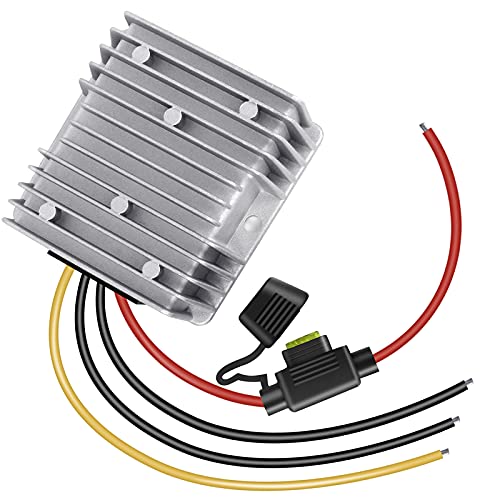
Input Voltage Range: 30-60V DC(36V/48V).

SMART MULTI-VOLTAGE UNIVERSAL BATTERY CHARGER – The All-in-One Power Solution for Every Lead-Acid Battery. This intelligent automatic charger seamlessly adapts to 6V, 8V, 12V, 14V, 16V, and 24V batteries, offering extensive compatibility with virtually all lead-acid batteries, including WET, MF, CA, AGM, GEL, SLE, VRLA, EFB, and STD. Featuring fully automatic charging current from 0 to a maximum of 15A, it delivers rapid, customized power for everything from routine maintenance to emergency charging—ensuring your battery receives the precise charge it needs.
Which Golf Cart Brand Keeps Its Value Best?
Club Car keeps its value the best among golf cart brands. After three years, it typically retains 70 to 80 percent of its original value, and after five years, around 55 to 65 percent. Its aluminum frame resists rust, giving it a resale advantage over steel-frame competitors. Upgrades to luxury features can enhance value, but brand reputation and dealer support are more influential factors. For example, investing in a top-rated light bar can make nighttime driving safer and more enjoyable, potentially adding to the cart’s appeal.
Yamaha and E-Z-GO follow closely, with about 60 to 70 percent retention after three years. Upgrading to lithium batteries can also boost resale value, as improved battery lifespan can add between $1,000 and $2,000 to the asking price. A clean five-year-old lithium-powered cart may sell for 60 to 65 percent of its original price, compared to 45 to 55 percent for lead-acid models.
Lower-retention brands like ICON and Evolution tend to drop to 40 to 50 percent after five years, making them less ideal for long-term value preservation.

ALUMINUM FRAME: The cart comes with strong and light aluminum frame which shows outstanding sturdiness and stability.

EASY FOLDING & PORTABILITY: This golf push cart features a 3-step quad-fold system that folds in seconds for compact storage. At just 13.75 lbs, this lightweight golf push cart is portable, trunk friendly, and perfect for travel and easy storage.
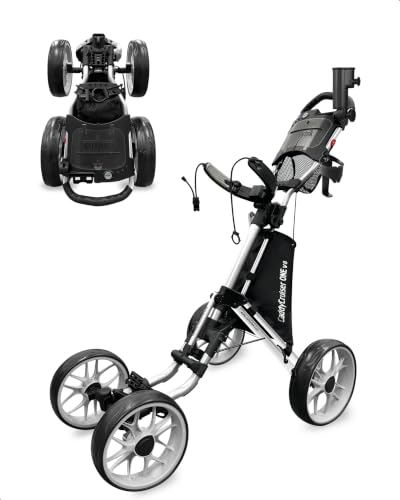
ONE-CLICK FOLD & PORTABILITY: Patented one-click button folds fast to a compact shape for trunks and lockers. At 16.9 lbs, this lightweight golf push cart sets up and stows easily, giving walkers a foldable golf push cart that saves time between rounds.