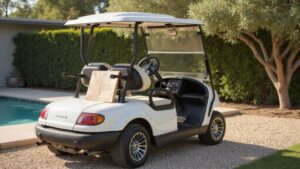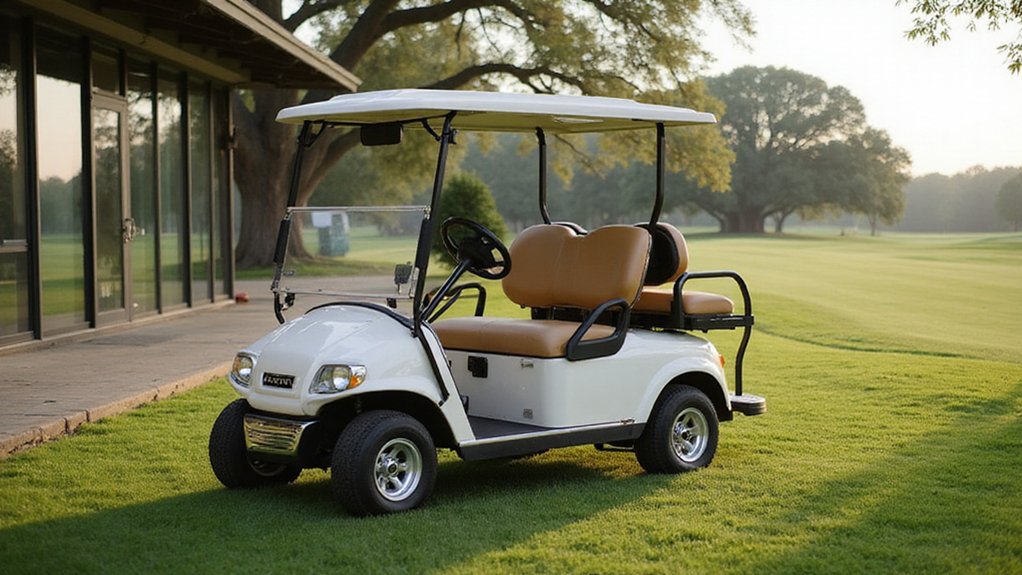
If you’re trying to find a golf cart that combines modern tech with affordability, Denago could be worth a look.
They offer features like Apple CarPlay, a rear camera, and a 40-mile range, all starting around $10,000.
While they may not have the brand recognition of top names, they provide solid reliability for neighborhood cruising.
Keep reading to see if a Denago golf cart fits your needs.
What Makes Denago Golf Carts Different?
Denago golf carts stand out by integrating advanced automotive technology with versatile seating options. You’ll find features like a 10.1-inch digital display with Apple CarPlay and Android Auto, keyless start, and a rear camera—elements that are more common in modern cars than traditional golf carts. These features enhance connectivity and ease of use during every ride. For buyers prioritizing navigation, some of the best electric golf carts reviewed in the market achieve higher value by integrating GPS for precise course mapping and tracking. To ensure longevity and efficiency, many top models now pair these systems with lithium batteries for consistent power delivery. A reliable 12 volt battery charger is also essential to maintain peak performance and extend battery life.
The design aesthetic emphasizes a contemporary look, featuring sleek body lines and integrated indicators that move away from the typical golf-cart appearance. The real innovation, however, is in the seating arrangements. You can select from forward-facing seats or lounge-style layouts, such as the City model’s L-shaped rear bench with a center table. This customization transforms a basic utility vehicle into a social space, perfect for neighborhood gatherings or property leisure. Paired with four-wheel hydraulic brakes and smooth electric performance, these carts provide a blend of style, functionality, and social appeal that makes them distinctly different from the competition.

Multi-function Battery Monitor with Clear Display: this battery indicator features a crisp display that cycles between voltage reading and battery percentage with a simple press of the front button; Easily toggle the backlight, set sleep mode, and select your specific battery type (Li-ion, Lead-Acid, etc.) for unparalleled accuracy and control; The package includes 1 battery meter
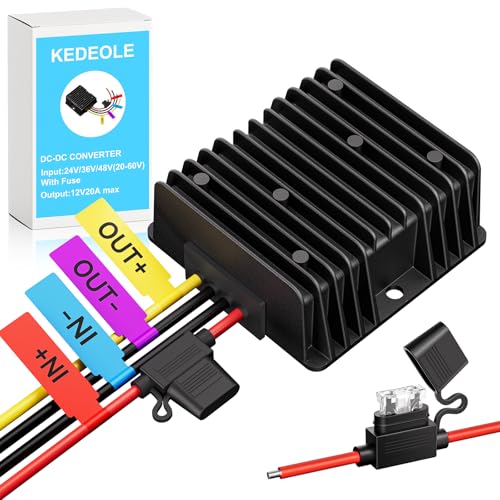
【Efficient 24V/36V/48V to 12V Converter for Golf Carts】 Step down golf cart voltage reducersystems (20V-60V input → 12V 20A 240W output) with stable performance.

{A Must Have LED Battery Monitor Indicator } - The battery indicator is used to measure the remaining charge in the golf cart battery, including lithium battery, lead acid battery, lithium iron phosphate battery, 3-15 series lithium ion battery, storage battery, water battery and other different battery types.Freely switching voltage among 12V 24V 36V 48V 60V 72V
Which Denago Model Should You Buy: Nomad, Rover, or City?
The Denago City is the option if you need maximum seating and range. It seats six passengers and provides up to 80 miles per charge, making it ideal for longer outings or frequent use. Its larger 150-inch footprint offers strong utility and space, but this size can make tight turns more challenging. Choose the City if you prioritize passenger capacity and range over maneuverability in smaller spaces. For buyers comparing options, reviews often highlight top golf carts with roof for their quality and performance. To extend the battery’s life, avoid deep discharges that shorten its lifespan. When selecting a charger, look for a 24 volt battery charger that matches your specific battery type.
The Nomad is best if you want a compact, lower-cost model with four seats. It reaches speeds of 25 MPH and has a 40-mile range, perfect for short trips around town. Its smaller footprint makes it easier to navigate in tight spaces and park where space is limited, but the shorter range limits all-day use or longer trips.
The Rover offers a middle ground with added flexibility. It accommodates extra passengers or cargo without the larger size of the City. It may not have the same seating capacity or range but strikes a balance between utility and maneuverability. This model suits those needing more versatility without opting for the full-size City.

【Compatible Model】: This golf cart enclosure is compatible with Denago Nomad XL/TEKO Turbo (NOTE: Does not fit Denago Rover XL)

6 Persons Golf Cart Cover: the golf cart covers for 6 passenger is suitable for most 6 persons(4 forward + 2 rear facing) golf cart and car, which size is about 300 x 112 x 160 cm/ 95 x 48 x 66 inches; Dimensions details are as followed: roof width 44", roof length 116"--118", body height Front 63"; Please check the size needed before ordering, our golf cart enclosure doesn't fit golf cart of small size

ULTRA-CLEAR 360° VIEW: Crafted with premium PVC windows for a full panoramic view with no blind spots, ensuring safe driving in all conditions. The 600D waterproof Oxford fabric provides superior protection against rain, snow, and UV rays for year-round use.
How Does Denago Compare to Club Car and E-Z-GO?
E-Z-GO provides a wider range of dealer support and more powertrain options, including lead-acid batteries, whereas Denago specializes solely in lithium-based systems. Understanding golf cart battery voltage is crucial when comparing these options, as voltage impacts performance and range significantly. Denago’s main advantage is its focused battery technology: a 51.2V LiFePO4 pack that offers over a 40-mile range on a single charge. It also includes modern tech features like a touchscreen with CarPlay, making it feel well-equipped for the price. While Denago offers a modern, all-lithium setup with integrated technology, you may miss the long-term reliability and extensive service network that comes with E-Z-GO’s more established history. For buyers seeking top golf carts, Denago’s focused quality and performance present a compelling modern alternative in the market. When comparing battery types, Denago’s lithium system avoids the frequent running costs of replacing lead-acid batteries every few years.

All-in-One 48V Lithium Golf Cart Battery Upgrade Kit – Comes with everything you need for a seamless upgrade: a high-performance 56.8V 18A charger, 2.8-inch LCD touch display for real-time monitoring, voltage converter for stable output, and a durable retention strap—no additional accessories required.

All-in-One 48V Lithium Golf Cart Battery Upgrade Kit – Comes with everything you need for a seamless upgrade: a high-performance 58.4V 18A charger, 2.8-inch LCD touch display for real-time monitoring, and a durable retention strap—no additional accessories required.

Easy Installation & Quick Upgrade: Revolutionize your golf cart with our 48V golf cart lithium conversion kit! This 48V lithium battery directly replaces 6-8V 100Ah heavy lead-acid batteries in one simple and wiring-free installation. Enjoy 74% weight reduction, 60% smaller size, and extended 56-mile range (effortless 7-9 Rounds of 18-hole courses). Lasts 8x longer than lead-acid batteries, 5000+ deep cycles ensure maintenance-free performance and long-term reliability
Are Denago Carts Reliable? What Owners Actually Say
Denago carts are generally reliable for everyday neighborhood driving, with many owners reporting hundreds of miles without experiencing a breakdown. Most issues tend to be related to short-term use rather than long-term durability. Battery life remains solid under normal conditions, though you might notice reduced performance on hilly terrain. Proper maintenance—such as keeping connections clean and tires properly inflated—can help sustain optimal performance. Using a smart charger can prevent overcharging damage and extend battery lifespan, which is a key factor in long-term reliability. For added protection against weather and debris, investing in a proper golf cart enclosure can help shield your cart from the elements. The biggest factor influencing reliability is your local dealer; responsive support and quick parts availability make a significant difference. Conversely, slow parts pipelines and poor dealer support can lead to frustration. Overall, owner feedback is positive, but your experience will depend on the quality of local service. For those who want to upgrade visibility, choosing the best light bar can improve safety during evening drives.
Denago’s Biggest Complaints: What Owners Complain About Most
Denago owners often complain about fit-and-finish issues that make the vehicle feel cheap. Common problems include panel gaps, loose trim, and squeaks or rattles that persist while driving. These details can undermine the perceived quality of the car and become irritating over time. For many owners, aftermarket modifications like a 6 inch lift kit can help address ride quality and ground clearance concerns not solved by factory build. Electrical headaches are also frequent, with touchscreen glitches, failing side controls, and broken direction selector knobs causing frustration. Service experiences can compound these issues; dealer-dependent repairs and slow parts availability turn minor problems into lengthy, aggravating delays. Additionally, neglecting proper battery maintenance can significantly shorten golf cart battery lifespan, leading to premature failure that owners may not anticipate. For those seeking a more durable alternative, comparing top golf cart covers can reveal how protective accessories help offset some of these build-quality frustrations.
What’s Covered Under the Denago Warranty?
Denago’s warranty coverage includes three main areas: the battery, the chassis, and major parts. The lithium-ion FePO4 battery is covered for eight years with a full replacement policy, which directly addresses concerns about battery lifespan. To qualify, you must register your product within 24 hours of purchase. The aluminum chassis comes with a lifetime warranty against manufacturer defects, offering long-term peace of mind. Major components such as the motor, suspension, brakes, wiring, and display are protected for two years. However, this warranty does not cover wear-and-tear items, damage due to misuse or neglect, non-OEM modifications, or units used commercially. For a more in-depth comparison, you can review the top lithium golf carts that benchmark quality and performance against these warranty terms. Proper driving habits can help prevent premature wear on brakes and wiring, regardless of warranty coverage. When buying used, you should always verify that ownership paperwork is properly transferred to avoid future registration issues. Labor and transportation costs are also not included, so you may need to pay for service and shipping expenses. To make a warranty claim, you must go through your authorized dealer rather than contacting the company directly.
Is a Denago Golf Cart Worth Buying Right Now?
Buying a Denago golf cart now can be a smart choice if you prioritize features and affordability over brand recognition. You gain access to luxury tech and conveniences like Apple CarPlay, a rear camera, and standard lithium-ion batteries without paying the premium prices typical of well-known brands. The cost often falls between $9,995 and $16,500, making it accessible for neighborhood cruising or family transport. However, you should confirm whether the cart meets local street legal requirements to avoid enforcement issues. If the cart is not street legal, you can follow a step-by-step guide to add required lights, mirrors, and a horn. Consider the resale value carefully. Denago isn’t as established as brands like Club Car or EZGO, which could mean less long-term equity. Your main concern should be dealer support: if a responsive authorized dealer is nearby, service parts and repairs are likely straightforward. Without solid dealer support, delays and difficulties could arise. If your decision hinges on features and cost rather than brand prestige, Denago is worth considering now. But be aware of the practical risks—especially related to after-sales support—before making your purchase.

【ULTRA HIGH PERFORMANCE - CLASS A BATTERY】: LOSSIGY 36V100AH Lithium Battery Golf Cart is made of class A chip, equipped with 43.8V25A smart charger, 9 in1 battery monitor, built-in 200A BMS, 3840W Powerful, 1000A peak current. IP65 waterproof. Preferred item for golf cars, trolling motors.

Born for 48V Golf Cart: Special designed for 48v golf cart industry, OGRPHY 48v lithium golf cart battery is compatible with golf cart controllers of all major brands on the market. Built in premium grade A prismatic LiFePO4 cells(UL certified), this 48v battery has better durability & safety. Over 5kWh capacity equals 8pcs 12V 100AH lead acid batteries. Max 10.24kW continuous power & peak 51.2kW power (50% more powerful than standard lithium batteries) to conquer hills/rough terrain effortlessly.

Enhanced Safety Design: The DC HOUSE lithium golf cart battery 36v kit features a durable metal case that is fireproof, impact-resistant, and far safer than the ABS cases used in ordinary lithium batteries. It includes a one-touch power switch to easily cut off output when not in use, preventing accidental power-on.