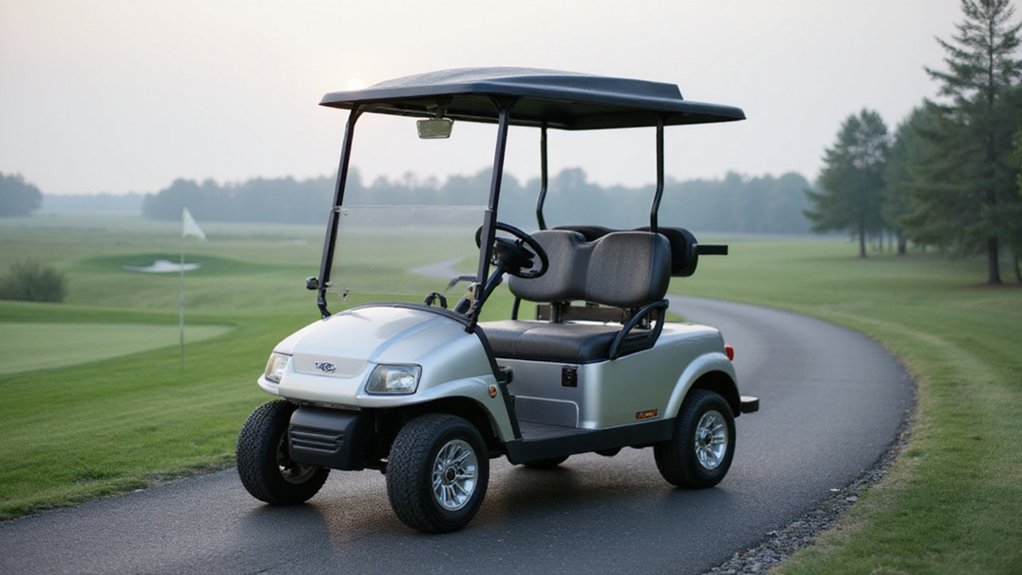
Wondering how fast a 48-volt golf cart can really go? Most stock models hit around 15 to 20 mph, but that can vary based on battery health and tire size.
Larger tires might boost speed a bit but can reduce torque, and factory governors keep everything safe for neighborhood cruising.
Keep reading—here’s everything you need to know about golf cart speeds and upgrades.
What Speed Can You Expect From a Stock 48V Golf Cart?
A stock 48V golf cart typically reaches a top speed between 15 and 20 mph. Most factory settings keep the speed around 15 to 19 mph, constrained by electronic governors for safety reasons. Your cart’s battery condition significantly affects this speed—if the battery is worn or low on charge, voltage drops under load, decreasing your maximum speed by a few mph. Weather conditions also impact performance; cold temperatures reduce battery efficiency, making the cart slower. Upgrading to lithium batteries can provide more consistent power delivery and improve overall speed stability. Realistically, exceeding 20 mph usually requires modifications, so expect around 18 mph on a good day. If your cart feels much slower than this, start by checking your battery’s charge level and age, as these are common culprits. For top performance, choosing quality 8 volt batteries can help maintain consistent voltage and speed. Using a top battery charger ensures your batteries reach full capacity, which directly supports maintaining that top speed.

[10 Years Lifetime and 5000+ Deep Cycles] OGRPHY 48 volt lithium battery is made of new grade A cells with UL certification. 10 years lifetime and 5000+ deep cycles is not just a slogan under instructions on the product manual.

【ULTRA HIGH PERFORMANCE - CLASS A BATTERY】: LOSSIGY 48V100AH lithium iron phosphate battery for golf carts is made with class A chip, equipped with LCD display with stand, built-in 200A BMS, 5120W Powerful, 1000A peak current. IP65 waterproof. Preferred item for golf cars,RV,Solar

【Grade-A cells】XRH 48V 105AH Golf Cart lithium battery Built with high-performance Grade-A cells that support a 3C discharge rate, ensuring reliable, high-current output for demanding applications.
Motor, Controller, and Tires: 6 Factors That Set Your Top Speed
Your motor’s RPM directly determines the wheel speed potential. A higher RPM motor can reach greater top speeds because it spins the wheel faster at the same voltage. Using a speed-oriented winding in the motor increases top speed by allowing higher RPMs, but it often reduces torque, which is the motor’s pulling power. However, pairing your motor with a Trojan Battery compatible high-voltage system can help maintain consistent power delivery for sustained speed. Additionally, Florida law requires that golf carts operate on designated roads, and drivers must be at least 14 years old to legally operate one. For reliable signaling at higher speeds, you may also want to consider installing best turn signal kits designed for golf cart upgrades.
Heat and field weakening are limitations that can prevent your motor from hitting peak RPMs under load. Continuous high speeds generate heat, which can cause efficiency drops or damage. Field weakening techniques temporarily reduce magnetic fields to push RPMs higher, but they also lower torque and can cause instability if not managed carefully. Expect peak RPMs only when your motor is cool and under light loads.
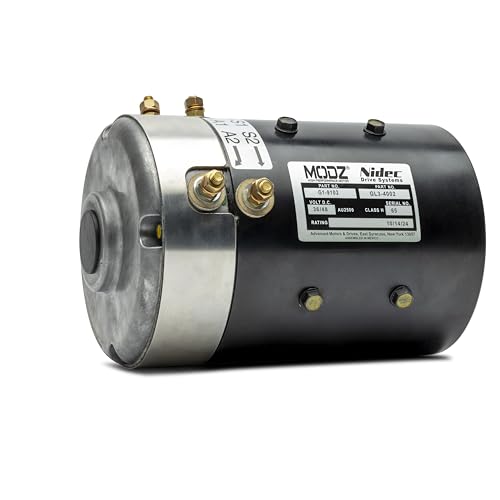
High Speed Performance: Increases top speed between 25-35% mph with the factory controller, compared to the stock motor

Club Car Golf Cart Motor - 36/48 Volt Golf Cart Motor - ONLY Series golf carts - Stock 10 Tooth spline - 19 mph & 10% More Torque versus a stock Golf Cart Motor. (Club Car Electric Motor)

Advanced Motor - Fits EZGO TXT & Freedom 2010+ 48V Golf Cart, with 19 teeth, perfect replaces stock part number 612624, 624105
Will an Upgrade Add 5 MPH or 15 MPH? Common Results
Most common modifications deliver a modest 5 mph gain. If your stock cart runs around 12-15 mph, upgrading the controller can boost your speed to roughly 18-19 mph, a noticeable and reliable improvement. However, achieving a full 15 mph increase usually requires more extensive changes, such as upgrading the motor, altering the gearing, or switching tire sizes. For maximum traction in soft terrain, installing mud tires can also affect overall speed and torque. Battery health plays a critical role; a worn-out pack can limit your top speed because it reduces voltage under load. Weather also influences performance: cold temperatures drop battery efficiency, further limiting acceleration and speed. Choosing a 48 volt lithium battery can provide consistent voltage output even under heavy load, supporting higher sustained speeds. In most cases, sticking with a controller upgrade offers a realistic and consistent speed increase, making it a common starting point for improving your cart’s performance. For those looking to protect their investment in these upgrades, choosing a golf cart enclosure can shield the electrical components from weather and debris.
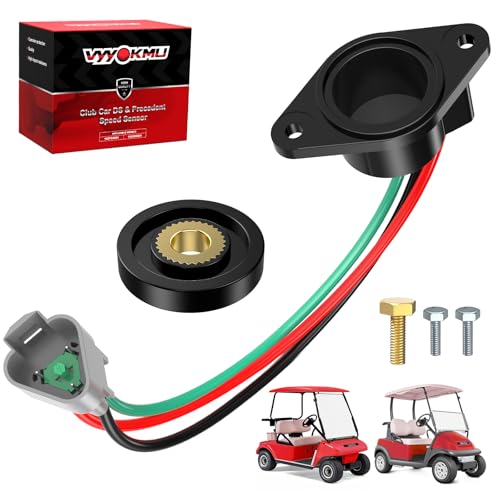
[Compatible Models]: Club Car DS high speed sensor is compatible with 2004-UP Club Car DS & Precedent 48V models equipped with ADC motor or KDS motor and IQ system. (Note: It does not fit the earlier gas and electric motor models)
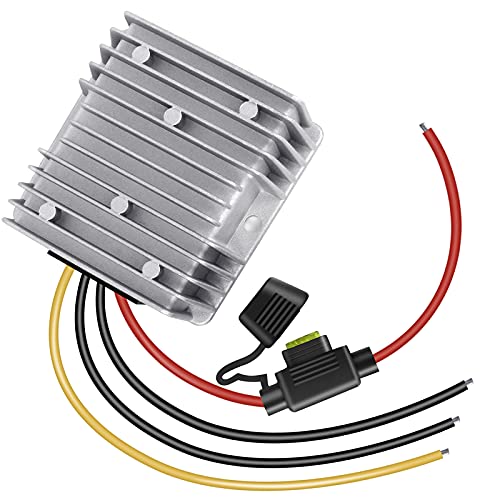
Input Voltage Range: 30-60V DC(36V/48V).

48V vs. 36V vs. 72V: Which Voltage Delivers More Speed?
72V delivers the highest top speed among the three options, starting around 20–25 mph and potentially exceeding that with upgrades. This voltage tier significantly boosts performance, offering a more noticeable speed increase compared to 36V and 48V systems. Moving from 36V to 48V provides a modest speed boost, generally raising the top speed from about 12–14 mph to 15–20 mph. However, jumping from 48V to 72V results in a larger step up, with top speeds climbing clearly higher. Keep in mind that higher voltage also impacts battery life and charging routines, with 72V systems requiring more careful maintenance. For maximum speed potential, 72V is the clear choice, but 48V offers a balanced improvement for everyday use over 36V. To achieve the highest speeds, selecting the right controller for Yamaha golf cart is essential for optimizing performance and ensuring smooth power delivery. Additionally, upgrading to 8-inch wheel covers can reduce rolling resistance for a slight speed gain on smooth surfaces. Before testing any top-speed modifications, safely testing the controller with a multimeter ensures it delivers consistent voltage without faults that could limit your 72V setup.
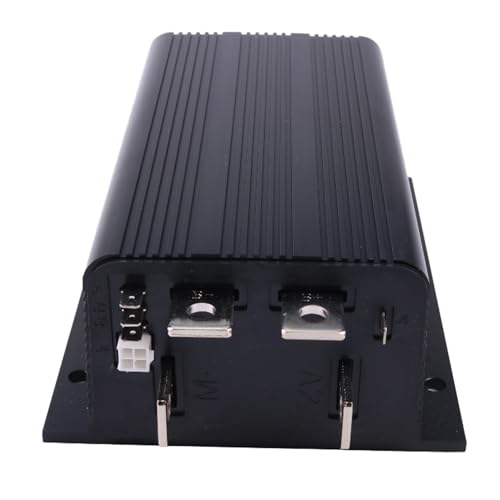
Part Name: Motor Controller

Replace the OEM number: 1205M-6B403, 1205M-6B401, 72V / 400A / 0-5kΩ
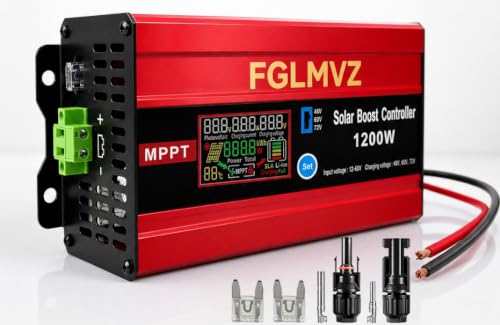
【Efficient Boost Charging for Low-Voltage Solar Panels】 – This red boost charge controller is specifically designed to step up low-voltage solar panel output to effectively charge 48V, 60V, or 72V battery banks. When your solar panel voltage runs lower than battery voltage, this controller ensures a stable and continuous power flow, making it an ideal solution for off-grid systems that require reliable voltage conversion and solar boost charging performance.
How Tire Size Changes Your Speed Without Touching the Motor
Changing your tire size is a simple way to alter your cart’s top speed without touching the motor. Larger tires, such as swapping from 18-inch to 22-inch wheels, cover more ground with each rotation, effectively increasing your speed. For example, this size increase can push your top speed from 19 mph to about 23 mph—a roughly 22% boost. However, bigger tires also reduce your cart’s effective torque, making hill climbing more challenging. For those seeking the best lithium golf cart for performance, upgrading to lithium batteries can also improve acceleration and efficiency. When buying a used cart with modified tires, it is critical to get ownership paperwork in writing to avoid title issues. Proper maintenance becomes essential after such an upgrade. Excessive tire wear can occur if wheel alignment is off, especially with larger tires. You may also need a lift kit to prevent rubbing against the body or suspension. Keep in mind that your speedometer will read lower than your actual speed by the same ratio, so it won’t be entirely accurate after the change. While the speed gain is noticeable, it requires careful upkeep to ensure your cart runs smoothly and maintains safe handling.
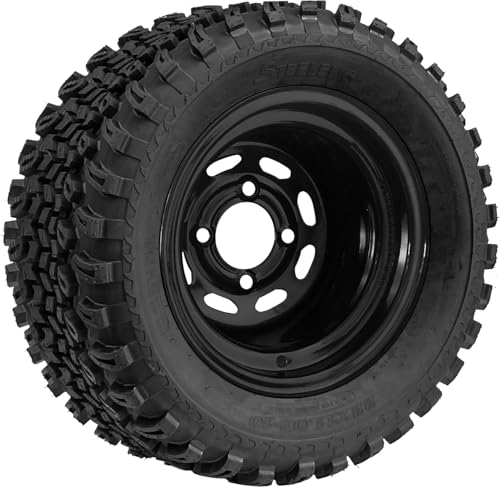
Includes: (4) 22x11-10 All Terrain Tires, (4) 10"x7" Black Steel Wheels

Includes: (4) 22x11-10 All Terrain Tires, (4) 10"x7" VAMPIRE Machined/Black Aluminum wheels, (4) Chrome Center Caps, (4) Sets of Chrome Lug Nuts

Includes: (4) Brand New 22x11-10 All Terrain Tires, (4) 10"x7" BULLDOG BLACK Aluminum wheels, (4) Black Center caps, (4) Sets of black lug nuts
Why Driving Over 25 MPH Is a Whole Different Ballgame
Once you surpass 25 mph in a golf cart, you no longer fall under the low-speed vehicle (LSV) category. This change is significant because it removes simplified street-legal privileges, and your vehicle is now subject to stricter safety standards. Your stopping distance increases sharply because kinetic energy grows exponentially with speed, so factory brakes designed for slower speeds become less effective. Additionally, your cart’s small frame, tires, and suspension are not built for sustained higher speeds, leading to reduced stability during turns, on slopes, or during sudden steering maneuvers. Upgrading to a high-torque motor can improve acceleration and control at these elevated speeds. Speed limits at this level are no longer just suggestions—they now reflect your vehicle’s new classification. Without federal LSV status, you must meet full motor-vehicle safety requirements, which impact insurance, titles, and registration. If you prioritize stability and control, choosing a model with a quality bed can improve weight distribution and handling at higher speeds. Understanding street-legal compliance is critical before driving on public roads, as many states require specific equipment like headlights and seat belts for LSVs. Playing at this speed transforms your golf cart into a much more serious vehicle that demands careful respect and adherence to regulations.
Real-World Speeds by Popular 48V Models
A stock Club Car Precedent typically reaches about 19 to 20 mph, while an E-Z-GO RXV clocks in near 19.5 mph. Yamaha Drive2 models usually range from 15 to 19.5 mph depending on tuning. E-Z-GO TXT carts are slower, topping out at 12 to 16 mph in their stock form. These speeds provide a baseline, but keep in mind that small cosmetic modifications like larger tires can boost your actual speed by a few miles per hour without altering the motor or controller. However, increasing speed often impacts battery life, so weigh that trade-off carefully. For those seeking improved visibility, upgrading to top LED headlights can enhance nighttime driving safety without affecting top speed. When choosing a power source, selecting a lithium battery for golf cart can improve weight distribution and performance. Your cart’s true top speed depends largely on its specific controller programming and tire size. For higher voltage systems, a 48 volt drivetrain with a high-performance motor can push speeds beyond 25 mph in modified setups.
Realistic Top Speed for Your Cart and Driving Needs
Most stock 48V golf carts reach top speeds between 14 and 20 mph. Your actual speed needs depend more on where you’re driving than the number on the spec sheet. On a golf course or in a neighborhood, that range feels perfectly adequate. You don’t need more.
If you want a little extra speed, cart customization can push you into the mid-20s. But remember that faster speeds require better brakes and handling, especially on turns. Your speed also relies on healthy batteries. Neglecting battery maintenance can reduce performance on hills or when carrying a load. Weak batteries won’t supply the voltage your motor needs to operate at peak efficiency.
For most daily trips, stock speed is enough. Only consider upgrades if your route actually requires higher speeds.